From equipment manufacturing to data analysis and financing, countries big and small are getting into the new space race
As launch costs fall and satellite data becomes easier to analyse and access, space has become everyone's playground. As more countries in Southeast Asia angle for a slice of the pie in the sky, CNA TODAY looks into how Singapore's own astro ambitions match up.
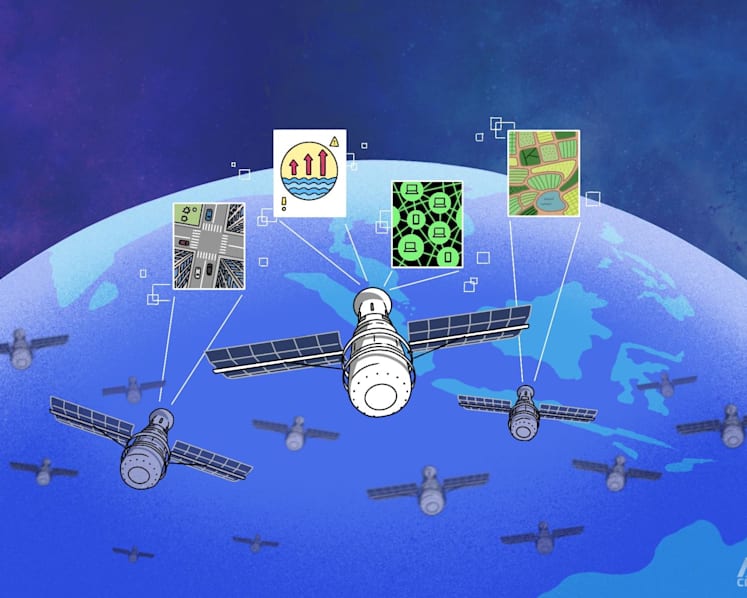
Nearly 80 countries now maintain official space programmes or agencies, with activities ranging from satellite operations and Earth observation to research, regulatory development and international cooperation. (Illustration: CNA/Nurjannah Suhaimi)

This audio is generated by an AI tool.


In Jakarta, radar satellites survey the Indonesian capital, measuring millimetre-scale ground movement, as the city sinks, that is gradually reshaping flood defences and infrastructure plans.
Over in Vietnam, the country’s first radar satellite, LOTUSat-1, is designed to see through clouds and darkness, providing the authorities with the data they need to respond to storms and protect fragile coastlines.
Even tiny Singapore has joined the space race, launching satellites since 2011 and using space-based imagery to strengthen coastal protection, climate resilience and long-term urban planning.
These examples show that what intensified in the 1960s as a Cold War contest between two superpowers – the United States and the Soviet Union – has become something far more expansive. Space used to be the final frontier; now, it's almost everyone's aspiration.
In the past, getting into space required huge defence budgets and government-run rocket programmes that only a few countries could afford.
Today, that exclusivity has faded. Nearly 80 countries now maintain official space programmes or agencies, with activities ranging from satellite operations and Earth observation to research, regulatory development and international cooperation.
And the rapid commercialisation of space has lowered barriers to entry, enabling far more countries and companies to reach orbit. A 2025 report from consultancy PwC found that the global space economy reached revenues of US$570 billion (S$721 billion) in 2023 and is expected to reach US$2 trillion by 2040.
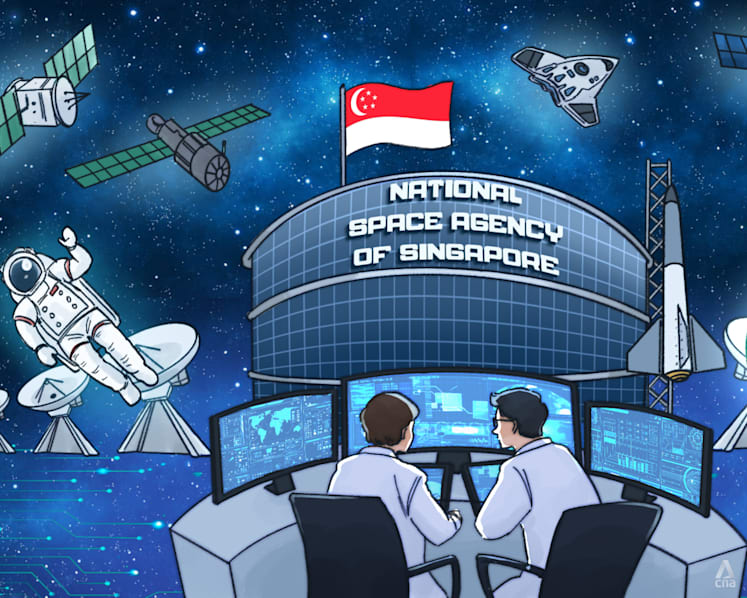
Amid these developments, it was perhaps not surprising that Singapore announced it would start its own space agency.
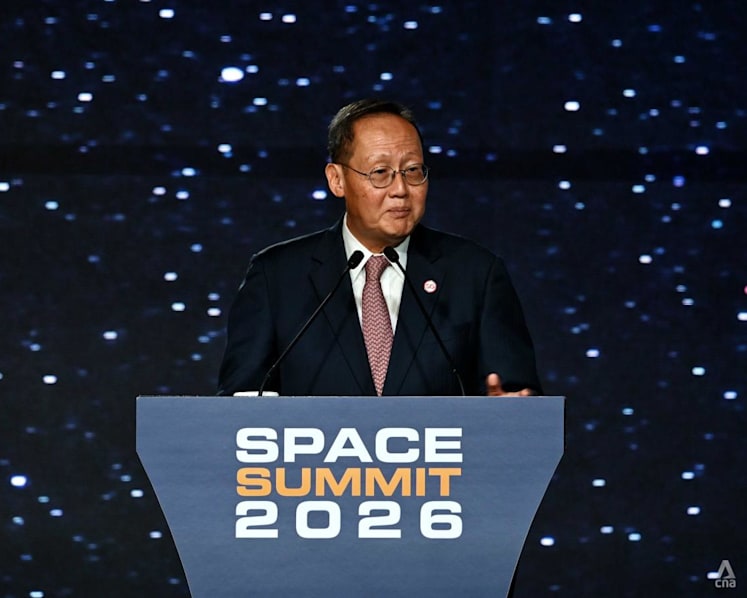
Earlier this month, the Minister-in-charge of Energy and Science and Technology Tan See Leng announced that Singapore will establish the National Space Agency of Singapore (NSAS).
The NSAS is set to commence operations on Apr 1, he said at the inaugural Space Summit, and will provide decisive leadership for Singapore to seize opportunities in the expanding space economy and the new possibilities posed by democratised access to outer space.





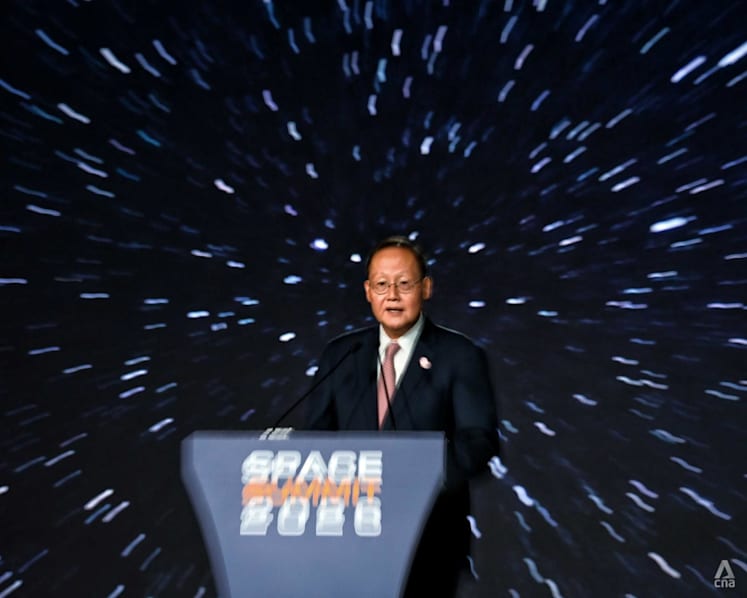
He added that the NSAS will allow the nation to "unlock the full potential of space technology applications for Singapore's national and regional needs", while keeping its assets safe in an increasingly congested space environment.
His announcement was a nod at several trends that have reshaped the space industry over the past few decades, and the developments that are turning the modern space race into a completely new game.
THE DEMOCRATISATION OF SPACE
Soon after World War II ended in 1945, the US and the Soviet Union emerged as the two dominant global powers. They competed not just in arms and ideology, but in science and technology.
Rocket development was closely tied to military capability, and landing a man on the moon became a powerful symbol of national strength and global prestige.
Access to space was expensive, requiring vast defence budgets, government-run industrial complexes and cutting-edge rocket technology that few other countries could afford.
As a result, space remained largely reserved for these two superpowers.
Over the past decade, this high-cost landscape has changed.
Experts told CNA TODAY that space is becoming more accessible for two main reasons. First, cheaper and more frequent launch services, together with smaller satellites, have made it less expensive to place equipment in orbit.
"The entry of private companies such as SpaceX, Blue Origin, and others into the space industry has revolutionised the launch market," said global technology leader Thales.
The availability of more frequent and affordable launch services has significantly lowered the cost of sending payloads into space, making it easier for countries and organisations to launch their own missions, added Thales.
For example, the cost of launching into low Earth orbit via space shuttle has fallen from the range of US$54,000 to US$65,000 per kg in 2010 to US$1,500 per kg with SpaceX's Falcon Heavy in 2018, said Charles Yonts, head of Asian sustainability research Charles Yonts at Macquarie Capital, in a Macquarie report.
Low Earth orbit is about 160 km to 1,000 km above Earth, where most satellites operate due to lower energy requirements to reach orbit and faster data transmission.
By 2030, SpaceX hopes to bring such orbiting costs down to US$100 to US$200 per kg.
SpaceX is a private US space company founded by billionaire Elon Musk. Its Falcon Heavy is a powerful reusable rocket that helps launch satellites into orbit at a much lower cost than older systems.
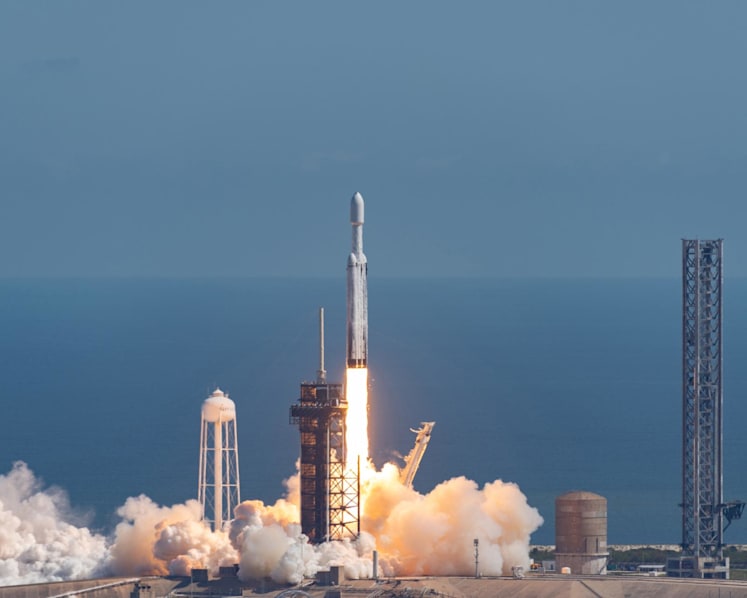
Assistant Professor Victor Cole from the Singapore Institute of Technology said that the growth of commercial space launch facilities in countries such as India over the past decade has also made it significantly more affordable for new entrants to the space industry to "book a ride".
Asst Prof Cole has research interests in space ethics and deep tech communication.
Most famously, the Polar Satellite Launch Vehicle, built by the Indian Space Research Organisation and operational since 1994, together with other rockets LVM3 and SSLV, have launched 393 foreign satellites from 2015 to 2024.
"You don't need sovereign launch capabilities to develop software, specialised sensors or data services," said Professor Andy Koronios, founding chief executive officer and managing director of the Australasian Space Innovation Institute.
"All of these are valuable services that can meet both local needs and contribute to the global market," said Prof Koronios, who is based in Australia.
Dr Iuna Tsyrulneva, research fellow at the Earth Observatory of Singapore at Nanyang Technological University (NTU), added that with commercially available standardised CubeSats, it is now much cheaper for universities, startups and smaller countries to send satellites into orbit, with commercial constellations now accounting for the majority of new launches.
CubeSats are a class of nanosatellites that use a standard size and form factor.

The second reason for the democratisation of space is that advances in data processing mean satellite images can now be turned into ready-made insights, such as flood alerts or crop forecasts, instead of requiring specialist teams to analyse raw data.
Ms Michelle Khoo, who leads the Deloitte Centre for the Edge Southeast Asia, said that with these advances, rather than grappling with vast streams of raw imagery, governments and businesses can now purchase decision-ready intelligence tailored to their needs.
These developments have changed the game so much that these days, meaningful participation in space is not about launching rockets, said Mr Alex Shapilsky, group executive of deep tech and the national space industry hub at Cicada Innovations based in Australia.
"It is about competing in downstream services such as satellite data analytics, AI (artificial intelligence) applications, advanced manufacturing, robotics and ground systems," he said, noting that these capabilities allow countries to use space technology to address real-world challenges on Earth.

MORE THAN JUST PRESTIGE-DRIVEN EXPLORATION
And as a result of the democratisation of space, countries are no longer entering space for prestige alone; they now see it as a strategic investment with real economic, security and resilience benefits.
Experts told CNA TODAY that the economic benefits of space investment are incontrovertible.
"There is strong evidence that space investment delivers long-term economic returns, particularly through downstream productivity gains," said Ms Khoo.
Deloitte's Space to Thrive report estimates that increased adoption of Earth observation technologies alone could add around US$100 billion cumulatively to Southeast Asia's gross domestic product by 2030, with benefits concentrated in agriculture, energy, utilities and government services.
Beyond economic returns, investing in the space sector offers a multitude of benefits, experts said.
"For many smaller and emerging economies, space is no longer symbolic or aspirational; it is strategic infrastructure," said Professor Erick Lansard from the School of Electrical and Electronic Engineering at NTU.
In particular, investment in space is particularly pressing for equatorial and tropical countries.
Prof Lansard said that climate impacts are intensifying in these regions, yet global observational systems have historically been calibrated using data from Europe and North America, not tropical countries.
"Investing in space capability allows these countries to generate data directly relevant to their own vulnerabilities and policy priorities," said Prof Lansard, who is a fellow of the Academy of Air and Space and the International Academy of Astronautics.

While smaller countries may not be able to compete in heavy rockets or deep-space missions, Ms Khoo said they can still build selective upstream capabilities such as small satellite manufacturing, payload design or even launch facilities if geography allows.
"Countries with strong digital infrastructure can also be regional distribution hubs for processed space data," said Dr Tsyrulneva, noting that Singapore’s expanding subsea cable capacity will facilitate the transfer of processed data and insights across the region.
For smaller economies to make their mark in the space domain, Mr John Munro, global head of space, aviation and aerospace at consultancy Marsh Risk, said success hinges on regional collaboration, affordable partnerships and a focus on differentiated capabilities.
As for Singapore, Asst Prof Cole noted that it has "significant capacity" in many relevant areas.
"(Singapore) has well-developed facilities in precision engineering and high-tech manufacturing and possesses strong data processing capacity and logistics infrastructure," he said.
He added that Singapore could also supply a broad range of services from technical to financial, and is well-placed to take a lead in the provision of ethical consulting services for the space economy.
Agreeing, Dr Tsyrulneva said: "Occupying the hardware niches where scale isn’t everything is another approach."
She cited Singapore-based firm Aliena, which builds small propulsion systems for satellites – a niche and highly specialised piece of space technology.
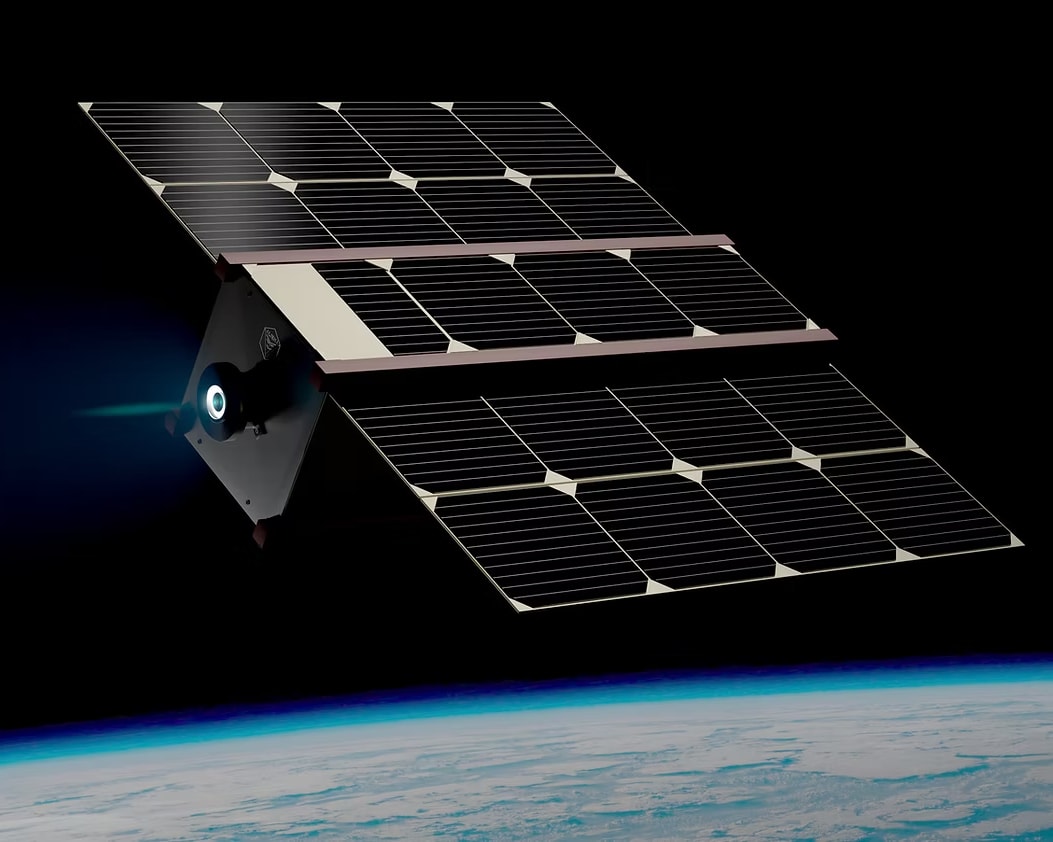
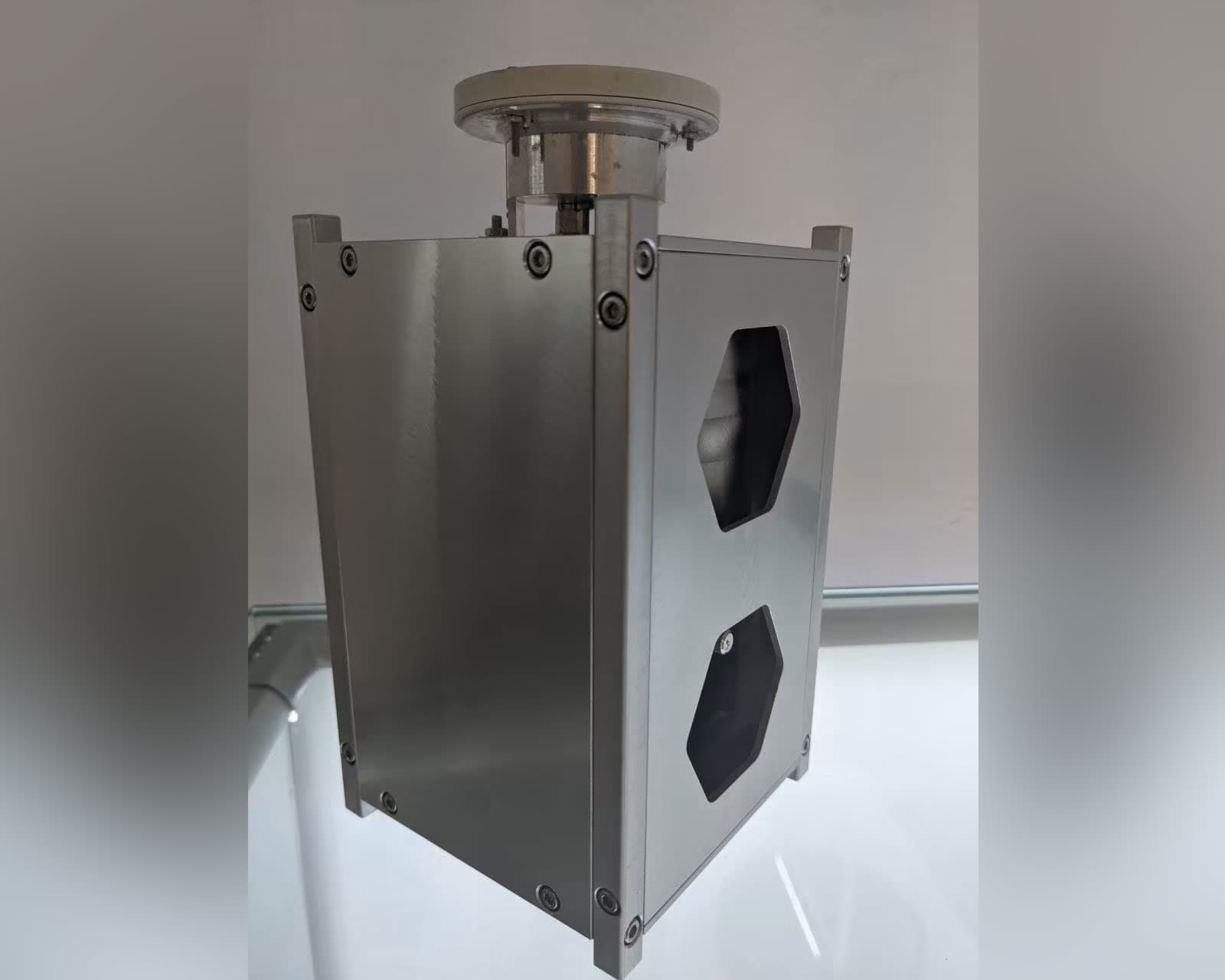
Another Singapore startup, SpeQtral, is working to create a quantum key distribution network, positioning the country as a leader in secure communication.
"The highest returns are achieved when space is treated as an economic infrastructure, integrated into national productivity strategies, rather than as a matter of national prestige," said Prof Koronios.
ASEAN'S SPACE ASPIRATIONS
For most Southeast Asian countries, competing with the established major powers in building rockets or embarking on deep-space missions is far from a priority, experts said.
Instead, emerging economies are focusing on the parts of the space value chain where they can realistically compete: midstream operations and downstream applications.
That means operating satellites, processing and managing data and turning that information into services such as maps, weather forecasts, internet coverage and disaster alerts, rather than trying to launch payloads themselves.
Many countries from the Association of Southeast Asian Nations (ASEAN) focus on Earth observation, ground infrastructure, analytics and capacity building rather than on heavy launch capability, which remains expensive and out of reach for most.
Indonesia, for one, has long been active in space with Earth observation satellites.
For example, its Lapan-TUBSat, a micro-satellite developed with German partners, has been orbiting since 2007 to monitor natural resources and weather over the archipelago.
Indonesia also operates commercial telecommunications satellites, such as Nusantara Lima, which provide broadband services across the country and parts of Southeast Asia.
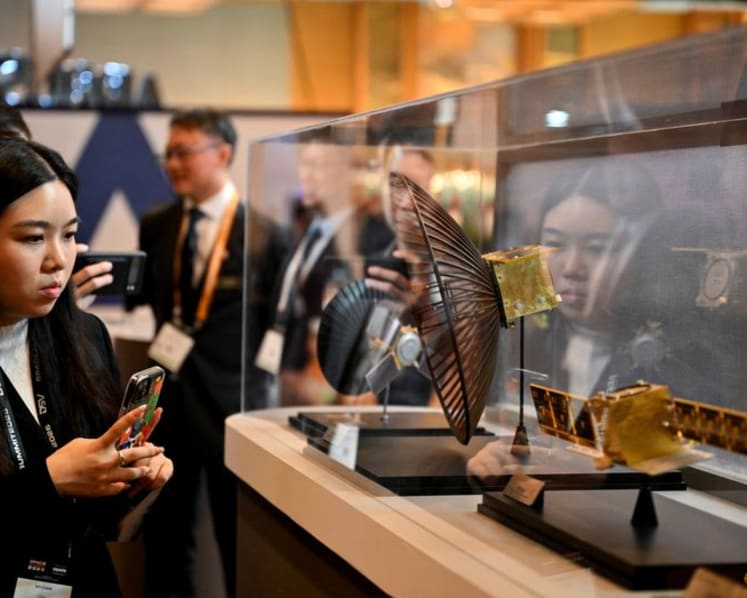
The Philippines, through its Philippine Space Agency (PhilSA), told CNA TODAY that its priorities are anchored in the Philippine Space Act, with an emphasis on expanding upstream space activities and strengthening the domestic space value chain.
The agency said a key near-term milestone for PhilSA is the launch of the Multispectral Unit for Land Assessment (MULA) satellite in 2026.
MULA will strengthen the Philippines' sovereign Earth observation capabilities, delivering high-resolution imagery to support disaster risk reduction, agriculture, environmental monitoring and national planning.
"Ultimately, PhilSA’s milestones go beyond individual missions. They reflect our broader goal of building institutional capacity, expanding technical expertise, and ensuring that space science and technology consistently support national development."
In Thailand, its Geo-Informatics and Space Technology Development Agency (GISTDA) has built a nationally owned Earth observation capability.
In October 2023, Thailand successfully launched THEOS-2, a high-resolution Earth observation satellite developed with leading global aerospace corporation Airbus that captures imagery with up to 50cm resolution to support water management, land use planning, disaster response and environmental monitoring.
The satellite is part of a broader effort to expand geospatial services, and GISTDA is also developing a small companion satellite and training local engineers to grow in-country expertise.
Malaysia's programme under the Malaysia Space Exploration 2030 framework emphasises policy, infrastructure and capacity building over headline missions.
The Malaysia Space Agency supports Earth observation and telecommunications satellites, invests in ground systems such as assembly, integration and testing facilities and builds resilience tools for agriculture, urban planning and environmental management.
Malaysia’s approach is to institutionalise space capability, such as strengthening governance, data services and technical talent, according to their Malaysia Space Exploration 2030 (MSE2030) action plan published by the space agency.
Malaysia also set its sights on building the first rocket launch pad in Southeast Asia by 2029, with three locations shortlisted in Pahang, Sarawak and Sabah. Malaysian reports state both the governments of Pahang and Sabah have submitted their feasibility reports for review by a Multi-Agency Evaluation Committee soon.
As for Singapore, it has launched more than 30 satellites over the past two decades, said Deputy Prime Minister Gan Kim Yong in a written parliamentary reply on Tuesday (Feb 24).
Mr Gan, who is also Trade and Industry Minister, said most of these were launched by academia and the private sector, and are generally used for Earth observation, technology demonstration and communications.
The Singapore government currently co-owns three Earth observation satellites with Singapore-based defence, technology and engineering group ST Engineering to support both government and commercial needs.
"As the space sector grows, we expect a steady pipeline of satellite launches," said Mr Gan.
ST Engineering has announced plans to launch the NeuSAR-2 constellation next year. The NeuSAR-2 constellation will comprise four small Synthetic Aperture Radar (SAR) satellites for commercial use when it is fully operational in 2030.
When functioning in near-equatorial low Earth orbit, the NeuSAR-2 satellites will provide high-revisit, high-resolution radar imaging across the equatorial region, supporting environmental monitoring and disaster response planning.
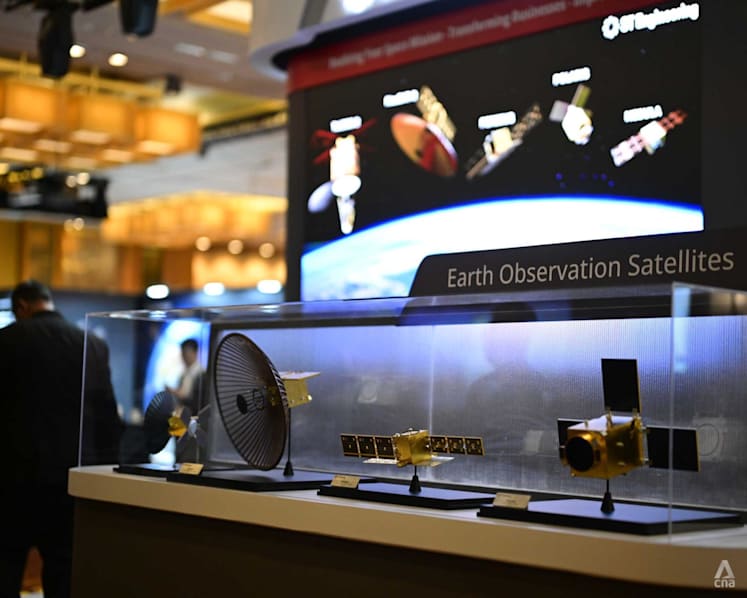
Meanwhile, Singapore has concluded bilateral space agreements with France, India, Luxembourg, Spain, Thailand and the United Arab Emirates to support joint research, policy exchanges and stronger industry ties, particularly in areas such as satellite communications and geospatial analytics.
Singapore also signed the Artemis Accords in March 2022, a set of non-binding international agreements led by the US that outline principles for the peaceful and responsible use of outer space.
WHO WILL WIN THE MODERN SPACE RACE?
Given the massive changes in the industry over the decades, it is clear that the space race today is completely different from the one that defined the 1960s. The US and the Soviet Union vied for symbolic triumphs in space such as moon landings and powerful rockets, with launch ability serving as the key indicator of strength.
Today, traditional powers such as the US, through its space agency NASA and commercial partners like SpaceX and Blue Origin, still lead in spaceflight capabilities, regulatory sophistication, alliances and open-data initiatives.
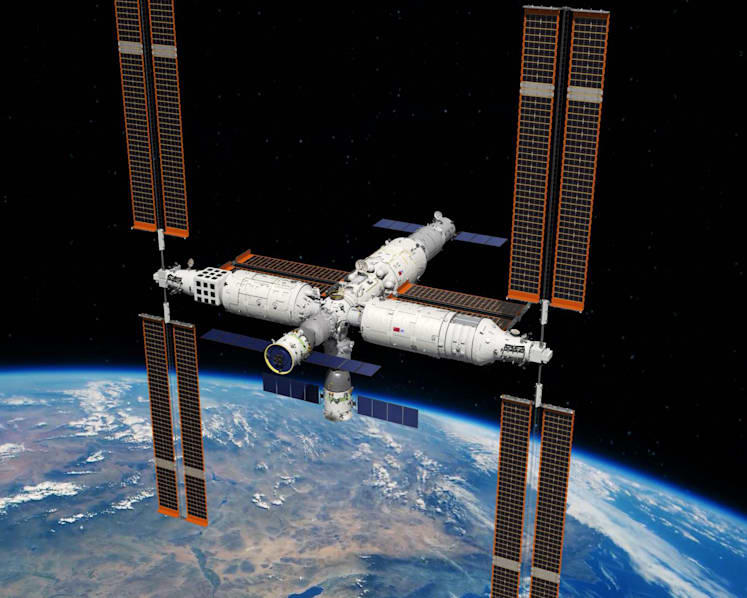
But at the same time, China and India are quickly gaining technical and launch capacity, given that China operates its own space station, the Tiangong.
The bottom line, experts said, is that space leadership is no longer defined solely by who can build the biggest rocket.
The advantage increasingly lies in industrial depth, alliances, regulatory credibility, data control, and the ability to translate space data into economic and strategic value, said Ms Khoo.
Prof Koronios added: "The more important metric now is integration, specifically how nations embed space capabilities into their digital economy, climate strategy and industrial sectors."
Countries like Australia, Singapore and other Asia-Pacific nations have the potential to take a leading role in certain areas, he said.
"For smaller economies, leadership may be defined by regional relevance rather than global scale. Providing critical equatorial climate data, for example, could represent a meaningful and strategic contribution," added Prof Lansard.
Yet the expansion of space activity brings new risks. As more satellites are launched, particularly large commercial constellations, Earth's orbit is becoming increasingly crowded.
The risk of collisions grows with every new deployment. A single accident can generate thousands of pieces of debris travelling at high speeds, threatening other spacecraft in a cascading effect.
The lack of universal agreements on the deployment and decommissioning of space objects such as satellites leaves the space environment open to exploitation and potential degradation, said Asst Prof Cole.
In developing complex national space plans, governments often seek ethical input in "piecemeal fashion", with issues considered in isolation rather than in an integrated way, he added.
Mr Munro cautioned that without inclusive rules and well-designed governance, the space economy could become uneven, with concentration in a few powerful states and major enterprises.
Cybersecurity presents another vulnerability, since satellites and ground stations can be hacked, jammed or disrupted.
For smaller economies, leadership may be defined by regional relevance rather than global scale.
At the same time, global governance frameworks remain fragmented and largely non-binding. There is no single authority overseeing orbital traffic, debris removal or cyber norms.
The United Nations' guidelines of Long-term Sustainability of Outer Space Activities set useful norms but did not mandate them, leading to unregulated conjunction coordination, end-of-life disposal and data sharing, experts noted.
Emerging players must also accept that democratisation does not guarantee equal access, said Mr Shapilsky.
Factors such as capital intensity, spectrum control, export restrictions and advanced deep technical capabilities still pose significant barriers, he added.
"Space capability is a long-term commitment that demands continuous investment, clear regulations and a well-defined strategic purpose," he said. "Without these, programmes risk becoming fragmented or merely symbolic rather than economically valuable."
Prof Koronios said one of the greatest risks facing the industry is that, even as launch costs decline, value capture becomes concentrated in a handful of vertically integrated global players.
Vertically integrated players are companies that control several parts of the space business, from launching rockets to operating satellites and selling the data, which gives them significant power over the market.
Given all these risks and challenges, Asst Prof Cole said the debate about the ethical implications of competition in the space economy must begin now.
"If commitments to respect the resources of space as a global commons can be made early enough by a broad enough range of players, there is hope that a frontier-style ‘gold rush’ dynamic can be averted," he said.
"The successful countries in the space sector will be those that are well-funded and with a reputation for ethics and sustainability."
Dr Tsyrulneva added: "The question shouldn’t be about the inclusivity or concentration of power. Instead, we should advocate for ensuring fair access to critical infrastructure, data and spectrum so everyone can stay in the game."