How Singapore's Budget nearly doubled in a decade – and where the money's going
As Prime Minister Lawrence Wong prepares to unveil Budget 2026 on Feb 12, CNA TODAY took a deep dive into the past decade's worth of Budgets to examine how the Singapore government has balanced spending on short-term needs with investments into long-term competitiveness.

The numbers in the Budgets over the past decade serve as a dynamic archive of Singapore's evolving concerns and priorities. (Illustration: CNA/Nurjannah Suhaimi)

This audio is generated by an AI tool.




Around this time last year, Prime Minister Lawrence Wong announced that every Singaporean citizen aged 21 years old and above would receive up to S$800 (US$628) in the form of SG60 vouchers, on top of another S$800 per household in Community Development Council (CDC) vouchers.
Since then, innumerable QR codes have been scanned up and down the country to claim these vouchers – and next week, when Mr Wong, who is also Finance Minister, delivers Budget 2026, Singaporeans will undoubtedly be watching out for the next tranche of goodies they might receive.
But while these cash payouts, rebates and vouchers tend to grab the most attention each year, the Budget is in fact a much more complex document – one that has evolved over the years to provide for the nation's changing needs.
A look at the past 10 years' worth of Budgets, for example, shows some major shifts in government spending and revenue streams, driven by factors such as Singapore's ageing population and the need to mitigate the impact of climate change.





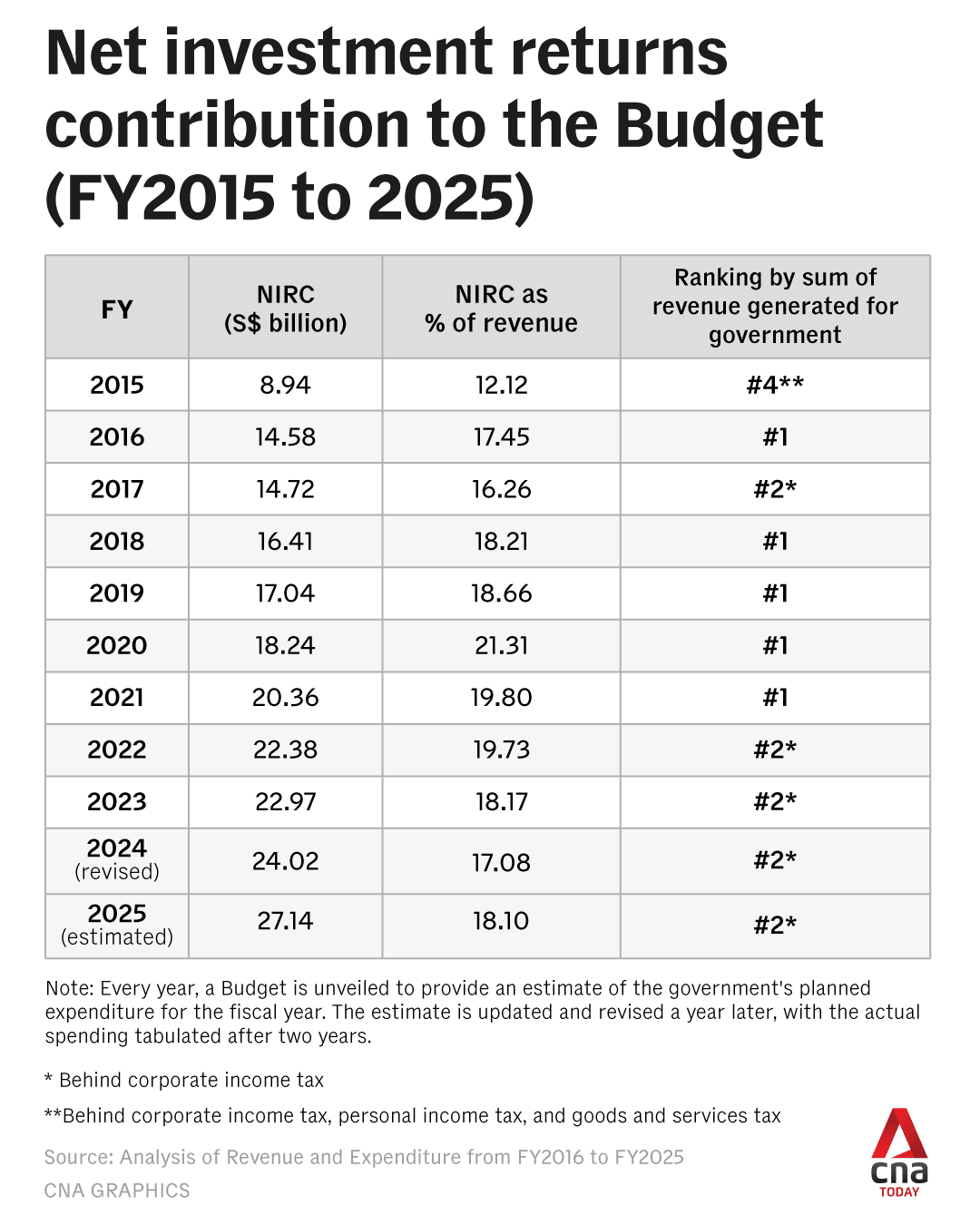
For example, from the financial year of 2016 (FY2016), the government included Temasek Holdings in the Net Investment Returns Contribution (NIRC) framework, which allows the government to spend up to 50 per cent of expected investment returns on the reserves.
In more recent years, it also raised the Goods and Services Tax (GST) from 7 to 9 per cent, while introducing what analysts described as "proxy" wealth taxes.
These moves have helped to significantly raise revenues to fund much-needed infrastructure development and alleviate Singaporeans' cost-of-living pressures.
Over the same period, spending on social development has almost doubled, mainly driven by investments into Singapore's healthcare system.
Significant amounts have also been poured into boosting the productivity of Singapore's enterprises and sharpening the skills of its workforce during this period, continuing and deepening efforts that began as far as back as the 1960s.
All of these developments, among others, have led to a ballooning of the Budget: The estimated total spending of Budget 2025 was S$147.2 billion, almost 90 per cent higher than the S$77.8 billion of actual expenditure recorded in FY2015.
Every year, a Budget is unveiled to provide an estimate of the government's planned expenditure for the fiscal year. The estimate is updated and revised a year later, with the actual spending tabulated after two years.
This means that all figures relating to Budget 2025 are estimates, those relating to Budget 2024 are revised estimates, while numbers from previous years are the actual amounts.
More than simply a reflection of the population's growing needs, the numbers in the Budgets over the past decade serve as a dynamic archive of Singapore's evolving concerns and priorities – and a forecast of the nation that is being shaped by the expenditure and revenue numbers therein.
MORE HANDOUTS IN UNPREDECENTED TIMES
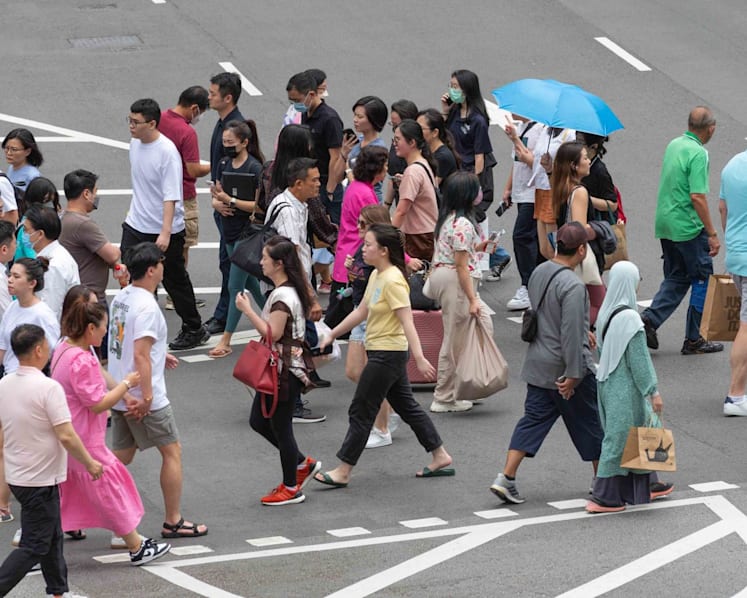
Direct cash handouts to Singaporeans have become a defining feature of the national Budget in recent years, charged by the COVID-19 pandemic and later by the surge in inflation that put more pressure on household incomes.
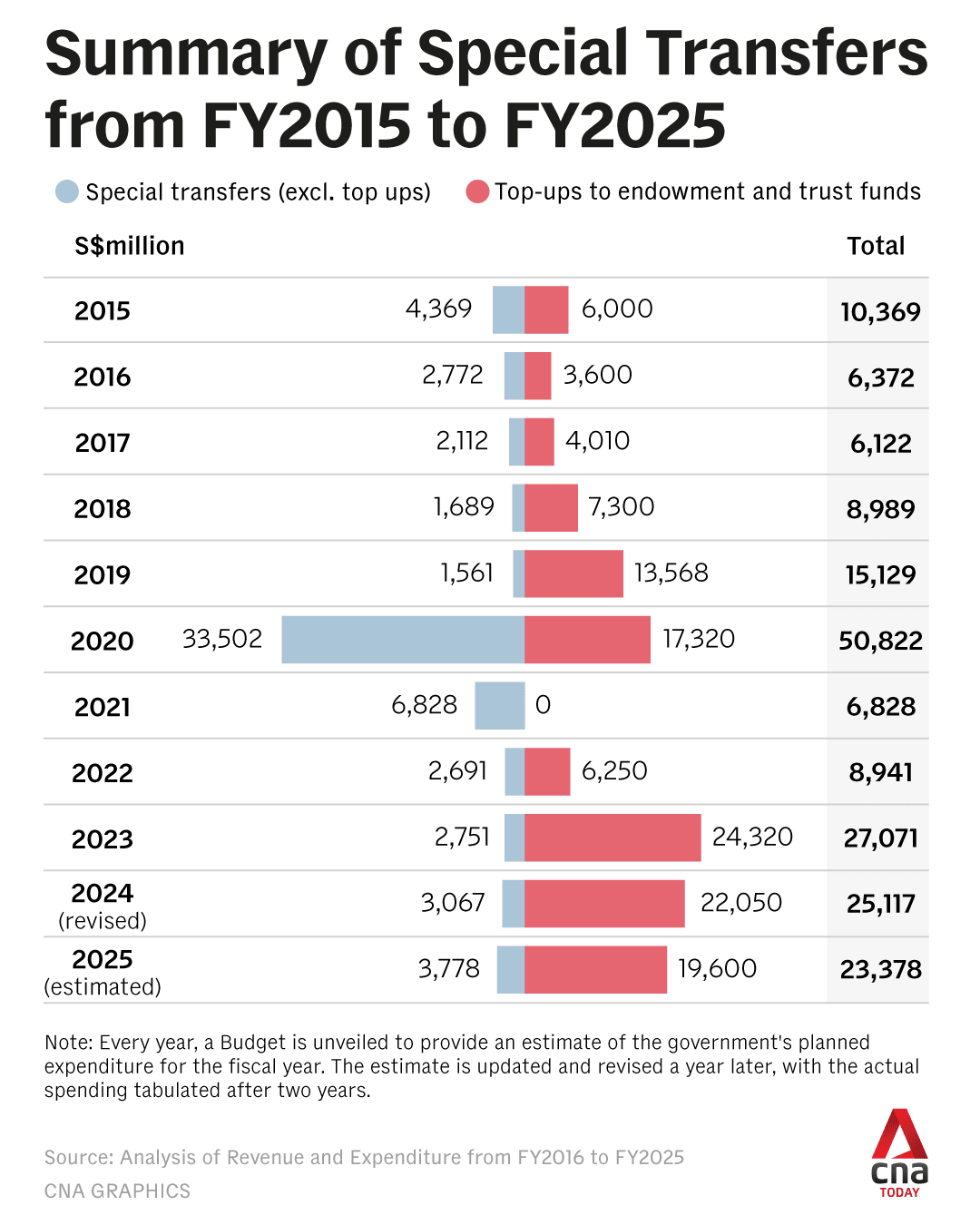
The numbers tell the story: In FY2020 alone, when the pandemic hit, the government spent S$33.5 billion across five separate Budgets on special transfers, excluding top-ups to endowment and trust funds.
These special transfers refer to one-off transfers given by the government to businesses and households, such as cash, vouchers, rebates on utility bills and top-ups to MediSave, Edusave and Post-Secondary Education accounts.
Of this amount, around S$6 billion came in the form of cash payouts to help Singaporean workers weather the financial storm brought on by the pandemic, which shuttered many businesses and roiled the job market.
Even after the pandemic ended, these cash handouts continued to feature in Budgets, though tranches were smaller. In FY2023 and FY2024, for example, special transfers amounted to about S$2.75 billion and S$3.07 billion (revised estimate) respectively.
Last year, as Singapore marked its 60th year and SG60 vouchers were gifted to all adult citizens, special transfers rose to an estimated S$3.78 billion – of which CDC and SG60 vouchers made up S$3.08 billion.
Mr Christopher Gee, the deputy director of research at the Institute of Policy Studies (IPS) at the National University of Singapore (NUS), noted that there has been a steady increase in the amount of transfers given to households over the past two decades, outweighing how much they are taxed.
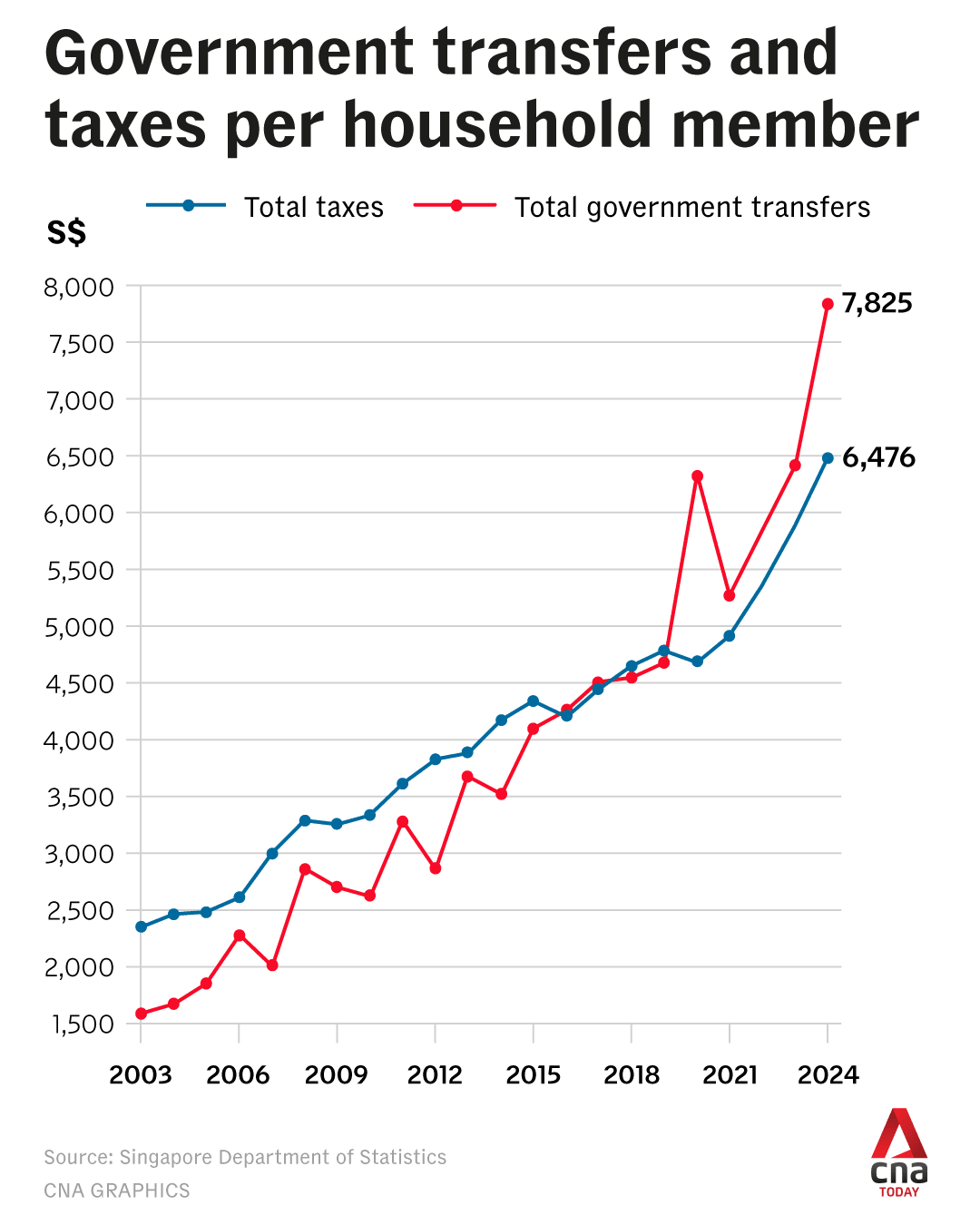
Data from the Department of Statistics shows that each resident household member received an average of S$4,099 in government transfers in 2015. By 2024, that figure had risen to S$7,825.
Apart from helping consumers deal with rising costs, these transfers also help to manage inequality, said Mr Gee.
In 2024, these government transfers narrowed the income gap between richer and poorer households, he said.
A key measure of income inequality – the Gini coefficient – dropped from 0.435 to 0.364 after these transfers were factored in. The lower the number, the more equal incomes are across a society.
RISING HEALTHCARE AND SOCIAL SPENDING
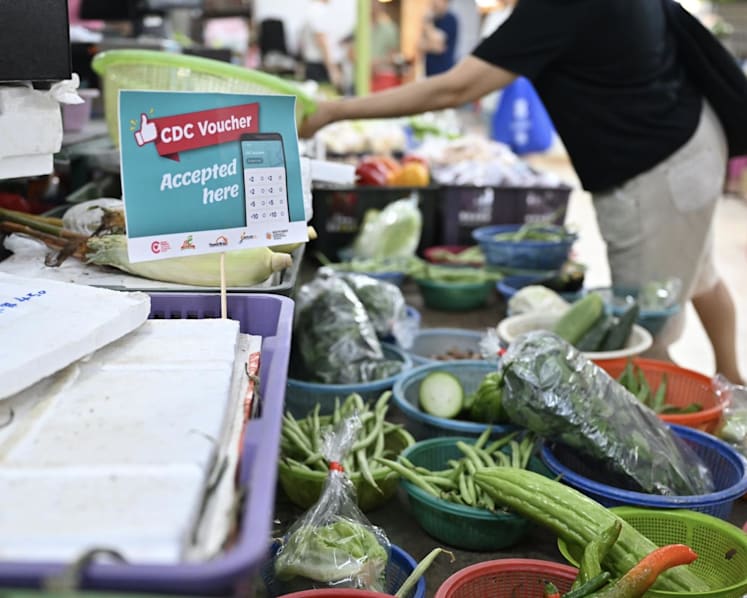
Even more significant than the increase in special transfers over the past decade is the ballooning of spending on what the government calls "social development".
In its annual analysis of revenue and expenditure, the Ministry of Finance (MOF) breaks down total spending into four key sectors – government administration, economic development, security and external relations, and social development.
That last category refers to money spent on the ministries responsible for:
- Health
- Education
- National development
- Social and family development
- Sustainability and the environment
- Culture, community and youth
Some portion of spending from the Ministries of Manpower and Digital Development and Information fall under the category of social development too.
Over the years, social development spending as a portion of the total expenditure has crept up, and in the past three years more than 49 per cent of expenditure has been allocated to this category alone.
In FY2015, spending on social development stood at S$31.3 billion. Ten years on, estimated social spending for FY2025 was almost double that, at S$61.3 billion.
Within this, by far the largest sum of funds is allocated to the Ministry of Health (MOH), which was estimated to spend S$20.9 billion in FY2025 – about one-third of all social spending.
Experts CNA TODAY spoke to agreed that the key driver underlying these numbers is the need to care for Singapore's ageing population.
Come 2030, almost one in four Singaporeans will be aged 65 and above, and the government has started several wide-ranging initiatives in recent years to ensure that social systems and infrastructure are ready for the silver tsunami.
Age Well SG, the national programme to help seniors age well in the community, is a big part of this – Mr Wong announced in Budget 2024 that the government would set aside S$3.5 billion for this effort over the next decade.
This includes the expansion of Active Ageing Centres, community-based hubs for seniors to stay active, social and healthy through activities.
In fact, Minister for Health Ong Ye Kung said in 2025 that he expects healthcare spending to reach over S$30 billion a year by 2030.
But even with rising social spending, Singapore continues to allocate substantial resources to the other sectors, an MOF spokesperson told CNA TODAY.
"Defence investments include advanced capabilities and better equipment. Economic transformation remains a priority through productivity and internationalisation support schemes, and investments in research and innovation."
WIDENING REVENUE STREAMS
Where has the money been coming from to pay for all of these heftier bills? The answer lies in several major shifts in government revenue streams over the past decade.
The hike in the GST from 7 to 9 per cent was first mooted by then-Finance Minister Heng Swee Keat in Budget 2018, and was then progressively implemented in 2023 and 2024.
The impact is clear: GST contributed an estimated S$20.6 billion in government revenue in FY2024, up from S$14.09 billion in FY2022, before the GST hike took effect.
While the decision to raise the GST hogged the headlines and was a hot talking point islandwide, the more critical policy decision for raising revenues actually occurred two years prior, experts said.
Mr Gee of IPS pointed to Budget 2016 as an important milestone in Singapore's fiscal history.
That Budget marked the first year that state investment firm Temasek was formally folded into the NIRC framework, alongside GIC and the Monetary Authority of Singapore, thus allowing the government to tap into its long-term investment returns.
The impact was immediate and substantial.
In FY2015, the NIRC was the fourth largest stream of government revenue. The following year, the NIRC became the single largest stream of government revenue. In several years since, it has retained that position, falling behind corporate income tax in only four of the last 10 years.
But with spending expected to increase in the coming years, driven by the nation's ageing population, the government has also increasingly turned its focus on taxing wealth.
Unlike several other developed countries, Singapore does not have direct wealth taxes such as net wealth or inheritance taxes.
However, Mr Ajay Kumar Sanganeria, partner and head of tax at professional services firm KPMG in Singapore, noted that Budget 2022 featured several "proxy wealth taxes".
For instance, the government introduced a higher property tax rate, with the top rate for non-owner-occupier residential properties rising from 20 to 36 per cent that year.
It also announced higher individual tax rates for top income earners, along with a new Additional Registration Fee (ARF) Tier for luxury cars.
In addition, the 2018 and 2023 Budgets saw a significant increase in stamp duty rates, especially on higher-value residential properties, noted Mr Sanganeria.
Mr Harvey Koenig, partner and co-head of BEPS COE at KPMG Singapore, added that Singapore's rapidly ageing society translates to a shrinking base of working individuals, which means "significant downward pressure" on tax collections.
"As a result, there will be a need for increased reliance on other forms of revenue, including revenue from taxing wealth. These could come in the form of higher property taxes and other asset taxes, which are not dependent on the size of the working population, as well as the NIRC," he added.
"However, measures to tax wealth require careful calibration, to ensure Singapore continues to remain an attractive location for high-net-worth individuals and the asset management industry overall."

SHORT-TERM AGILITY, LONG-TERM FOCUS
Experts noted that the past six years have been nothing short of turbulent, marked by a global pandemic and the ushering in of an unpredictable United States administration that has, among other things, raised trade tariffs and set off global economic uncertainties.
Amid these global shocks, short-term priorities have inevitably had to take up significant portions of Singapore's more recent Budgets, they noted.
This was most clear during the pandemic years in 2020 and 2021, where about S$40.3 billion in special transfers were made in total. These comprised not only cash and vouchers direct to residents, but also subsidies and grants to help businesses stay afloat and avert greater retrenchments.
For instance, in 2020, the Jobs Support Scheme alone amounted to about S$24.7 billion, or about half of the S$50.8 billion of special transfers that year.
Nonetheless, experts say Singapore's Budgets have overall been strategic in balancing the country's short-term needs and long-term competitiveness.
"Budgets have enabled the country to react nimbly to short-term shocks – for example, through targeted assistance to businesses and individuals during economic downturns – while ensuring that its fiscal stance remains sustainable," said Mr Sanganeria of KPMG.
The experts pointed out that while the value of the special transfers during the pandemic years was significant, they were outliers rather than the norm.
Assistant Professor Chua Yeow Hwee, an economist from Nanyang Technological University (NTU), argued that fiscal spending has been more heavily weighted toward long-term initiatives than short-term measures, and that this can be seen by comparing top-ups to endowment and trust funds with special transfers for immediate relief.
Barring 2020 and 2021, throughout the decade, annual top-ups into endowment and trust funds far outweighed the corresponding years' special transfers. And the disparity is growing by the year.
In 2015, top-ups to endowment and trust funds was S$6 billion, or around 37 per cent higher than the S$4.37 billion special transfers that year.
Last year, money set aside for endowment and trust funds was S$19.6 billion, or about five times the S$3.8 billion in special transfers.
Professor of economics Hoon Hian Teck from the Singapore Management University (SMU) noted that even when the government pushes out short-term measures during exceptional circumstances such as the pandemic, each Budget always sets aside financial support to boost the economy's capacity for growth.
"This is so that with the economy growing, the taxable base can expand to generate the fiscal resources needed to meet growing social needs," said Prof Hoon, who was also a Nominated Member of Parliament from 2021 to 2023.
PUSHING FOR PRODUCTIVITY
While a young Singapore fuelled its early economic growth through capital accumulation, such as the building of factories, it later had to move towards productivity-driven growth as its economy matured.
"You can't just (keep building) another factory for Singapore's growth for the next decade, because the returns are so low. So you're going to turn to this thing called productivity growth," said Prof Hoon from SMU.
Productivity growth can come from "new ideas, better ways of doing things, creativity, organising people better or a composite of various things", he said. "But they basically amount to this: same input more output, which is obviously harder."
It thus takes a village to boost productivity, he added, with both enterprises and workers having to pitch in.
Indeed as far back as Budget 2016, then-Finance Minister Heng Swee Keat had noted how Singapore "must keep working on" productivity as it had "remained relatively flat" since 2013.
That year, he launched the Industry Transformation Programme, which he described as a "major effort" in raising productivity.
The Industry Transformation Programme aimed to develop roadmaps designed to drive growth, productivity, and job creation across key industries.
It was also noteworthy that just the year before in 2015, the SkillsFuture programme was launched, and was to become the de facto national programme for lifelong learning and workers' upskilling.
Additionally, since 2016, the government has pumped S$10 billion into the National Productivity Fund, of which S$9 billion was poured in within the last three years. Established in 2010, the fund was primarily used to support productivity enhancement for businesses.
The relentless setting aside of funds into productivity continued even as cost-of-living concerns were top of mind among residents in recent years.
Mr Wong during Budget 2025 stressed how economic growth and increasing productivity are "the best way" to adjust to the impact of rising prices in the long term.
That year, he announced a S$3 billion top-up to the National Productivity Fund, as well as an expansion of its purpose to drive investment in specific sectors in Singapore
Explaining the significance of expanding the fund's scope, Asst Prof Chua said: "Productivity policy has broadened beyond traditional firm-level upgrading and training, to include frontier capabilities such as advanced technology adoption, artificial intelligence and strategic sector development."
Throughout the decade, annual spending from this fund ranged between S$133 million (2023) and S$324 million (2018).
At the same time, the government has also poured money into the Skills Development Fund – one of the sources of funds for government spending on upskilling and reskilling of Singaporeans. As much as S$2 billion was topped up into it in 2020 and another S$500 million in 2024.
The combined annual spending from the Skills Development Fund and the Lifelong Learning Endowment Fund – another fund that supports lifelong learning and upskilling – has gone up steadily: from S$179 million in 2016 to a revised estimate of S$890 million in 2024.
Mr Gee said that this could be likened to investments into physical infrastructure with long-term returns, like rail tracks.
"But in this case, it's intangible, social and human infrastructure," he said.
The increased spending on these two funds also indicates the government's policy direction, said Asst Prof Chua.
"Workforce transformation is delivered through continuous training and reskilling programmes, which naturally require more regular disbursements," said Asst Prof Chua. "This pattern is consistent with a policy emphasis on human capital as a central driver of productivity growth."
Official figures indeed show that, while uneven, there has been some improvement in productivity over the past decade.
Labour productivity change, as measured by real value-added per actual hour worked, was at 2 per cent in 2015, but rose to 3.6 per cent by 2024.
Multifactor productivity growth, which generally measures the impact of changes such as technology in overall output, was recorded at -0.8 per cent in 2015 and jumped to 2.2 per cent in 2024.
Veteran economist Song Seng Wun said that the impact of the productivity growth investments can be seen in the adoption of productivity solutions across various industries, from prefabricated Build-to-Order public flats to the automated payment counters in retail shops.
Still, he added, Singapore's productivity push is still "very much a work in progress".
"We see visible signs of that on the ground, clearly with the big and chain businesses first, but perhaps less so for the smaller and mom-and-pop shops," said Mr Song, who is now an economic advisor at Singapore-based fintech company SDAX.
The reality is that businesses are still grappling with elevated costs that impact their immediate bottomlines, and therefore "may not be willing to invest as much" in costly business reforms or innovative solutions to boost long-term productivity, he added.
BUDGET 2026 AND BEYOND
When Budget 2026 is delivered on Feb 12, experts said they expect to hear largely familiar themes – support for families, funds to boost productivity and upgrade workers' skills and continued plans to build up Singapore's competitiveness as an economic hub.
But they also forecast some shifts, notably with regard to handouts, which they expect will not be as generous in Budget 2026.
After all, Singapore's core inflation averaged at 0.7 per cent last year, down from 2.8 per cent in 2024. In its forecast for 2026, the Monetary Authority of Singapore said it expected core and headline inflation to be between 1 and 2 per cent.
"As inflation pressures ease, policy may shift toward more targeted assistance for households facing greater financial strain, alongside structural measures that support income growth and productivity," said NTU's Asst Prof Chua.
Furthermore, analysts also noted that this is the first Budget of this term of government.
"The government will likely be prudent in the first year of the new electoral term, preserving some dry powder to draw upon," said Maybank economists Chua Hak Bin and Brian Lee in their Budget 2026 preview.
The Budget might also not include handouts as generous as those distributed during milestone years like SG50 and SG60, analysts noted.
That said, Asst Prof Chua said that the voucher-based delivery mechanism itself is likely to remain a feature of Singapore’s fiscal toolkit.
"Households are familiar with it, and it allows support to be deployed quickly with low administrative cost," he said. "The more important adjustment is therefore likely to be in targeting rather than structure."
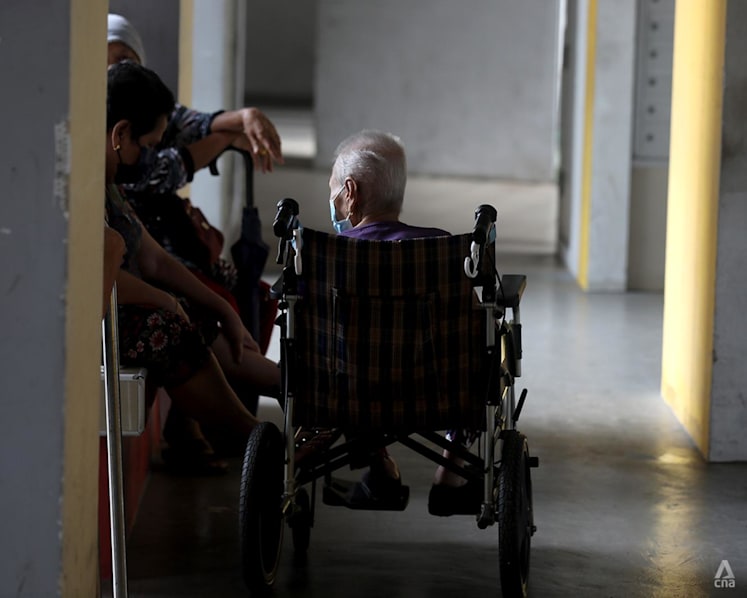
Agreeing, Mr Lennon Lee, tax leader at professional services firm PwC Singapore, said that vouchers have the added benefit of channeling resources to specific national objectives with "the most immediate economic and social impact for Singapore" while helping households.
"For example, schemes like CDC vouchers help sustain footfall for heartland merchants, while also relieving cost-of-living pressures for households," said Mr Lee.
Upon expiry, all unclaimed and undonated vouchers lapse, and the amount is returned to the government for other national schemes.
Mr Gee from IPS also pointed to recent allocations into endowment funds that are "clearly investing into the future".
He cited as an example the S$5 billion top-up last year to the Changi Airport Development Fund, which is meant to help develop Changi Airport's Terminal 5 and ensure Singapore remains a "critical gateway for global travel and trade".
Last year's top-up to the Coastal and Flood Protection Fund – set up in 2020 to protect Singapore against rising sea levels and enhance flood resilience – amounted to S$5 billion as well.
Some recent announcements also provide big hints as to the key economic industries that the government is likely going to focus on this year and in coming years.
Last Friday, the Economic Strategy Review committee led by Deputy Prime Minister Gan Kim Yong recommended that Singapore establish itself as a global artificial intelligence (AI) leader, and push for artificial intelligence adoption across its economy.
And last month, Minister for Digital Development and Information Josephine Teo announced that the government is committing over S$1 billion in its National AI Research and Development Plan to strengthen public artificial intelligence research capabilities over five years from 2025 to 2030.
Mr Desmond Teo, the ASEAN private tax leader at professional services firm EY, said pursuing a broader AI ambition will have to mean going beyond just offering tax incentives.
"(It also requires) substantial investments in both hard infrastructure, in the form of facilities such as data centres, utilities, telecommunication networks and digital infrastructure, as well as soft infrastructure such as talent, cyber security and legal," said Mr Teo, who added that Budget 2026 might include some such efforts to bolster the nation's foundations in AI.
Overall, carefully balancing short-term and long-term needs is a long-held approach when planning the Budget, notes MOF.
While some Budgets receive more attention as they took place in times of crisis, every Budget is important, the ministry's spokesperson noted.
"But every Budget will deal with the issues of the day, while building on the foundations set by previous Budgets, ensuring that we meet current needs while investing for future generations."
As Budget 2026 approaches, Mr Song the economist said that it will be natural for Singaporeans to be most concerned about direct assistance to cope with cost-of-living concerns, despite some easing of inflation rates.
"Your plate of chicken rice or briyani are not getting cheaper – prices are just not rising as quickly as they used to. To the average household, it's these headline prices and coping with immediate bread-and-butter issues that matter," he said.
However, he added, the Budget will also be addressing equally important concerns such as caring for an ageing society, strengthening the economy and protecting workers, which will affect all Singaporeans in the long run.
Agreeing, Mr Patrick Yeo, the markets leader at PwC Singapore added: "The annual Singapore Budget affects every one of us, albeit in different ways. Beyond the headlines, it is important for every Singaporean to have an understanding of our nation's priorities, as these will eventually cascade down to the individual level, affecting how we live, work and plan for the future."