







Singapore's core inflation averaged 0.7% for 2025, falling from 2.8% in 2024
For December 2025, core inflation stood at 1.2 per cent - unchanged from November 2025.
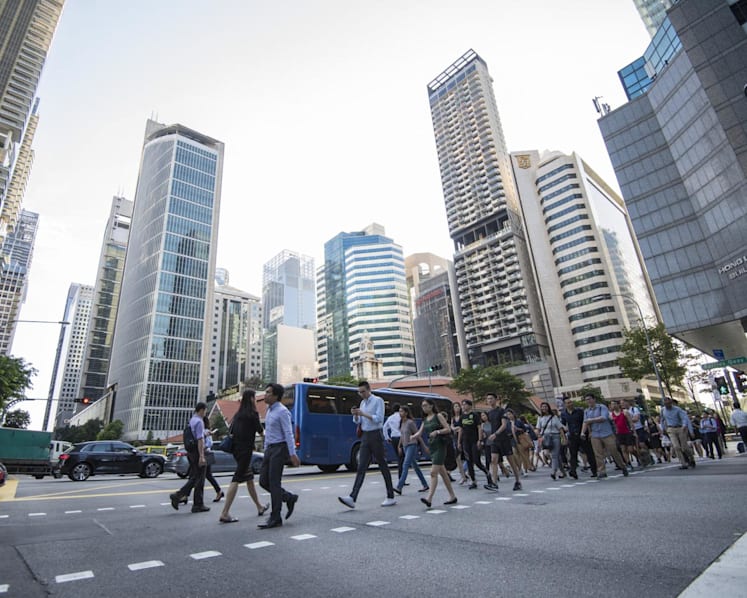
Office workers in the central business district of Singapore. (File photo: iStock)

This audio is generated by an AI tool.


SINGAPORE: Singapore's core inflation averaged 0.7 per cent in 2025, falling from 2.8 per cent in 2024, according to official data released on Friday (Jan 23).
For December, core inflation stood at 1.2 per cent - unchanged from November 2025.
This was largely because food and services inflation remained unchanged, the Monetary Authority of Singapore (MAS) and the Ministry of Trade and Industry (MTI) said in a joint media release.
On a month-on-month basis, core prices rose by 0.4 per cent in December.





Core inflation, which excludes accommodation and private road transport, is seen as a closer gauge of the day-to-day price changes that affect most households.
CPI-All Items, or headline inflation, increased by 1.2 per cent year-on-year in December, also unchanged from November. This was mainly due to stable core and accommodation inflation.
On a month-on-month basis, the figure rose by 0.3 per cent in December.
For 2025 as a whole, headline inflation averaged 0.9 per cent, falling from 2.4 per cent in 2024.
OUTLOOK
Giving their outlook for 2026, authorities said core and headline inflation are projected to rise.
"Singapore’s imported costs should continue to decline, albeit at a slower pace, over the course of this year," said MAS and MTI.
"While global crude oil prices are projected to fall this year, regional inflation should pick up modestly after their weak outturns last year."
On the domestic front, unit labour cost growth is expected to begin to increase as productivity growth normalises. Private consumption demand, meanwhile, is likely to remain steady, said MAS and MTI.
"Reflecting these factors, MAS core inflation and CPI-All Items inflation are projected to rise in 2026 from their low rates last year," said MAS and MTI.
"The inflation outlook remains subject to uncertainties."
SECTORS
Data released on Friday showed that services inflation was unchanged at 1.9 per cent as a smaller fall in airfares was offset by a slower pace of increase in the cost of healthcare services and a fall in holiday expenses.
Food inflation was unchanged, at 1.2 per cent, as the prices of food services increased at a similar pace as in November, said MAS and MTI.
Electricity and gas prices fell at a slightly faster pace due to a larger decline in electricity costs.
Private transport inflation picked up on the back of a smaller decline in petrol prices, increasing from 3.5 per cent to 3.7 per cent.
Accommodation prices rose at a steady pace as housing rents increased at a similar rate in November and December.
The core and headline inflation forecast ranges for 2026 will be released in MAS' upcoming monetary policy statement on Jan 29.




