

The struggles of single parenthood
Support for single parents has improved over the years, but many still fall through policy cracks in a system built to prioritise and encourage marriage. Experts warn that if things stay the same, the children of single-parent households will continue to pay the price in the long term.
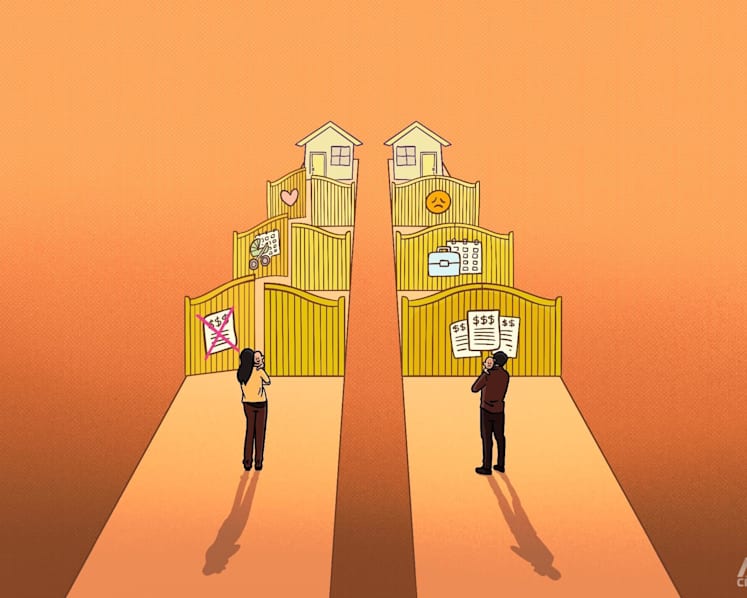
Single parents are being offered more support in recent years but gaps still remain as they are faced with added challenges in raising children compared to families with dual parents. (Illustration: CNA/Nurjannah Suhaimi)

This audio is generated by an AI tool.


When Sarah went through her first divorce in 2014, the challenges of raising two babies on her own and becoming the sole breadwinner hit her hard.
Despite the availability of childcare, she struggled to earn the income her family needed.
"Our work hours are limited by the childcare centre hours," said the 38-year-old mother of two teens, who declined to be identified by her real name as her ex-husband is incarcerated.
"And when your child is sick at childcare, they will call you and you have to drop your work and bring them home. It also impacts our work performance."





She has since resigned from her service sector job to do a home-based food business which, while giving her a less stable income, allows her to spend more time with her children.
On top of the financial load, Sarah has had to shoulder the emotional toll by herself.
"Every day feels like flight or fight for me. Honestly, I can spiral anytime, but I just don't, for the sake of my children," she told CNA TODAY.
Like Sarah, 25-year-old preschool teacher Shanel Lim, too, is a single mum, albeit under different circumstances. She never married, and gave birth to her daughter seven years ago when she was still a polytechnic student.
In addition to facing the emotional challenges common among single parents, it was also immediately apparent to her that she would not get the same level of support that married parents receive from the government.
Unmarried single mothers are not eligible for the Baby Bonus cash gift and do not receive the same tax rebates as their married female counterparts. They also face more hurdles when applying for public housing compared to married or divorced parents, among other challenges.
To support herself and her newborn child, Ms Lim took up part-time retail work a month after giving birth.
"Almost every day I would be working. I worked at least four to five times a week, and took additional shifts when I could," she said, adding that she was grateful that her mother took on the work of caring for her child while she worked, without which she could not have coped.
She also recalled considering buying her own flat at one point as her parents' flat, where her grandmother and a helper were also living, started feeling cramped as her child grew, but was deterred by the need to appeal her case with the authorities.
"The process was less straightforward, and while I wanted to buy a home, it was not the most pressing priority for me at that time," she said.
"At that point of time, I was just very focused on how to survive. I had to pay for milk, to pay for diapers and things like that. It was very chaotic."
She still does not have her own house, but is in a serious relationship now and she and her partner plan to get married and apply for a flat together soon.


Because of such differentiated policies, unwed single mothers are among the most structurally disadvantaged in society, especially if they are also from low-income groups, according to family and social policy experts.
Strides have been made to better support solo parents, but interviews with seven of them reflect the many challenges that remain.
An average of about 745 children annually were born to unwed Singaporean mothers between 2020 and 2024, revealed Minister for Social and Family Development Masagos Zulkifli in a written parliamentary reply last month.
This already small figure – comparable to less than 3 per cent of resident live births last year – reflects a declining trend in roughly the past two decades. The average number of children born out of wedlock was 830 per year between 2016 and 2020, a dip from more than 1,000 annually from 2006 to 2012.
The overall number of lone parent resident households – which includes divorced or widowed parents – declined in terms of proportion of total number of resident households, from about 6.84 per cent in 2005 to 5.06 per cent last year.
Relatively small though the population of single parents may be, there has been some progress over time in extending support to this group, observed single parents and experts alike.
As a baseline, benefits such as subsidies for education, healthcare, childcare and infant care as well as the migrant domestic helper levy concession, are extended to parents regardless of their marital status.
More recent moves to support solo parents include the removal of a wait-out period to buy a house after a divorce, extending maternal leave as well as a savings scheme with government co-matching funding to children born to unwed mothers.
Nonetheless, the experts and parents whom CNA TODAY spoke to pointed to persistent gaps in the system. These disparities exist partly because many family-related policies are differentiated to align with the longstanding official position of promoting parenthood specifically in marriages.
“Many public supports, particularly in housing and family schemes, were designed with traditional family nuclei in mind," said Ms Kaylee Kua, executive director of Daughters of Tomorrow.
"This means that unwed single parents or those who’ve recently separated can find themselves navigating eligibility gaps that affect housing, childcare and income stability."
If left unaddressed, such gaps may have repercussions for the well-being of the single parents and result in long-term effects on their children, the experts noted.
Children are born innocent and are unable to choose the circumstances in which they were born – including whether or not their parents are single or otherwise – and thus should not be disadvantaged based on their parents' marital status, added sociologist Tan Ern Ser.
"There is thereby a responsibility on the part of parents, community and the state to ensure that every child, regardless of background, has access to a decent quality of life, be given opportunities to achieve their potential, and be adequately prepared for their adult roles," said Dr Tan, an adjunct principal research fellow at Social Lab, at the Institute of Policy Studies.
THE GREAT SYSTEMIC GAP
Over the years, several changes have been made to level the playing field for children of unwed parents, experts noted.
For instance in 2016, Child Development Account (CDA) benefits – which comprise government grants and dollar-for-dollar matching top-up for the amount that parents save for their child – were extended to children of single unwed parents. The following year, unwed mothers were also eligible for the full maternity leave entitlement of 16 weeks that married mothers receive.
Ms Lim, the preschool teacher, said the CDA grant has been helpful to a certain degree, but noted its limitations. For example, starting from next year, the money cannot be used at optical shops and retail pharmacies, businesses that parents often have to frequent for their kids.
This will prevent parents like her from using the grant "to its fullest potential" and add to her financial strain, she said.
Yet, there remain differentiated policies and gaps, meant to reflect prevailing social norms of the family as the building block of society and to promote parenthood within marriage.
For example, unwed fathers do not automatically qualify for paternity leave, though appeals are considered on a case-by-case basis.
Unwed mothers in the meantime do not qualify for Baby Bonus cash gift nor the same tax relief as married mothers.
The cash gift comprises S$11,000 (US$8,540) each for the first and second-born child of wedded parents, and S$13,000 for the third and subsequent children.
"These tax reliefs are considerable in value, and would be deeply useful to unwed single mothers facing financial precarity," said Ms Bharathi Manogaran, deputy executive director of the Association of Women for Action and Research (AWARE).
The women's rights and gender equality advocacy group said that in 2023, for instance, the median monthly income of single unwed mothers under the age of 35 was S$1,000, compared to the national median of S$5,197 then.
"This is an issue of equity. Single parents often have one rather than two incomes to support their children. This means that they likely need more, not less financial support," said Dr Chin Hui Wen, a lecturer at the Singapore University of Social Sciences’ early childhood education programme.
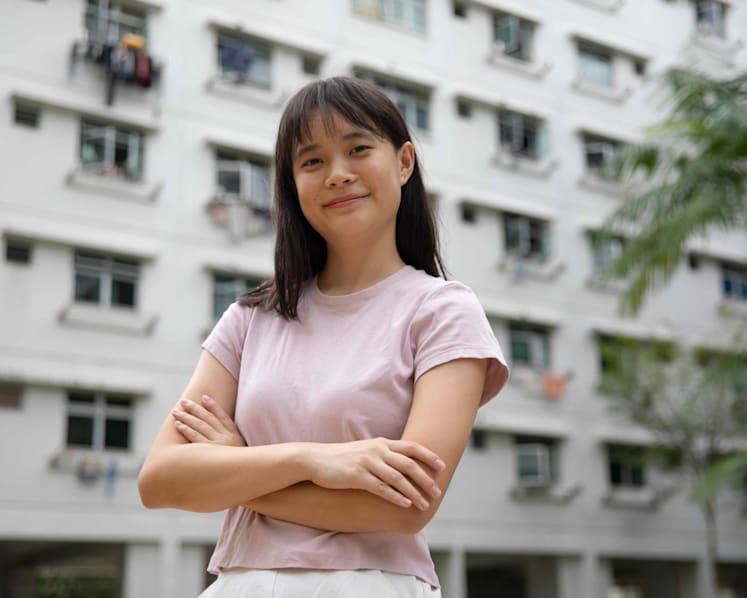
Ms Lim, the preschool teacher, said: "Missing out on the Baby Bonus (cash gift) is something that, to this day, I'm still salty about."
She said that she was fortunate that her parents had footed her maternity hospital bills with their savings, and that the scholarship she was on while studying for her diploma provided her with an allowance that helped offset some of her expenses.
"I would consider my family to be in the average income bracket, so I can't really speak for lower-income single mothers. But I'm already struggling, can you imagine how they feel?"
Unwed parents and their children are not explicitly recognised as a family nucleus, which means that they are also disadvantaged when seeking public housing.
They are required to write to the Housing and Development Board (HDB) to have their request to buy a public flat evaluated on a case-by-case basis. If they qualify, they are only eligible for lower subsidies akin to singles rather than married families.
And unwed parents cannot access the Parenthood Provisional Housing Scheme, which provides interim housing for married, divorced or widowed parents.
AWARE noted that HDB approved fewer than half the rental requests made by single unwed parents in 2022 and 2023, citing a parliamentary reply last year
The unsuccessful requests include applicants who did not follow through with their applications, had the means to purchase a flat, or had family members who could house them, according to the Ministry of National Development then.
"Housing is the foundation for a child’s sense of security. Without it, everything else becomes harder,” said Ms Jeanne Lin from HCSA Community Services.
Apart from the structural challenges, single parents, especially unwed ones, also continue to face some level of stigma from society, noted Ms Lin, who heads the HCSA’s SPIN programme to empower single parents.
"Children of unwed mothers or fathers face the greatest systemic gaps. Social stigma is more pronounced, compounding emotional stress for both parent and child," she added.
WOES OF "SINGLE-AGAIN" PARENTS
While single parents who were previously married may have better policy support than unwed ones, they continue to face other challenges.
These include legal disputes, emotional trauma and the financial strain of running a single-income household.
Ms Sophia Evangel Cheah can attest to that, with the 45-year-old still dealing with fallout from her acrimonious divorce back in 2020.
Due to the long drawn-out process of the divorce, she said her four children were put into the foster system for a period of time, impacting their development during their crucial years.
Her eldest son, now 18, was homeschooled by her and had entered a prestigious all-boys secondary school while his parents were still married. His grades have since dropped drastically and he is now studying at the Institute of Technical Education.
"Do I feel guilty? Of course I feel guilty. It's just one of the many, many emotional and mental burdens I have to deal with as a single parent," said Ms Cheah.
She also had to grapple initially with the challenges of suddenly returning to the workforce after over a decade of being a full-time housewife and homeschooling her children.
She not only had to look for a job and adjust to working life, but had to balance this with multiple court hearings related to the divorce, among other errands.
"I had to call my friends and ask, 'Can you look after my kids for a few hours, while I go for this interview?' I had to proactively make that effort, but I could, because I'm shameless," she said.
"Can you imagine if you're a freshly divorced mum, concerned about the stigma, and yet having to constantly find people for such help?"
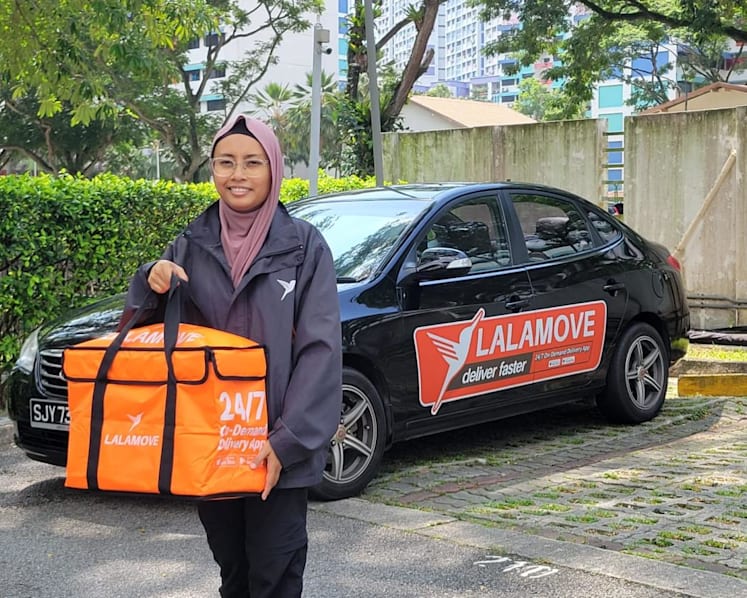
Single dad Wilson Yu, meanwhile, had his world turned upside down when his wife left home earlier this year, leaving him to care for their seven-year-old son who has autism.
To be able to afford his child's special needs education and a helper to care for the boy, the private hire driver, 38, drives about 12 hours almost every day.
"It's always a dilemma – earn more for family and spend less time bonding with him, or spend more time with him growing up but earn less," Mr Yu said.
His son is non-verbal and low-functioning and any time not spent on the road is taken up by caring for him, Mr Yu added.
Beyond the physical and mental toll he bears from not getting enough rest, Mr Yu is also concerned about the status of his matrimonial home, which his wife had asked him to sell so they could split the proceeds.
He said that he has made appeals thrice to the relevant agencies to be allowed to sell the five-room flat a year earlier than its minimum occupancy period due to his impending divorce case, but none of the appeals has been approved.
"If you ask me how I cope, I can only say it's fatherly love that keeps me going. And I have no other way to deal with it but suck it up," said Mr Yu.
But he wishes he could be given more support, specifically in the form of a more empathetic system that would consider his situation and help him sort out his financial and housing situation, without having to go through rounds of appeals, which has taken up precious time and energy, and is only adding to his stress.
"Nobody takes divorce lightly. If they (authorities) make it smoother for divorced couples to sell their homes and find alternative housing arrangements so they and their children don't have to deal with uncertainty, do you think people will suddenly be incentivised to get divorced?" he said.
Dr G Kaveri, a senior lecturer at SUSS' early childhood education programme, noted how couples in dual-parent families can lean on each other to share both the practical and emotional aspects of parenting.
"However, in single-parent households, every crisis, decision, and milestone must often be managed alone, especially when support from extended family or social networks is limited," she said.
"Over time, this emotional strain can lead to exhaustion, which may affect the quality of parent–child interactions and, consequently, the overall well-being and childhood experience of the child."
In recent years there have been moves to ease housing restrictions for divorced couples. In 2018 the government removed a three-year wait out period for divorced couples to apply for public housing.
"This was a critical barrier to single parents seeking stable housing after divorce that we advocated against in our #asinglelove campaign, and we’re glad to see this resolved," said Ms Bharathi of AWARE.
Experts and support organisations also highlighted the growing number of initiatives to aid single-parent families in general.
For instance, Daughters of Tomorrow piloted a home-based child-minding programme in 2022 and expanded it islandwide in 2023 to provide affordable childcare outside of institutionalised hours.
"The programme has benefitted 63 families with more than 2,800 hours of child-minding provided by community child minders. The long-term outcomes of this programme is evident in the ability of the families to sustain employment and improvements in the children’s well-being, with the creation of fictive kinship between the child minders and users," said Ms Kua, its executive director.
Non-profit organisation NeuGen, which works closely with families of incarcerated persons and ex-offenders, has also expanded its services, which include providing after-school activities since 2018 for children from such families.
Such activities go a long way for single mums like Sarah, the single mother whose ex-husband is incarcerated. Being a NeuGen beneficiary gives her peace of mind when it comes to her children's whereabouts when she has to work.
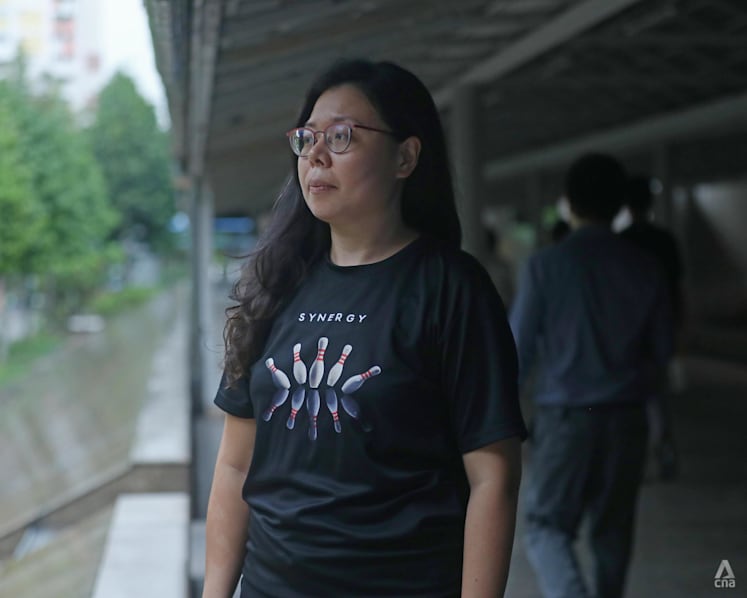
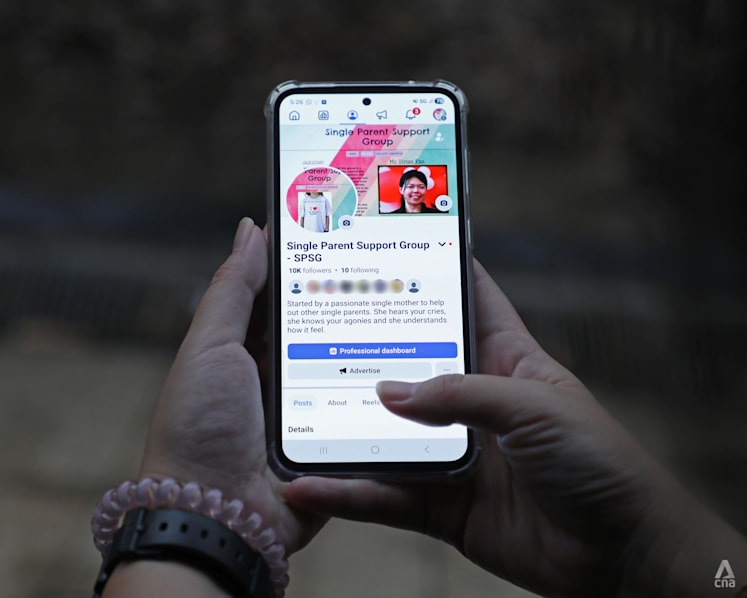
Ms Vivian Pan, a single mother of a 20-year-old son, who runs an informal support group for single parents, feels that society in general has also become more empathetic towards single parents.
She recalled how in 2013, when news broke about a single mother with a mental illness who had fatally pushed her child out of her window, it was met with intense public criticism and contempt, with some accusing single parents in general of being irresponsible and bad parents.
The tragedy prompted Ms Pan to create a support group, which in its early years organised events to encourage single parent families to socialise and find support in one another. Ms Pan now focuses on providing advice and emotional support to parents who approach her.
"Today, I think the stigma is a lot less. More people are willing to talk about their situation as single parents and about divorce, and so are more willing to reach out for help," said Ms Pan, 45.
THE CASE FOR SUPPORTING SINGLE PARENTS
If policies towards single parents are indeed partly shaped by prevailing societal views, it is noteworthy that attitudes, specifically towards having children out of wedlock, are liberalising, according to some research.
A 2024 survey conducted by IPS found 58 per cent of respondents disapproved of pregnancy outside of marriage, down from 64.9 per cent in 2019 and 73.5 per cent in 2013.
A separate, one-off survey that same year by non-profit group Cultivate also found 83 per cent polled believed that single parents should receive more support.
More importantly, experts said, providing equal support to such families and their children means ensuring that they are not unnecessarily placed at a disadvantage that could affect the course of their lives in the long term.
Assistant Professor Yong Ming Lee from the National Institute of Education said that circumstances in a single-parent household, if left unchecked, could impact the children’s long-term development.
For starters, due to the likelihood of the household having a lower income with just one parent working, it might limit the children’s access to quality childcare and educational support.
"Young children need to experience a positive attachment relationship with a consistent and caring adult, and this is critical and essential for long-term healthy socio-emotional development," she said, adding that such opportunities may be limited with only one parent around.
And due to the long-term implications of potentially negative child development outcomes, it is important to proactively provide preventative social services for single-parent households, she added.
Dr Mathew Mathews from IPS said that improving support for single parents here "is really necessary, especially given our desire to remove as many disadvantages as possible for children".
"Given that our total fertility rate in Singapore is dismally low, and many couples who could have children find it hard to and so choose not to, it is hard to imagine how ensuring better support for single parent families will incentivise them to have more children, or for singles to try parenthood outside marriage," he said.
Agreeing, Ms Lin of HCSA SPIN said that global studies have shown that marriage and childbirth are deeply personal choices and are usually not driven by social assistance.
And while prioritisation of resources may be necessary in terms of policy, it should not lead to the exclusion of single-parent families who often represent some of the most vulnerable households, she added.
"The intent of support is not to encourage single parenthood but to mitigate hardship for children who are already here. This balanced approach strengthens social cohesion and reflects our shared responsibility to ensure that no child is left behind,” Ms Lin said.
Ms Pan, the single mother of one who runs an informal support group for single parents, still vividly recalls the challenges she had to go through after her divorce 17 years ago.
She stressed throughout her chat with CNA TODAY that she considers herself one of the relatively fortunate single parent cases, as her divorce was handled amicably and she had parents to rely on for emotional and some financial support.
Yet, Ms Pan said, she still went through bouts of depression over the years due to the immense stress that she had to face alone.
Out of her own desire to be self-sufficient, she did not seek external support, choosing instead to count pennies, eat frugally and forgo any overseas holidays until two years ago.
While she believes society can do more to support single parents, Ms Pan said single parents, too, should not hesitate to seek help and care for their own needs better than she herself did.
"Go to your Meet-the-People sessions and they will help you find the right agencies if you're unsure, go for short holidays for your mental health, because it's important so you can take care of yourself and your child," she said.
And now is as good a time as ever for such parents to seek help, as society has become more inclusive and supportive of single parents, she added.
"Now when you say you're a single parent, I think not many will look down. In fact, I have heard people say, 'single parents are so brave, taking on two roles'," she said.
"The voices on the ground have actually grown kinder."




