Move over, golf. Padel is fast becoming the new networking playground for PMETs
Padel players say that not only is the sport social by design, but the post-game mingling has become as important as the workout itself.
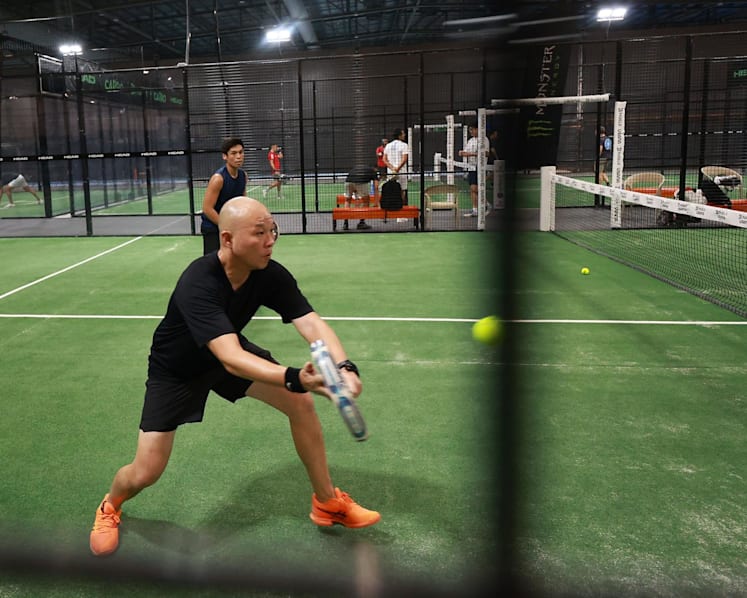
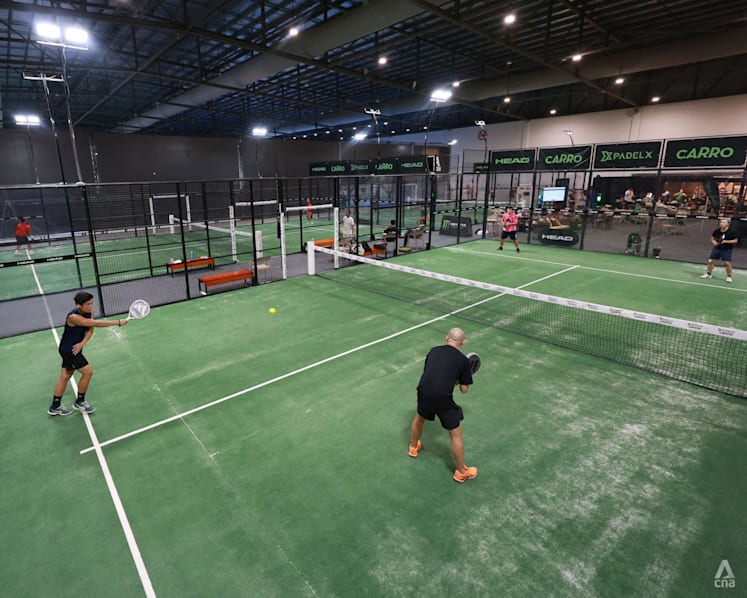
Padel players at Padel X club, located at the Singapore Expo. (Photo: CNA/Raj Nadarajan)

This audio is generated by an AI tool.


When some of Mr Dylan Ong's business associates invited him to a game of padel in September last year, he assumed it would simply be an hour of working up a sweat and getting a decent workout.
What he did not expect was that the racquet sport would become an unexpectedly fertile ground for networking and new clients.
The 31-year-old property developer, whose company helms mixed-use projects in both Cambodia and Singapore, said he has since closed deals with several players he met on the court.
What began as casual post-work form of exercise quickly evolved into conversations about investment, site visits and, ultimately, sales.





“I really didn't expect this, because it was through the padel courts,” said Mr Ong.
After one game, he added, he invited a few players to view his projects.
“They loved them so much that they purchased a unit immediately," he said.
Padel is frequently described as the world's fastest-growing sport, and the numbers back it up with the International Padel Federation's World Padel Report for 2025 reporting more than 35 million amateur players now take to the courts at least once a week globally. This is up from the nearly 30 million recorded in last year's report.
The sport is something of a cross between tennis and squash.
One similarity with squash is that players are allowed to hit the ball after it has rebounded off one of the glass walls that enclose the court, and after one bounce.
This makes for longer and faster rallies.
Padel is usually played in teams of two, known as doubles, and uses the same scoring system as tennis, though the equipment is different, such as using stringless, solid racquets.
Players said that the sport's low barrier to entry also makes it appealing, unlike tennis, which can take months of lessons before one can play somewhat decently, much less competitively. In padel, after about three lessons with a coach, most beginners can play socially and join group sessions.
In the last two years, Singapore has seen a similar explosion of interest in the sport as many other parts of the world. There are currently 16 padel operators, up from a single operator who started in 2021 at Marina Square's rooftop, with more venues slated to open in the coming year.
With the cost of renting a court falling between S$80 (US$62) and S$100 an hour, the sport is drawing mainly professionals, managers, executives and technicans (PMETs) who find padel courts a modern, more energetic alternative to the traditional golf fairways for networking.
Players who spoke to CNA TODAY said the sport's built-in sociability, from quick rallies and frequent partner rotations to unhurried post-match conversations, makes it a surprisingly effective way to forge new connections.
A GAME THAT'S SOCIAL BY DESIGN
Padel is unusual among racquet sports in that it requires four players, unlike tennis or badminton, which can be played in singles, even though those sports can also be played as doubles.
The compact court places players in close proximity, making communication essential – from calling switches to deciding who takes the ball off the glass.
Several players told CNA TODAY that they had built wider social circles within weeks of playing, meeting people they would never normally cross paths with.
“It's social by design,” said Mr Colin Cheong, a marketing and customer experience consultant who picked up the sport in 2022 and now plays at least once a week.
The 37-year-old, who also plays tennis, said that camaraderie forms quickly when every point relies on a partnership.
Another key factor in forcing social interactions is the Americano format, which typically lasts 90 minutes a session.
In this format, players vie for individual points. Each match is played to a set number of points, and everyone rotates partners and opponents at the end of every round.
This results in each player paired and pitted against a dozen others within one session.
Mr Ong, the property developer, said padel has certainly expanded his network rapidly. His Saturday morning games alone have introduced him to professionals working in banks, law firms, financial institutions and hedge funds.
"Every game, you can gain three friends," he said. "I'm still meeting new players even after a year. My social circle has exploded because of padel."
Chief marketing officer at online car marketplace Carro, Ms Katherine Teo, 37, was similarly surprised at how padel has helped her quickly expand her social and professional network.
Ms Teo started playing padel after a friend introduced her to the sport in August last year. She plays almost every Saturday, attends two to three group training sessions a week and has one private coaching session weekly.
As a keen padel player, the friendships she's forged on court have also spilt over into potlucks, birthday parties and even overseas padel trips.
"By this age, your social circle is usually fixed. You don't expect to meet many new people. So to build so many friendships through padel was a real surprise."
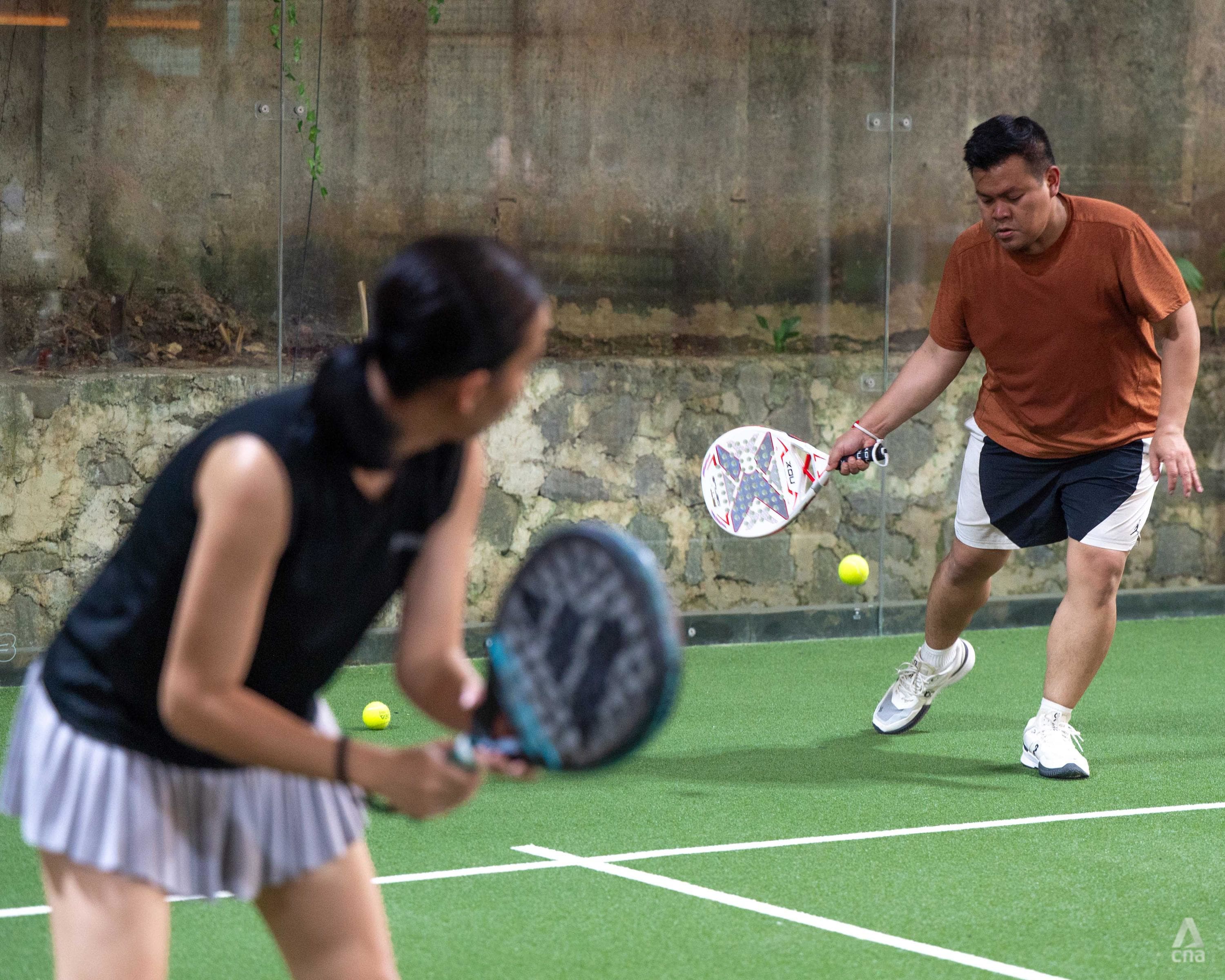

Along with new friendships, Ms Teo said padel fosters a relaxed environment where connections form naturally.
"People from different industries end up playing together, and conversations sometimes move from the court to business ideas, collaborations or partnerships," said Ms Teo.
More than the gameplay, Mr Cheong said the sport has helped him meet Singaporeans and expatriates from all walks of life.
"I can't imagine any other place where I'd be able to meet people and everyone bonds over their passion for padel."
THE NEW LINKEDIN
As addictive as the gameplay is, the post-match session where players gather for drinks and do some post-game analysis has become as integral to padel culture as the game itself.
A session may last 90 minutes, but the conversations that follow often run just as long, if not longer.
Ms Shyanne Browning, who works in the tech industry as a program manager, said she has met "almost everybody who does everything through padel" from restaurateurs to finance professionals.
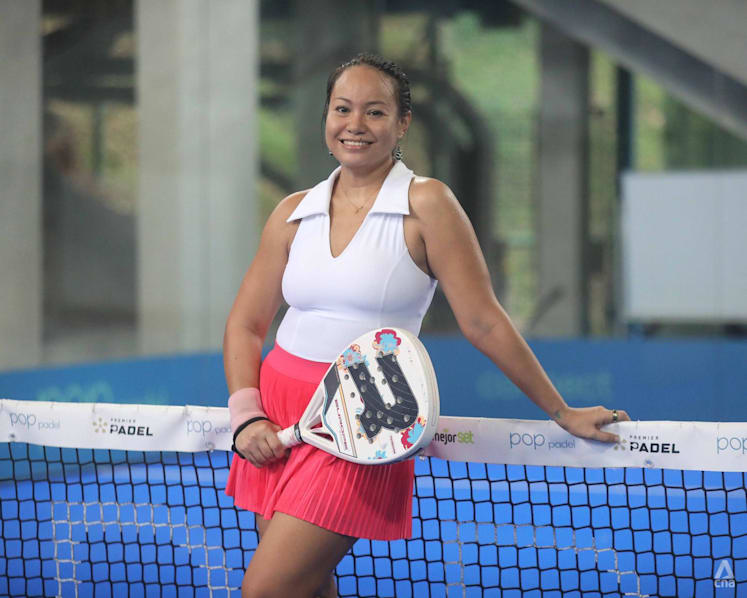
The 39-year-old added that in the space of a year, she met 60 to 70 new people through padel, ranging from Singaporeans as well as expats from Zanzibar, Thailand, Argentina, Germany and France – individuals she believes she would not have encountered otherwise.
"It is very organic even though it was networking in a way, but it's not like when you're going for a networking event where it can be kind of forced," said Ms Browning.
Agreeing, Ms Erica Loh, 33, said that because the environment padel creates is "casual and lighthearted", conversations flow more naturally than at a formal networking event.
"Padel has expanded my network in a very organic, genuine way, without feeling like networking at all," said Ms Loh, who is the regional head of marketing in the automotive technology industry.
Ms Loh, who plays two to three times a week, said the sport creates moments of teamwork and friendly competition that instantly break the ice, which is a much more authentic way to get to know someone.
"Padel removes the awkwardness. No name cards, no forced small talk, just people bonding through a shared activity," she added.
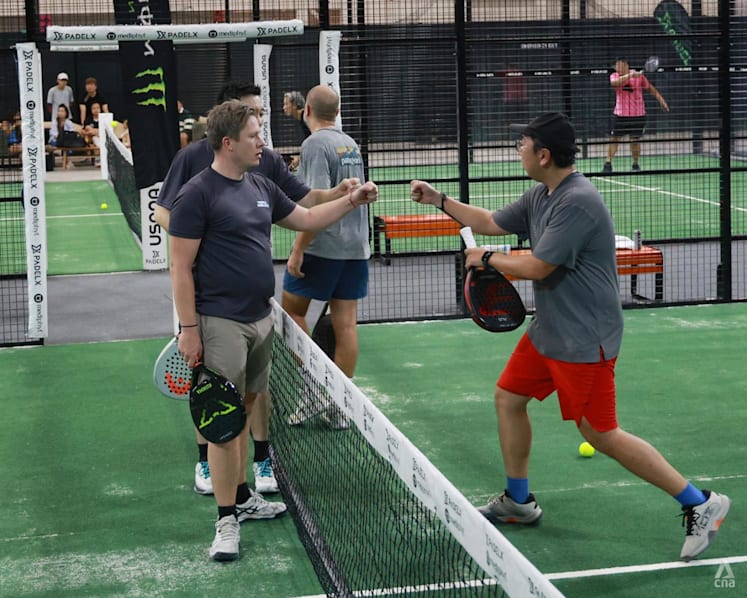
Similarly, Mr Gianni Phan, who works in business development in the perfume industry, said he actively uses padel to expand his professional network.
The 43-year-old said that when a name in one of the padel WhatsApp groups piques his professional curiosity, he glances at their LinkedIn profile before signing up for a match.
Like many padel players, Mr Phan belongs to multiple WhatsApp groups that make it easy to find partners and fill games quickly.
Mr Phan added that after playing in some social padel sessions, he exchanged numbers with other players and later met them to explore potential business collaborations.
These conversations have led to "some deals", he said, declining to give more specifics.
Connecting during a game felt easier, he added, because "you're sweating, you're exercising, you're not in formal attire" and the casual environment takes the pressure off such discussions, making them less awkward.
"It's definitely easier at padel, because if you try to contact this person on LinkedIn, you have a high chance that they will never answer," he said.
He contrasted this with traditional networking events, where "you are judged by your attire" and conversations can feel forced unless you're introduced by someone else.
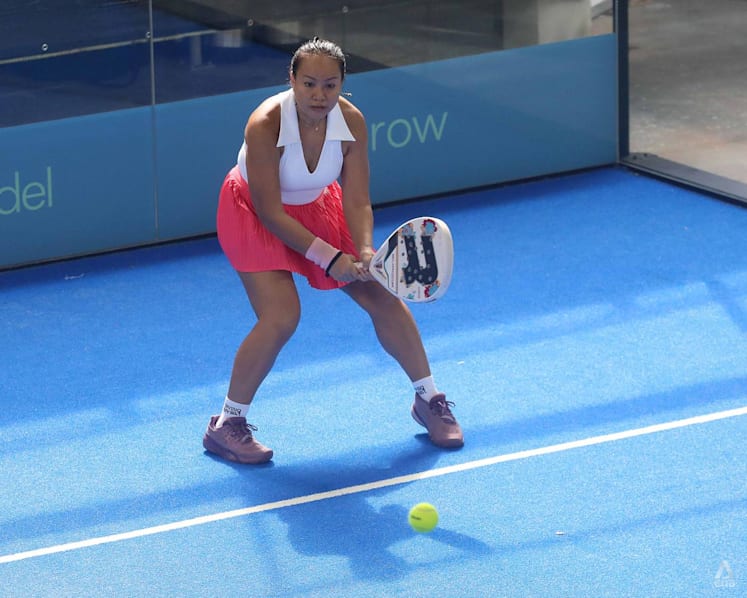
For Mr Ong, traditional networking events were once the only way to meet new people, but he found them stiff and contrived.
"While you are networking in padel, you don't have any expectations. You're just here for a game," said Mr Ong.
"You're in sportswear … you don't have to put up a good hairstyle. You can sweat like hell, and you'll still be able to get to know people through there."
Ms Cindi Wirawan, the founder of Vibe Tribe, a Singapore-based professional networking community, said padel removes the spotlight of networking and gives professionals the "permission" to connect without calling it networking.
"Padel reframes connection as play first, relationship second, business later," said Ms Wirawan.
Furthermore, padel takes the spotlight off self-presentation and onto the game and shared teamwork, easing the pressure that typical networking events create, she added.
Mr Raymond Low, senior engagement manager at DecodeHR, added that since physical activity is more informal and relaxed, conversations flow more easily and people show up as themselves.
"Because the connection feels more authentic, it's easier for trust to develop, which can lead to more meaningful discussions and genuine relationships over time," said Mr Low.
And given padel's accessibility, Ms Wirawan said this also "flattens hierarchy", where a junior professional and a senior leader can play as equals, laugh at the same mistakes, and share the same learning curve.
"It also cuts across industries because the entry point is not professional identity. It is curiosity and willingness to participate."
"Padel cuts across industries because the entry point is not professional identity. It is curiosity and willingness to participate."
A LITMUS TEST FOR BUSINESS AND LOVE
Padel court operators say the sport's sociability is not accidental. It is engineered into the way the venues are built and used.
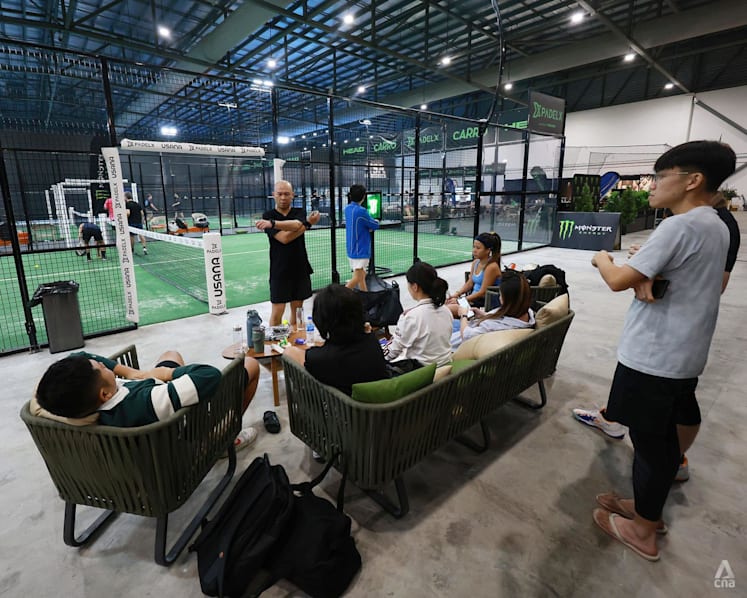
At Padel X, located at the Singapore Expo, co-founder Jefferson Lee, 48, removed what could have been a sixth court to create a dedicated lounge for players to sit and talk after matches.
"After the game, players will say, 'Should we go for a drink?' or they'll sit around the courts talking about everything from racquets to landlords to dogs," Mr Lee said, adding that this post-match ritual is as much a part of the sport as the rallies themselves.
As someone who has played everything from ice hockey to various racket sports, Mr Lee said padel stands out for its culture.
Team sports build camaraderie, he noted, but only within one's own team, and in tennis, players usually have to clear the court immediately after a match, leaving little time to talk.
Even golf, known for its strong social and business networking aspect, cannot match padel and the Americanos.
"On a golf course, it's only four players involved," he said. "But with Americanos, you have five courts going at once, and everyone plays with everyone – by the end of the day, you’ve met 20 players," said Mr Lee.
At Pop Padel, co-founder Davy Sanh, 39, has observed similar behaviour.
Since opening in May, the club in Redhill has hosted about 70 corporate events, many of which involve banks and energy firms.
He believes padel appeals to companies because it is more accessible and less intimidating than golf.
Mr Sanh said that in golf, players move in groups of four and are spread out across a vast course, limiting interaction.
In padel, everyone stays together in a small space for several hours, with the game and the after-game naturally flowing into one another, a structure he believes makes it far easier for people to talk, bond and build connections.
Besides being accessible for players of all levels, both operators also point out that the game's fast, co-operative nature reveals character quickly.
Mr Lee said he has seen players assess one another's temperament and communication style through how they behave under pressure on court.
Agreeing, Mr Phan said how one's behaviour on the court serves as a litmus test for a person's work style.
"You can understand how a person would behave at work when you see how he behaves on the court," said Mr Phan. "If it's someone who gets really angry, shouts, or does not communicate well, you can see these behaviours of a person while they are playing."
Just as you can see how a teammate communicates under pressure, Ms Wirawan said the game naturally creates moments of banter and laughter that break down barriers, which is why many team-bonding activities rely on shared physical movement.
This has even lent itself to players looking for love, said Mr Lee.
"When people are playing, you can see their character, temperament, how patient or helpful, they are," said Mr Lee. He added that, since the community is so tight-knit, where "everyone knows everyone, the other players can vouch for one another".
Ms Carolina Artiaga, 51, an entrepreneur and owner of Asia Padel, which supplies padel equipment, said romances can occur on padel courts.
"It's true, there are many couples who met in padel, why not if you like someone?" said Ms Artiaga.
Both Ms Wirawan and Mr Low said padel, in many ways, has become the "new golf" and reflects what professionals are seeking when it comes to making connections.
"Golf was historically about access, time and status. Padel is about energy, inclusion, and interaction," said Ms Wirawan. "It meets professionals where they are today."
Mr Low said: "In a way, padel reflects what many people are looking for today: authentic yet informal connection and shared experiences."