Restaurants drop plant-based meats from their menus, citing high costs, low demand
Experts said the popularity of plant-based meats faded once the novelty factor wore off because improvements in taste and texture did not keep pace with expectations and could not justify higher prices.
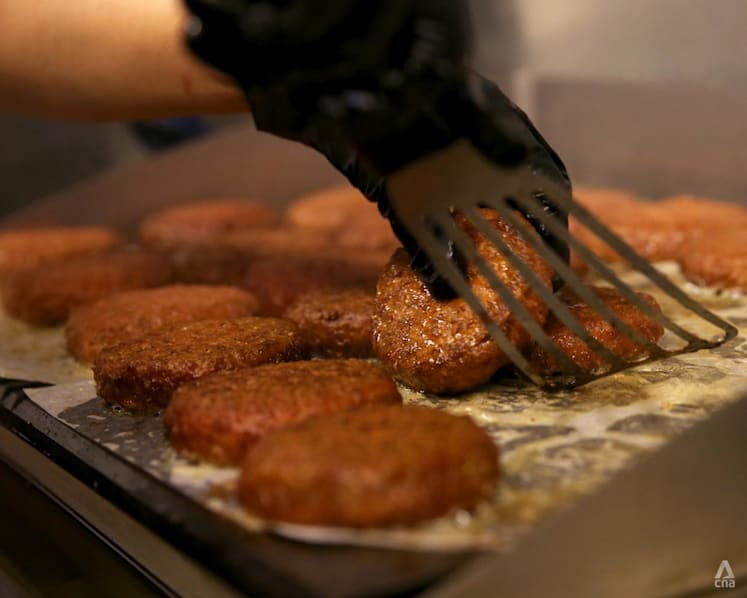
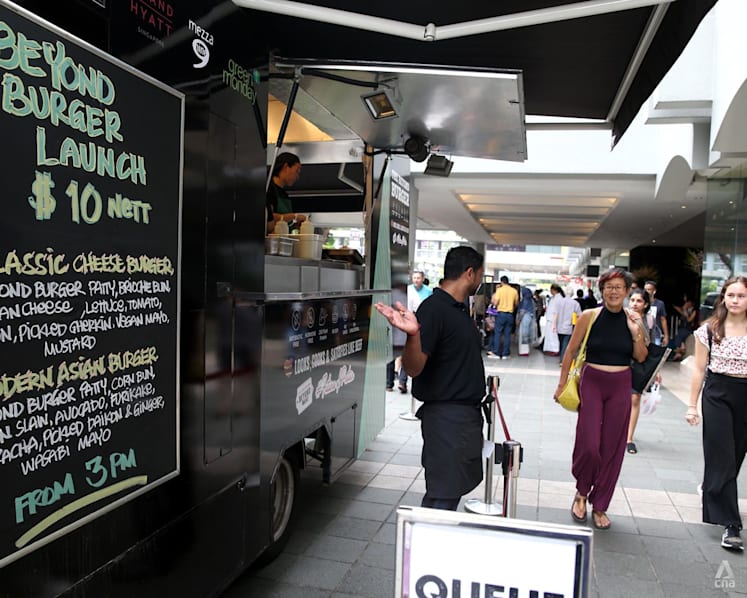
Plant-based Beyond Burger patties being prepared in restaurant mezza9’s food truck located outside the Grand Hyatt Singapore in 2018. (Photo: CNA file photo)

This audio is generated by an AI tool.


Ms Sim Hui Xin remembers her introduction to plant-based "meat" in 2021.
The 32-year-old assistant marketing manager was dining with a vegetarian colleague when she tried a mouthful of her colleague's Thai-style "Impossible pork" basil rice.
"When I had my first bite, it kind of shocked me a little, because it really did taste like meat," said Ms Sim, who doesn't eat beef for religious reasons.
Since that first bite, she has sampled plant-based meat in other dishes, such as Western food and burgers.





While she has no means of comparison, her husband, who eats beef, has marvelled to her about how some of these dishes, especially burgers, taste exceedingly similar to the real McCoy.
She estimates that she used to consume plant-based meat at least once a month after that.
Today, however, Ms Sim said it has become increasingly difficult to find such options on menus, and her experience reflects a broader shift observed here.
Between 2018 and 2019, meatless patties from brands such as Impossible Foods and Beyond Meat gained rapid traction locally, appearing not only at burger joints and fast-casual chains, but also on supermarket shelves and at local eateries.
Plant-based meat is typically made from concentrated plant proteins – such as soy, pea or wheat gluten – that are processed to replicate the texture and flavour of meat.
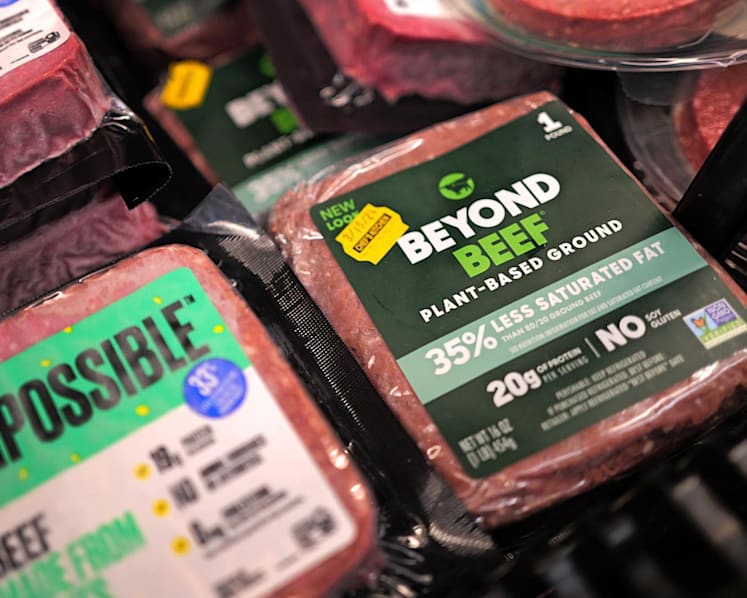
Marketed as a way to reduce the environmental footprint of meat consumption, these alternatives attracted both curious consumers and those motivated by sustainability and animal welfare concerns.
And for vegetarians, as well as those with religious dietary restrictions, they offered a way to experience dishes that would otherwise be inaccessible. But today, such products are harder to find.
Several restaurants that once offered plant-based meat dishes have since quietly removed them from their menus, while others have pared back their offerings or relegated them to add-ons at additional cost.
Mr Edo Lio, who is a pescetarian and eats plant-based meat products once or twice a week on average, noted that there was a "big movement" towards plant-based products in the late 2010s and early 2020s.
"But in the past year or two, (it feels like) we've been stagnating or going backwards," said the 28-year-old content creator.
"I don't see as many options at restaurants anymore, and I don't see as many restaurants trying to have plant-based options or menus."
BOOM TIME
Globally, the most pronounced surge in plant-based meat consumption took place between 2018 and 2020.
During this period, several casual dining chains – including Swensen's and PizzaExpress – introduced plant-based versions of regular items, such as an "Impossible burger", as well as "Impossible teriyaki" pizza and pasta.
Even Asian restaurants began tapping into the hype.
Peranakan restaurant Violet Oon introduced "Impossible satay" for a period, while Japanese-fusion eatery Tanuki Raw served rice bowls made with Impossible meat, drizzled with its house-blend black curry.
Online listicles on where to find such dishes in Singapore mapped out the category's rapid expansion at the height of its popularity.
Dr Samer Elhajjar, a senior lecturer of marketing at the National University of Singapore's (NUS) Business School, described this period as the "wow phase", which extended into 2021 in terms of investment and menu proliferation.
Experts attributed the boom to a mix of factors, including heavy marketing, growing consumer interest in health-conscious and sustainable food choices, and, in Singapore, the government's emphasis on alternative proteins for food security.
"You had a perfect storm: mainstream brands scaling fast and a cultural moment where climate and food systems were suddenly dinner-table topics," said Dr Elhajjar.
The sustainability narrative gave the category "moral momentum" at the start, he added, allowing consumers to feel they were making a perceived "better" choice without changing up what they ate too much.
"Health perceptions helped too, especially early on, because many people mentally filed plant-based under 'cleaner' and 'lighter', even when the products were engineered to mimic meat," he said.
Venture capital and media attention then acted as accelerants.
Professor William Chen, director of the Singapore Agri-food Innovation Lab at Nanyang Technological University (NTU), said the category's growth also aligned with Singapore's push to strengthen food security, alongside wider global interest in alternative proteins such as cultivated meat, microbial proteins and insect-based proteins.
Global events affecting conventional meat – such as the 2018 outbreak of African swine fever in China – have, in specific instances, also reduced supply and pushed up prices, said Dr Andrew Powell, chief executive officer of Asia BioBusiness.
"Particularly in China, during COVID, (demand for plant-based meat) peaked dramatically because of swine fever in China," he said.
"(So) for a period there, the ground pork alternative protein called OmniPork was competitively priced. But as soon as the price of pork came down after COVID, and the swine fever got resolved to a degree, then the interest in plant-based (meat) declined significantly."
WANING POPULARITY
Yet even at its peak, plant-based meat accounted for only a small fraction of overall meat sales in Singapore.
According to analysis by the Good Food Institute Asia Pacific (GFI APAC) – a Singapore-headquartered non-profit think tank focused on alternative proteins – plant-based meat made up just 0.056 per cent of total meat sales volume here in 2020, even as global investment surged.
By comparison, plant-based meat represented about 1.4 per cent of total meat sales in the United States that year – roughly 25 times higher than Singapore on a percentage basis.
Today, while updated figures for Singapore are unavailable, it is clear that demand has waned.
Malaysian casual dining chain PappaRich launched its own version of the Impossible burger in May 2019, and also rolled out plant-based versions of local dishes like fried rice and nasi lemak with Impossible rendang.
A spokesperson told CNA Today that two years later, however, it decided to pull all plant-based meat alternatives off its menu due to "low demand and the increasing price of Impossible (products) in Singapore".
"Price plays a huge role in the viability of plant-based meat dishes because Singapore is blessed to have such a large range of fresh produce readily available at lower prices," said the spokesperson.
A check at the supermarket found that a 383g packet of Impossible chicken nuggets retails for about S$11 (US$8.64), roughly the same price as a 1kg bag of chicken nuggets.
Supermarkets have seen a similar cooling of interest from consumers.
Responding to CNA TODAY's queries, a FairPrice Group spokesperson said it currently offers around 80 plant-based meat products, but has observed a gradual drop in demand over the past two to three years, despite efforts to keep prices stable.
Meanwhile, a Cold Storage spokesperson said that the category saw its most significant growth between 2020 and 2023, reflecting a period of "heightened consumer curiosity" over meat alternatives.
Since 2024, however, it has observed a softening in demand for the products, as well as some brands even exiting Singapore.
Organic grocery chain Little Farms has gone as far as to entirely shelve its plant-based meat category.
Mr Tom Gray, its commercial director, told CNA TODAY that the chain began trialling plant-based meat alternatives seven to eight years ago.
"At the time, there was genuine interest from customers and we tested a range of early- and later-generation products," he said.
He added that over time, customers had growing concerns over ingredient lists, unclear environmental claims, inconsistent taste and higher prices compared with conventional options.
"As a result, it became harder for plant-based meat to justify its place on the shelf."
BETTER SUITED FOR WESTERN CUISINE
Experts said Singapore's experience reflects a mix of structural and cultural factors.
For one thing, many plant-based meat products tend to perform better in burgers than in Asian-style dishes, which often involve preparation methods such as stir-frying, said NTU's Prof Chen.
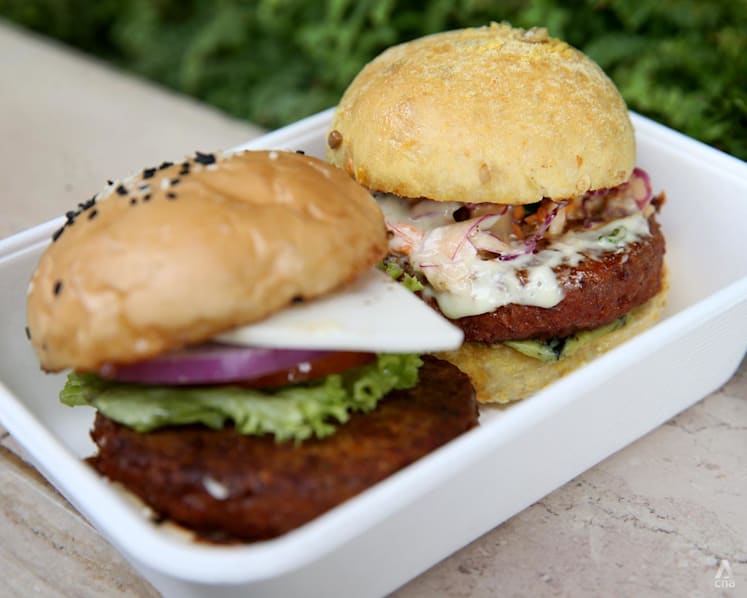
Agreeing, Mr Richard Zhan, who is a vegetarian, said he prefers plant-based meat prepared in Western dishes, as the texture tends to mimic actual meat more closely.
The 50-year-old, who works in events management, who ate fish and meat when he was younger before becoming vegetarian, said he first tried "plant-based fish fingers" about seven years ago.
"It's almost exactly the same as Filet-O-Fish," said Mr Zhan, adding that the category has given him access to a greater variety of vegetarian food options and also allowed him to savour dishes he once enjoyed.
Experts also said the early boom was driven in part by heavy marketing and rapid industry uptake – momentum that faded once novelty wore off.
This is especially so when improvements in taste, texture and cost competitiveness do not keep pace with expectations, or justify higher prices, they added.
"The category moved from novelty-driven trial to repeat-purchase reality, and that's where it got tested," said Dr Elhajjar.
At the same time, some consumers drawn by perceived health benefits have become more aware that such products can be highly processed, with additional components used to bind the plant proteins so that the end product more closely mimics animal meat, said Prof Chen.
This can temper the appeal especially when fresh fruits and vegetables are readily available, the experts added.
Economic pressures have also mattered. During cost-of-living squeezes, non-essential items priced at a premium are often among the first to be cut, experts said.
"If the product is pricier and not clearly tastier or healthier, it becomes an easy cut from the basket," said Dr Elhajjar.
BEYOND BEYOND MEATS
While the pullback from consumers on plant-based meats is evident, experts don't believe it is the end of the road for these meat alternatives.
Globally, retail sales of plant-based meat, seafood, milk, yoghurt, ice cream and cheese reached an estimated US$28.6 billion in 2024, a 5 per cent increase from 2023, according to Euromonitor data cited in GFI’s 2024 State of the Industry report.
Growth has also continued in some regions like Europe which remains the world's largest market for alternative proteins and is expected to grow for a third straight year, Bloomberg reported in June 2025.
Ms Mirte Gosker, chief executive officer of GFI APAC, said a 2024 consumer perception study commissioned by the think tank across six Southeast Asian markets – Singapore, Indonesia, Malaysia, Thailand, Vietnam, and the Philippines – found affordability to be the single biggest barrier to plant-based meat adoption here.
That, however, could change with global and industry developments.
One possible direction lies in "enhanced" meats, which blend plant-based ingredients with conventional meat.
Citing the study, Ms Gosker said 93 per cent of Southeast Asian consumers surveyed expressed interest in trying such blended meat products, including more than three-quarters who admitted they were sceptical of fully plant-based meat.
In fact, a 2025 study conducted by A*STAR – in collaboration with GFI APAC and Nectar, a non-profit initiative focused on publicly available sensory research on alternative protein products – found that some enhanced meat products already demonstrate strong sensory performance without compromising taste, she added.
Despite relatively limited investment in the sector, several products closely matched their conventional counterparts on taste, while one even outperformed a 100 per cent animal-based benchmark in blind tests, said Ms Gosker.
Such findings suggest that enhanced meats could help address some of the taste-related concerns that have weighed on consumer adoption.
Global developments may also reshape the sector's economics.
In January 2022, China's Ministry of Agriculture and Rural Affairs released its five-year agricultural plan, which for the first time included cultivated meat and other "future foods", such as plant-based eggs, as part of its longer-term food security strategy, Time reported.
Early last year, the country also opened its first alternative protein centre dedicated to cultivated meat and fermentation-derived products – the New Protein Food Science and Technology Innovation Base – in Beijing's Fengtai District.
"One cannot overstate the significance of Asia's largest economy putting alternative proteins at the centre of its national food strategy," said Ms Gosker.
China's scale and manufacturing capacity could help drive down production costs, benefiting price-sensitive markets such as Singapore.
At the same time, some experts said the way forward may lie in rethinking plant-based products altogether.
"My sense is that we may need to think out of the box in developing plant-based meat. To start with, the choice of source materials can go beyond our familiar few," said NTU's Prof Chen, pointing to mushroom and mycelium as promising alternatives that require less processing.
Rather than replicating meat, some restaurants are also pivoting towards whole-food, plant-based options.
Vegan burger eatery Veganburg, for instance, has placed greater emphasis on whole-food vegan patties, moving away from highly processed meat substitutes.
The store stopped offering Impossible plant-based meat due to cost considerations, said its operations director Ms Blessed Chee.
It has since expanded whole-food options, such as offering tofu broccoli and spinach potato patties, which customers have said they prefer.
Consumers said it would take some improvement to get them back to plant-based meats, including changes to taste and texture, the introduction of novel products, and of course, a price adjustment.
Mr Zahir Latif, 42, a multidisciplinary content creator said he tries to forgo meat a few times a month for sustainability and animal welfare reasons but since he's not strictly vegetarian, he does not feel "obliged" to look for plant-based meat options.
"I've tasted good plant-based meat products and I've tasted bad ones. The bad ones taste like cardboard and texture also like cardboard," he said, adding that the higher prices might make some plant-based meat products prohibitive.
Similarly, Ms Sim, who enjoyed the novelty initially, said that plant-based meat is still not a go-to option for her, given the cost and taste.
"Sometimes the texture is a little bit off ... it has this spongy kind of texture to it," she said.
"I wouldn't go out of my way just to order a plant-based meat when I have my regular meats available."
Mr Lio said that plant-based meats tend to be on the pricier side "which I think maybe does hold some people back from trying them".
He added: "Definitely adjustments to quality improving ... and I think the biggest thing would be the price going down, (as well as) being more readily available."