Apple wooed this Singapore engineer with gifts. He's moving on after 2 decades shaping iconic tech products
Singaporean engineer Mark Sin spent 22 years shaping Apple's hardware while rallying the Singaporean community in the San Francisco Bay Area as president of SingaporeConnect. Now, he is stepping away to explore a new chapter – and how he can give back to Singapore in new ways.
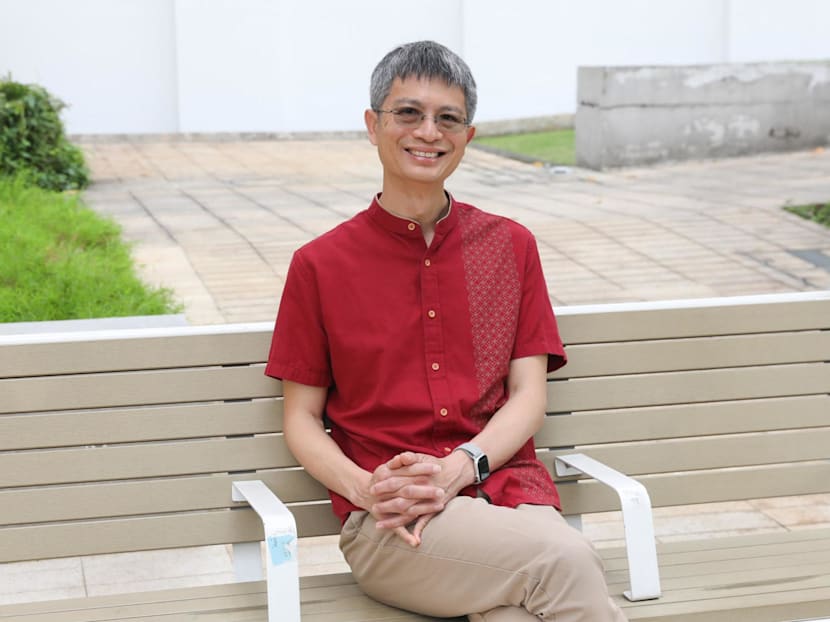
Mr Mark Sin pictured at a playground near the National Museum on Feb 26, 2026. (Photo: CNA/Mak Jia Kee)

This audio is generated by an AI tool.


For 22 years, Singaporean engineer Mark Sin helped shape Apple products used by millions worldwide – from the Apple Watch to the Mac Pro, the company's high-performance desktop computer.
The 49-year-old has spent the past two decades working behind the scenes in hardware design and systems integration, steadily rising through the ranks to become a key figure in the company's engineering endeavours.
It's the kind of career so many in the tech industry aspire to have – packed full of achievements and milestones, and positioned at the forefront of global innovation.
Then, in December 2025, with the job title "engineering architect" at Apple Inc, he walked away from one of the world's most coveted engineering jobs.
He said the decision was not impulsive. He had weighed his options over time, revisiting the question of whether to stay at Apple – and in the United States – almost every year. Each time, he had decided to stay.
Things changed about two years ago with, of all things, an asbestos contamination at Mr Sin's home – an incident that prompted him to reconsider what he wanted from the next chapter of his life.
Finally, at the end of 2025, he felt it was the right moment to step away from a company and career he had spent over two decades building.
But for Mr Sin, he knew he would be saying goodbye to much more than just professional prestige.
UNEXPECTED 'COURTSHIP' WITH APPLE
Apple is the first and only workplace Mr Sin has known. He's been employed there since graduating from the Massachusetts Institute of Technology (MIT) with a master's degree in engineering and public policy.
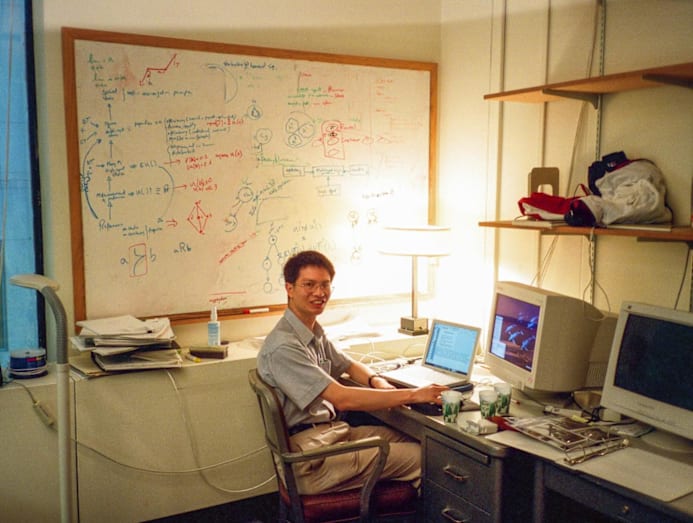
I was surprised when he told me that he had not even applied for a role at the company, then called Apple Computer, in the first place.
The elder of two children born to immigrant parents from Hong Kong, Mr Sin was exposed to technology from a young age through his father, a civil engineer who moved to Singapore for work in the early 1970s. He also developed a love for photography early in life thanks to his mother, who worked for US film and camera giant Kodak.
He grew up an avid Apple user, chiefly of products such as the Apple II+ and Apple IIGS, early personal computers released in the late 1970s and 1980s.
At 24, as a final-year undergraduate studying electrical and computer engineering at Carnegie Mellon University in Pennsylvania, he learnt of an information session Apple was holding on campus, open to all students.
Mr Sin readily decided to attend. With his love of photography, he took photos of the products the Apple team had brought and of the director presenting them.
After the session, he created a small webpage about the visit and sent it to the Apple team.
The director expressed his appreciation in a unique way: an internship offer.
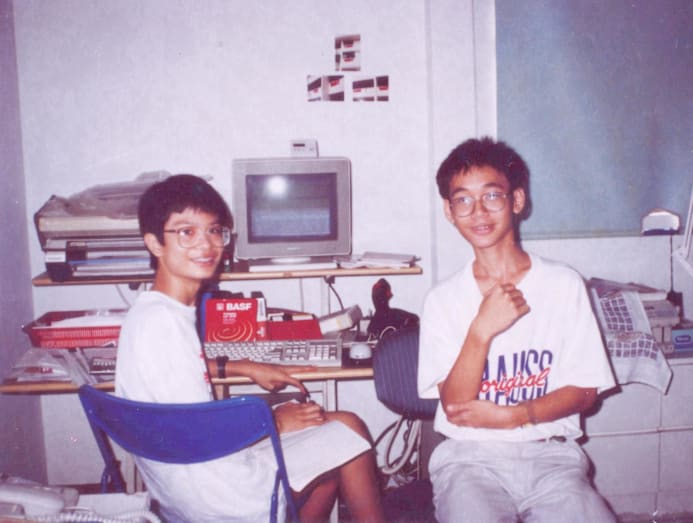
Mr Sin was immediately interested – but, having already secured a place at MIT's graduate school, felt he had to turn Apple's offer down.
What followed was an unexpected courtship over the next three months. The hiring manager even sent him a hamper with apple-shaped chocolates in a bid to persuade him.
At one point, Mr Sin told the manager over the phone that he liked the posters Apple had put out at the time advertising its products.
"He literally put down the phone and walked into any employee's office that had a poster on the wall and said: 'Hey, I need this'," Mr Sin said.
Soon after, the posters arrived at Mr Sin's doorstep, neatly packaged in a FedEx box.
Amid jokes from his classmates at Carnegie Mellon that he was playing "hard to get", Mr Sin eventually said "yes" to Apple.
He took up a four-month internship with the company between completing his bachelor's degree and starting his postgraduate studies.

JOINING APPLE AT AN EXCITING TIME
Still, Mr Sin recalled that when he accepted the internship position in 2001, some of his classmates were genuinely concerned.
After all, in the early 2000s, Apple was not the tech and business juggernaut it is today. The iPod had just been launched in 2001, and the first iPhone would be introduced only years later in 2007. The company was far from the household name it has since become.
On top of that, Apple had reported a significant quarterly loss shortly before amid the bursting of the "dot.com bubble" around that time. With heavy hitters like Microsoft and Intel dominating the market, there were questions about the company's prospects.
But Mr Sin saw it as an exciting time to join because of new moves the company was making in market innovation, from rethinking the architecture of its hardware systems – including a shift from IBM to Intel silicon chips – to unique product design, led by designer Jony Ive.
"There was all this energy with Steve Jobs and Jony Ive and the hardware team to take this momentum," he recalled.
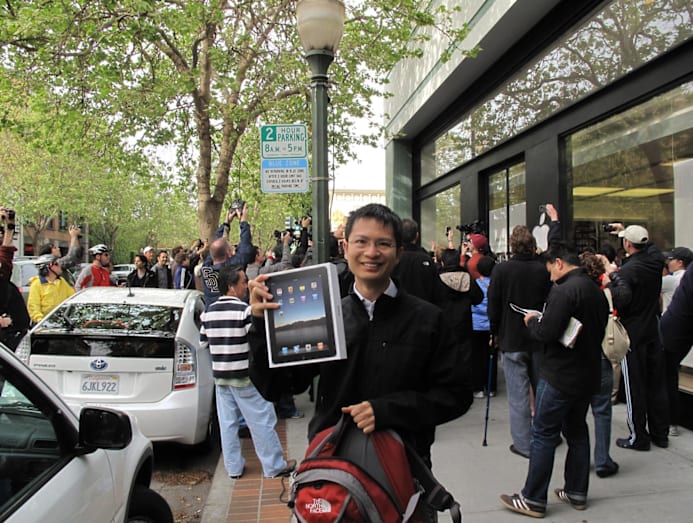
He ended up enjoying his first internship so much that one year on, he returned for a second stint while pursuing his master's degree.
Upon completing his master's degree in 2003, Mr Sin took up a full-time position at Apple.
There, over the next several years, Mr Sin was "intimately involved" in several of the company's major hardware transitions, including its move from PowerPC to Intel processors, and later to Apple silicon chips.
One project that stands out in his memory is the 2013 Mac Pro, which he was involved in from its early conceptual stages.
The processor's iconic cylindrical design was suggested by Mr Sin himself, after the team had pondered a variety of different shapes, even a pyramid. The result was a landmark product that marked several firsts for the company, including US-based manufacturing.
While its distinctive shape drew its fair share of jokes – to this day, it's still known among techies as the "Trash Can Mac Pro" – Mr Sin took the ribbing in his stride, seeing it as part and parcel of pushing design boundaries.
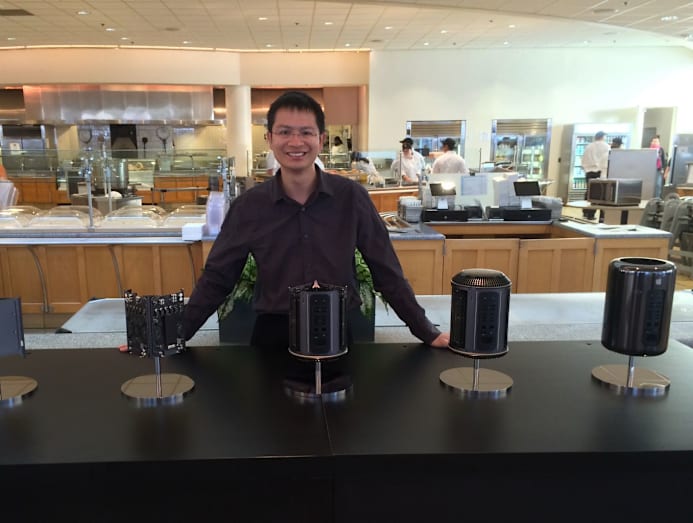
As he told story after story of his time in Apple, it was clear to me that he'd stayed so long not out of fear or obligation, but because he genuinely loved working there.
Coming from a cohort that straddles the line between millennial and Gen Z, job-hopping every few years has become quite the norm for my generation. I wondered if Mr Sin had ever been tempted by other opportunities in Silicon Valley.
"Every year, I do honestly evaluate and look (around)," said Mr Sin – but each time, there was always a new project at Apple to recapture his excitement.
"If it wasn't the Mac Pro, it was the Apple Watch. If it wasn't that, there was the Mac mini."

.jpg?itok=Sb2SmBEy)
A HEART FOR COMMUNITY BUILDING
Beyond the technical achievements, Mr Sin found a different kind of fulfilment at Apple.
In building teams for each new project, he found an unexpected joy in fostering cohesion, mentoring new hires and shaping shared culture.
Such people-centred experiences, he said, were as meaningful as the engineering milestones themselves.
Mr Sin's passion for community building has also extended to his life outside of the workplace.
Shortly after moving to the US to attend university, he co-founded the first Singapore Students Association at Carnegie Mellon, serving as its secretary.
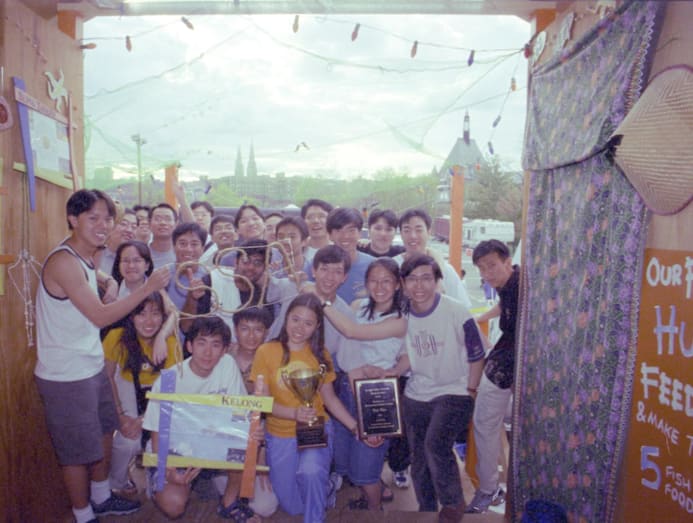
When he moved to the San Francisco Bay Area in 2003 to join Apple, his Singaporean friends took him to a National Day celebration organised by the Singapore Club of Northern California. Over time, some club members based in the South Bay – weary of travelling north – branched out to found SingaporeConnect in 2005.
Mr Sin joined the newly-formed community in 2007 and became the group's president a year later.
In September 2025, the group organised the first-ever Singapore Festival in North America to mark SG60 – an event that drew more than 3,000 people, the majority of whom were not even Singaporean.
In addition to Singapore hawker-style food and live performances by homegrown artistes and comedians, the festival featured a fireside chat with artificial intelligence leaders like OpenAI researcher Jerene Yang – a segment Mr Sin was particularly keen to include.
"It was more than just a festival where people came (together) and ate," he said. "People came and learnt more about Singapore – that it's more than just a small country. It's a small country with a big heart."
For Mr Sin, this was also about recognising the Singaporean diaspora as an "integral" part of the Singapore community.
He wondered: "Can I inspire people to do more such that the overseas community is a benefit to Singapore?"
Under Mr Sin's leadership, SingaporeConnect was reincorporated in 2025 as a non-profit public benefit organisation. Now, it is also seeking formal recognition as a social welfare body within the US, which would allow it to operate and raise funds within a clear legal framework.
"This is my legacy for our organisation to do this community building work long-term," said Mr Sin.
Next on his list of priorities: Searching for a younger successor to lead SingaporeConnect into a new era.
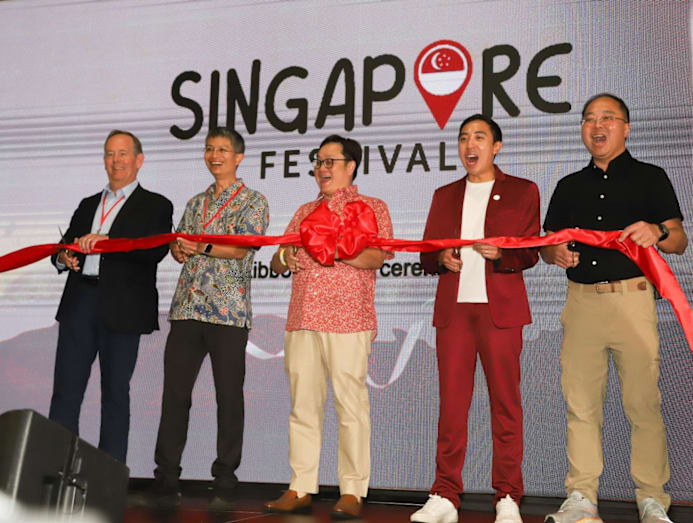
For Mr Sin, contributing to Singapore has always gone deeper than on-the-ground festivals and gatherings.
In 2001, the Singapore government set up the Economic Review Committee (ERC) to reassess the country's economic strategy and propose reforms to strengthen competitiveness and growth.
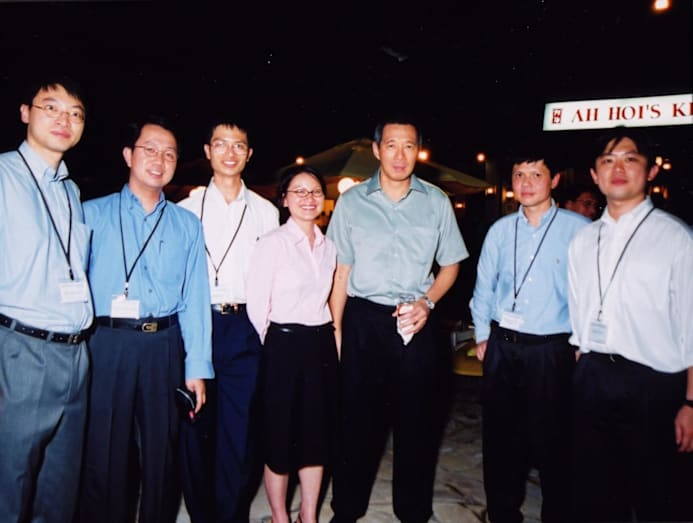
The next year, Mr Sin – then still a graduate student – responded to an open invitation by an ERC sub-committee to share his views on how Singaporeans living in the US could contribute to addressing targeted economic issues.
He volunteered and worked on two projects: one on tackling the fear of failure, and another on creating an overseas network of Singaporeans. He later had the opportunity to present the latter proposal to then-Deputy Prime Minister Lee Hsien Loong.
"I wanted people to realise that (whether) at this stage – as a student – or any stage, you can make potential differences in whatever you do in the world, whether it's in government policy or company products," said Mr Sin.
PERSONAL PASSIONS OUTSIDE OF APPLE
Staying connected to Singapore all these years has paid off for Mr Sin not just in professional or patriotic terms, but also in his personal life.
In 2015, Mr Sin reached out to the Singapore University of Technology and Design (SUTD) after it moved to its current Upper Changi campus. He wanted to explore potential collaborations, including academic talks with SingaporeConnect, as well as opportunities at Apple for SUTD students.
Later that year, during a brief trip back to Singapore, Mr Sin was invited to visit the SUTD campus.
For this visit, a staff member, Ms Celeste Lai, had been assigned to show him around. They ended up dating long-distance then tying the knot in 2017 – before Ms Lai moved to the US to join her new husband.
They now have two daughters, aged seven and five years.
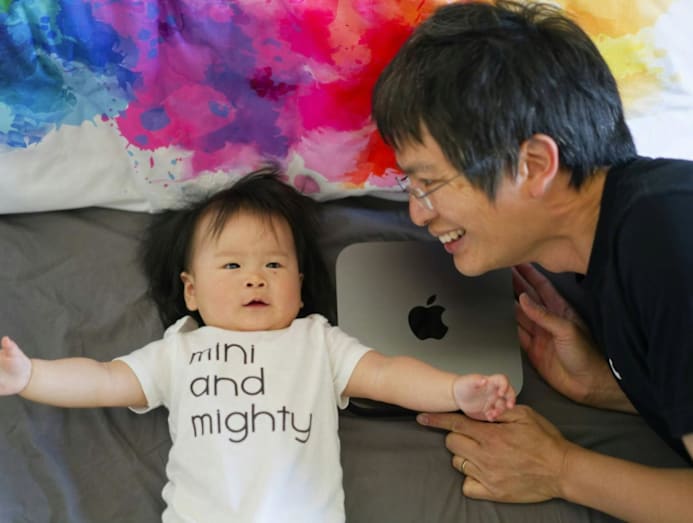
Between chasing tech engineering milestones and community work, Mr Sin has continued to make time for creative hobbies such as photography.
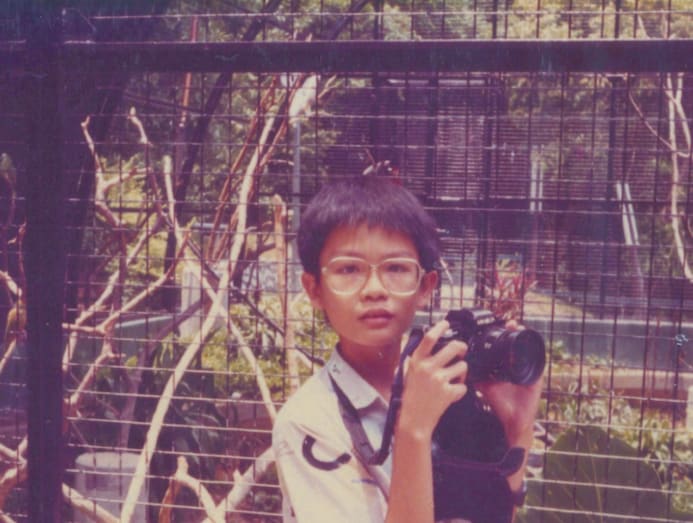
During his time studying at Raffles Institution (RI), he served as head of the school's photographic society.
He remembers one occasion from his RI days at a school event commemorating the school's move from Grange Road to Bishan, graced by guest-of-honour, then-Prime Minister Goh Chok Tong.
While on photographic duty, Mr Sin became distracted by the stress of documenting the momentous occasion. He failed to attach his lens to his camera properly – and the lens fell off and bounced on the floor.
"(The noise) paused PM Goh's speech, and obviously, caused all his security men to laser focus on me," he recalled.
Years later, Mr Sin found himself at an event in the US where Mr Goh was also present. He took the opportunity to introduce himself and apologise for having interrupted the former statesman's speech – a shared memory they were both able to laugh about.
"I got a picture with him … my parents put it in our living room," Mr Sin chuckled. "Every time a contractor came to work on something, they would see that picture and realise they'd better do a good job."
Describing himself as a curious person, Mr Sin said he was also, at one point, intrigued by the idea of becoming a teacher or writer.
Today, he lives out part of this dream through contributions on Quora, an online forum. There, he puts his love for simplifying complex tech concepts to use by responding to questions from strangers on tech dilemmas and quandaries in their daily lives.
He's introduced photography and drawing to his children, but is also getting into his girls' favourite hobbies – model-building and jigsaw puzzles.
He enjoys spending time with them at an age where they are "sponges for information".
"I'm also just starting to get them into the idea that I don't know everything, but I can work with them on that."
UNEMPLOYED FOR THE FIRST TIME IN 22 YEARS
When Mr Sin left Apple, he had no other job or position lined up. All the same, he felt that after 22 years, it was the right moment to step away.
"It's been a wonderful, wonderful ride with really awesome experiences working on technology and with very inspirational, driven, creative, brilliant people," said Mr Sin.
"Now, I would like to spend more time bonding with (my family)."
He added that while there were other factors at play in his decision, dealing with the fallout of the asbestos incident at their condominium had taken much time and mental space away from his wife and daughters.
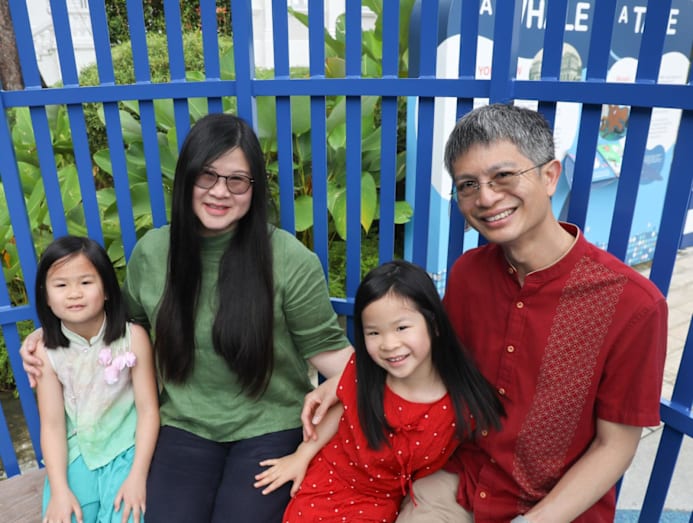
Perhaps, after nearly three decades away from Singapore, this would be an opportune moment to move home with his family?
Mr Sin certainly isn't saying no – but for now, he's saying "not yet".
"I think I owe it to them – even for a year – to get our lives more stable and free up my mind from all that kind of remediation we were doing."
For instance, while he is grateful for the active role his wife plays in their children's education, Mr Sin expressed a wish to be more involved.
"Any time I spend more (with my children) will pay huge dividends when I look back … (I want to) be part of the unique experience of their first 'this' and their first 'that'."
For now, Mr Sin is currently deep in the process of figuring out what to do with his newfound freedom.
He is keen to leverage his many years of experience working in product hardware, connecting with and managing people, to explore the possibility of entering public policy work – with a tech or engineering focus, of course.
"There has to be something more I can do to help make the world a better place … maybe something a little more Singapore-focused."
Next up, Mr Sin is set to moderate a panel discussion at the inaugural US edition of the Asia Tech x (ATx) event, Asia's flagship technology event for industry leaders. It is organised by the Infocomm Media Development Authority of Singapore and its partners.
Held in Silicon Valley in March, the ATx Community event marks the first time the platform has been staged outside Singapore. It serves as a lead-up to the ATx Summit, which will take place in Singapore in May.
Aside from that, he's now focused on connecting and reconnecting with industry peers and old friends.
"I actually think the best (way to figure out what's next) would be through exposure and the freedom to explore.
"It has been a good, long career. I'm excited to find new opportunities with all the skills and experience I have."