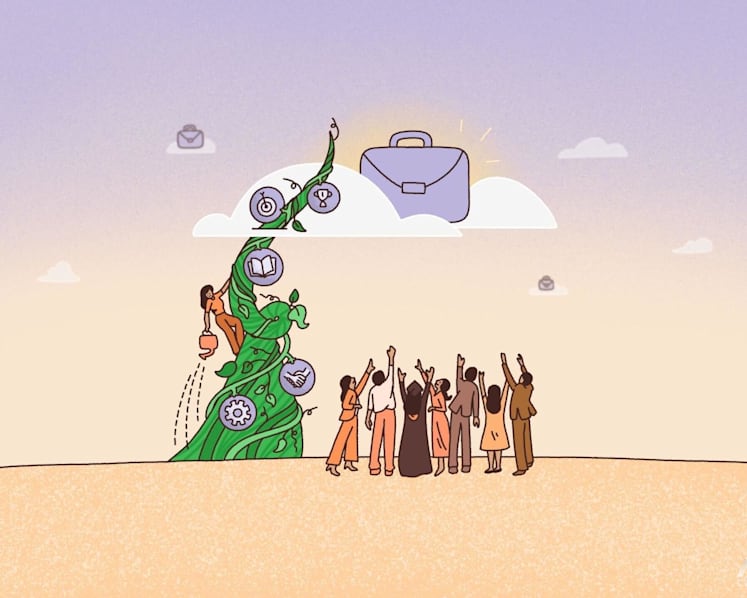
As a boss, is it ever the right call to stay silent during uncertain times at the workplace?
Founder Kelvin Kao warns that staying silent during difficult times will only create more fear and uncertainty among employees – and they deserve enough truth to make informed decisions about their lives.

As employees are the ones pounding the ground, they often know more than leaders think they do during a downturn. With nobody to address it directly, this transforms into collective anxiety, affecting productivity and trust. (Photo: iStock)

This audio is generated by an AI tool.


In 2021, I gave an interview to a media outlet where I spoke – perhaps a little too proudly – about how my creative agency had survived the worst of the COVID-19 pandemic without laying off a single employee.
At the time, it genuinely felt like something worth celebrating.
The previous year had been brutal for many businesses. I had friends in other companies who started discussing retrenchments, pay cuts and clients slashing their marketing budgets.
Against that backdrop, surviving intact felt almost improbable, and I thought we had overcome the odds and came out stronger.





Then, within a month, we lost three major accounts – perhaps a dent to any large firm, but a devastating blow to our little outfit.
Just like that, the numbers no longer worked. The very thing I had proudly spoken about preserving was now under threat.

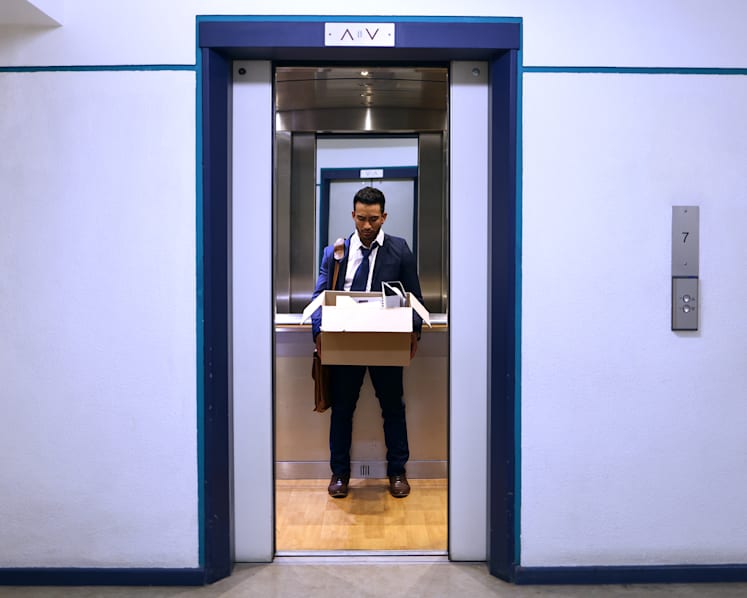
Over the next two weeks, I determined the best strategy forward, exploring options such as budget cuts and other contingency plans to assess whether it was realistic to avoid layoffs altogether.
And it came down to this: Even with budget cuts, revenue was simply not enough to sustain our headcount.
The difficult conversations followed, and eventually about 20 per cent of the team were retrenched.
At the time, I was focused on trying to steer the ship out of the storm.
What I did not fully reckon with, until much later, was what those two weeks of silence felt like for everyone else.
I HAD CONTEXT, BUT MY TEAM HAD NONE
As the leader and founder of my company, I had something my team did not: context and information.
I knew which accounts were lost, how serious the situation was, what contingency plans were still a possibility and how much runway remained.
Even in a genuinely bad situation, knowing the shape of it gave me some sense of footing.
In the days leading up to the town hall, my team had none of that. Only a strange and growing sense of foreboding.
Uncertainty slowly seeped into the workplace.
Conversations between colleagues became shorter and more careful, and every unexpected calendar invite suddenly felt far more ominous, even though they were nothing more than the usual check-ins and brainstorming sessions.

Without context and information, my staff members did the only thing they felt they could do at the time: speculate and draw their own conclusions from the fragments they had, usually imagining the worst.
After all, they were the ones who had to deal with the fallout – having to figure out what to do next and what to tell their loved ones.
STAYING QUIET ONLY CREATES MORE ANXIETY
Over the past year, in the midst of another wave of layoffs and economic unease across several industries, I have been thinking about how leaders communicate during difficult periods.
Observing the disparity in sentiments between leaders at the top and workers on the ground, I find myself wondering: Is it possible that many organisations misunderstand what employees really need?
The obvious answer is "more transparency", but reality is more complicated than that.
Leaders are frequently operating with incomplete information themselves.
Deals are still being negotiated. Budgets are still being revised. Legal and commercial constraints may limit what can be disclosed. Speaking too early can destabilise a situation that is still salvageable.
These are real constraints. But silence carries its own consequences, borne entirely by employees.
Most people would already know something is wrong long before their leaders verbalise it.
Projects that were once "urgent" get mysteriously deferred. A position remains unfilled after someone leaves. Managers change the way they manage, becoming either unusually guarded or strangely over-reassuring.
People notice these shifts in the atmosphere. The dots are already there – they simply connect them.
If that's so, why do some leaders still choose to remain quiet?
The obvious answer, again, is that they're hoping to contain panic.
Ironically, this can create even more anxiety and speculation among the team. We're only human – without a certain degree of certainty and assurance, it's only natural that our fears and worries rise to the surface.
Additionally, staying silent to keep things chugging along as usual can backfire, negatively affecting productivity. Can workers really be focused on their work when everything around them seems to be up in the air?
They're responding rationally to real signals, just without enough information to know what the implications are.
THE DIFFERENCE BETWEEN CONFIDENTIALITY AND AVOIDANCE
Communicating during periods of uncertainty is genuinely hard. It's no wonder that leaders so often avoid it.
Delivering bad news or admitting precariousness compels leaders to face emotions they might not have fully dealt with, such as embarrassment, guilt or the discomfort of feeling responsible for others' heightened stress or anxiety.
Waiting until "we know more" is often less a communication strategy than a way of deferring a conversation nobody wants to have.
And holding on to that hesitation has real effects on people's lives.
Is it possible that many organisations misunderstand what employees really need? The obvious answer is "more transparency", but reality is more complicated than that.
The people most trapped in this dynamic are middle managers.
Senior leadership expects them to maintain stability and morale, while their teams rely on them for answers they do not have. Pressure from above, pressure from below – and there's no escaping it.
In one widely reported retrenchment exercise, managers reportedly found out what had happened the same way their teams did – when employees' system access was cut without warning.
That cannot be right.
Businesses still require confidentiality and room for imperfect deliberations and incomplete discussions.
However, there is a difference between withholding information because it is genuinely premature and withholding it because the conversation is uncomfortable.
THE COST OF AMBIGUITY
Losing a job is hard, however it is handled. But prolonged uncertainty creates a distinct and additional harm, one that spreads well beyond the people who are eventually let go.
Once employees sense that something is wrong and nobody will address it directly, the anxiety becomes collective.
Productivity suffers as trust erodes. People who were never at risk start quietly updating their CVs anyway.


I still think about that period in 2021 – about giving that interview with such confidence, and how quickly things changed.
The embarrassment of that was real, but it was mine to carry.
More importantly, it was a minor bruise compared to the uncertainty felt by those on the receiving end, trying to piece together their futures without knowing what was happening or what was coming next.
In my opinion, employees deserve enough truth to make informed decisions about their lives – even if that means they may make a choice that doesn't bode well for us as bosses.
Some will choose to stay and see things through. Others may begin looking elsewhere.
That is not disloyalty; it is purely a survival instinct. Can we really say we wouldn't do the same?
At the end of the day, employees usually know more than leaders think they do.
They're the ones pounding the pavement, doing the work day in and day out. They almost always sense when something is wrong before leadership says it aloud.
The only real question is whether organisations will speak plainly and early enough for people to make informed decisions about their own futures, or leave them alone to assemble a warped version of reality from bits and pieces.
Only one of these is the right thing to do.