After braving PSLEs and O-Levels with 2 kids, here's what I’m doing differently for my younger ones
Are O-Level exams really less stressful for parents than the Primary School Leaving Examination, or are we just better at managing the stress? Mum-of-five Daphne Ling shares her experience.
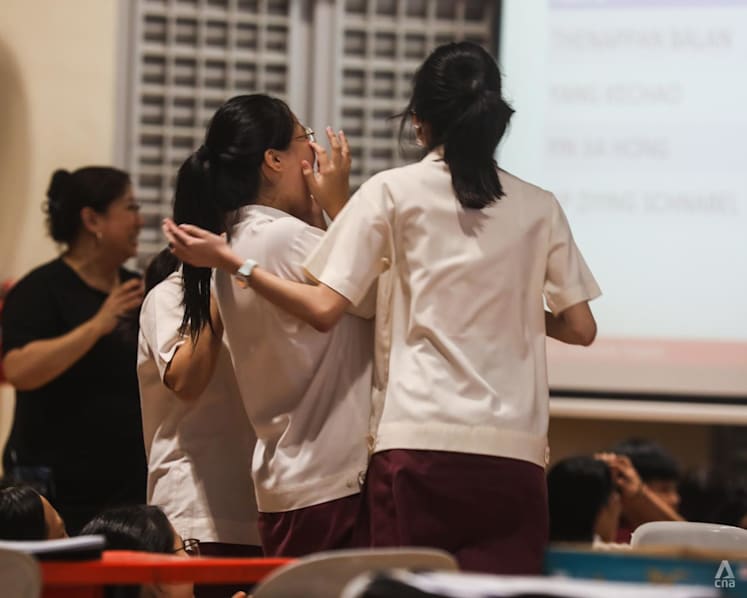
Students reacting as they receive their O-Level examination results in school in January 2024. (Photo: TODAY file)

This audio is generated by an AI tool.


My first experience as a parent preparing a child for a major exam was in 2020, when my eldest sat for the dreaded Primary School Leaving Examination (PSLE).
At the start of the year, my husband and I had planned to approach it as calm, supportive parents who would be unfazed by the pressure of this first, future-deciding exam for our son Truett.
Despite our best intentions, as the year wore on, the daily stress at home became more palpable. By the time we got to August, I started to worry that Truett would do poorly.
He wasn't putting in as much effort as we had hoped, and my motivational speeches seemed to fall on deaf ears.





Heartbreakingly, I could see my son growing increasingly stressed and sad as the days went by.
At the end of the year, we were dismayed by his PSLE score. After going through all the stages of grief, we began making arrangements for him to travel over an hour each way to a school further away than those we had been aiming for.
Distance aside, we worried that he would struggle in an environment where students were less academically inclined, and that it would affect his O-Level results.
PSLE PARENTING VS O-LEVEL PARENTING
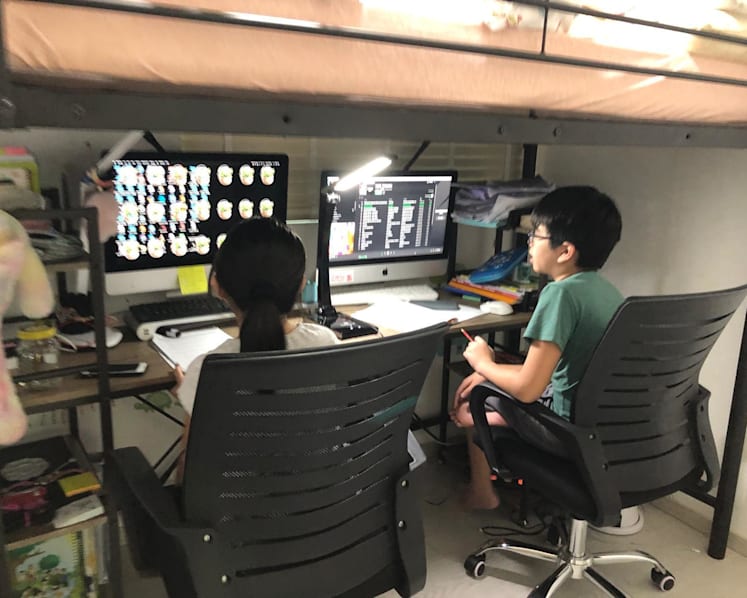
During those tense weeks leading up to Truett's PSLE, I would sit next to him as he did assessment papers for mathematics. He needed supervision, so I would get my own work done while keeping an eye on his progress.
Occasionally, he would fiddle with his pen and become distracted, which would be my cue to tell him to focus.
Sometimes, he would stop and say that he was stuck, and I would remind him that we had tackled a similar problem many times before.
He would press his fingers into his temples with a mixture of frustration and resignation.
At the end of each session, we would both be mentally exhausted and emotionally drained.
During this time, one of the lessons I had to learn as a mum was to evolve in the way I interact with my kids as they grow up.
At 16, Truett already towered over me, his lanky frame just a few centimetres shy of his current 1.78m height. He was already starting to adopt the assured demeanour of a young adult.
As he got older, the boundaries we had set for a child could no longer apply to an adolescent closer to adulthood.
Twelve-year-old Truett might have been able to tolerate having his mother sit next to him while he studied, but for 16-year-old Truett, this was an ordeal of suffering – one I did not want him to endure either.
Rather than micromanaging the way he revised, our role as parents had to change – instead of providing stern direction and instruction, we had to trust him to develop his own autonomy and personal responsibility towards his studies.
We had to learn to let go and focus on offering moral support, encouragement and the occasional hilarious Instagram reel for relaxation.
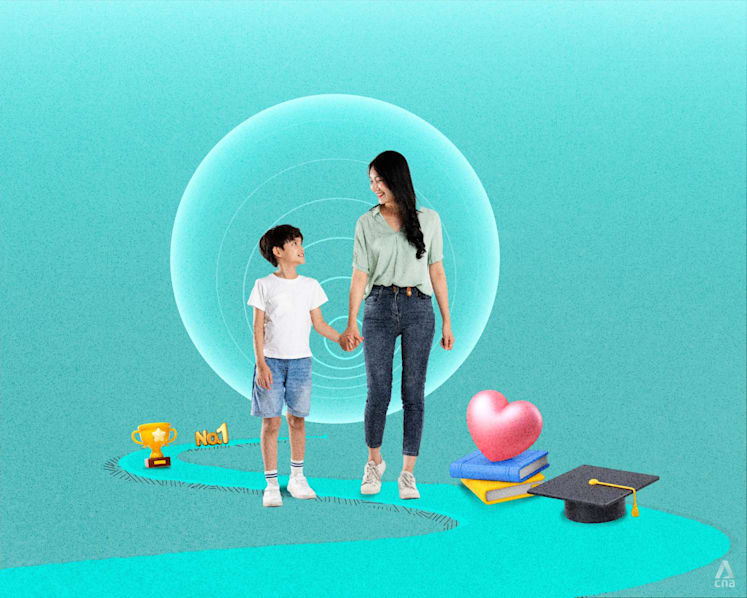
Even so, as we got closer to Truett's first O-Level paper, I would pop into his room frequently to ask: "How's exam prep coming along? You need any help?"
"I got it, Mum. Let me 'cook'," he would reply, meaning to let him be.
Admittedly, the stakes were somewhat lower for his O-Levels than they had been for his PSLE.
He had already secured a post-secondary spot via the Early Admissions Exercise. As long as he did not score more than 26 points for five subjects, his admission into Temasek Polytechnic's communications programme was a given.
"I know you've got it in the bag," I told him, "but still, give it 100 per cent – for self-respect and pride."
O-LEVEL STRESS IS DIFFERENT
If Truett had attained better PSLE results in 2020, perhaps he might have had an easier time at a more prestigious school and gone on to do even better for his O-Levels in 2024.
But then again, perhaps not.
He could have just as easily struggled in a school where he could not keep up with the pace of learning and grown even more disheartened.
Even though my son's journey did not follow the recommended path for academic success – a "good" primary school followed by a "good" secondary school – watching him thrive and eventually get into the tertiary course he really wanted was a joy.
Now, with hindsight, we can see how his PSLE disappointment was, in many ways, a blessing in disguise.
Nevertheless, for a child of 16, it is extremely stressful to know that your future may depend on a piece of paper.
How stressful? Enough to give you nightmares.
My second child Kirsten received her O-Level results on Wednesday (Jan 14). The week before, she started having recurring bad dreams about them.
In the first, she got 43 points, followed by another where she got 32 points. Then came one where she scored 16 points.
"Just two or three more dreams and you'll get down to six points," I told her.
Despite my attempts to ease her mind, I found myself feeling just as nervous.
For Kirsten, the stakes were higher than for her older brother: She had applied for early admission to the same course but was not accepted, so everything would come down to her results.
Having seen the hours she put into revising for the exams, all we can do now is remind her that regardless of how she did, we're proud of her for working hard and we'll figure out the next steps together.
LEARNING THAT WE CAN TAKE ANOTHER APPROACH
We have now gone through five rounds of major exams as parents (three PSLEs and two O-Levels), with several more to come. We have three more children after Truett and Kirsten.
I loved being able to do these deep dives with my daughter on literature and humanity ... It was a far cry from the PSLE days of frayed nerves, raised cortisol levels and frustrated tears.
In many ways, the O-Levels are arguably more important because they affect tertiary choices available to our kids. However, the process feels emotionally easier for everyone involved – far less stressful and, dare I say, even enjoyable.
This is partly because O-Level subjects are more strongly tied to our kids' interests. I was secretly pleased when both Truett and Kirsten chose the same subject combination I took in secondary school – history and literature, my two favourites.
Instead of plodding through painful science papers, Kirsten and I spent much of last year discussing Arthur Miller's The Crucible – a book I had studied for my own O-Levels – in Gen Z slang.
"Abigail is so 'buns' (bad). She really irritates me," she would say, referring to the book's antagonist.
"It's easy to hate on Abigail. She's manipulative, I'll give you that. But she was shaped by trauma and a repressive Puritan society," I argued.
She was quick to rebut: "Well, aren't we supposed to rise above and take responsibility for our actions? She can't blame what she does on her circumstances."
I loved being able to do these deep dives with my daughter on literature and humanity, bantering back and forth like Lorelai and Rory in one of my favourite TV shows, Gilmore Girls.
It was a far cry from the PSLE days of frayed nerves, raised cortisol levels and frustrated tears.
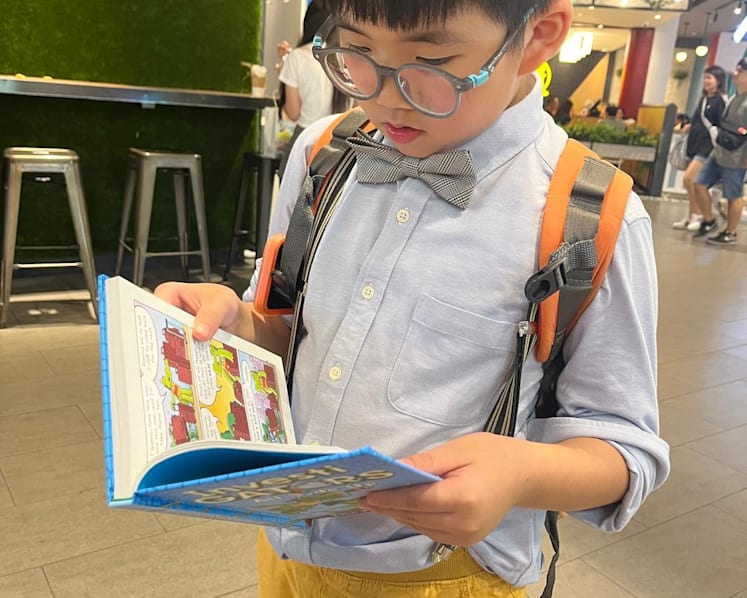
Getting to experience the markedly different nature of O-Level stress with our older kids has also changed how we approach PSLE for our three younger ones.
For starters, we are far less rigid about keeping too tight a leash.
Our fourth child Theo will be taking his PSLE this year. He's already noticeably less strung-out than his older siblings were, having witnessed them go through multiple major exams.
"I can study on my own, Mum. Let me 'cook'," he told me, echoing his big brother.
"Nice try," I replied. "In four years' time, you can 'cook'. But for now, this is still my kitchen."
The tradition of having them study next to me has to be upheld, at a time when they tend to act on emotional impulses than lead with rationality.
However, we have reached a compromise: supervised study with more allowances for self-study.
Time will tell if our revised approach will prove effective for our younger kids' grades, but for now, it will certainly allow all of us at home to enjoy a little less tension and stress.
Daphne Ling is a mother of five. She is also the co-owner of an advertising agency.
If you have an experience to share or know someone who wishes to contribute to this series, write to voices [at] mediacorp.com.sg (voices[at]mediacorp[dot]com[dot]sg) with your full name, address and phone number.