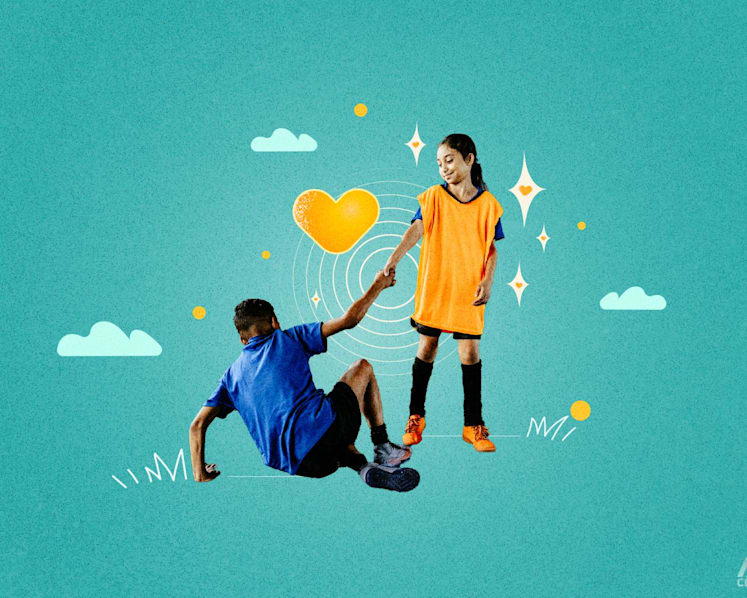
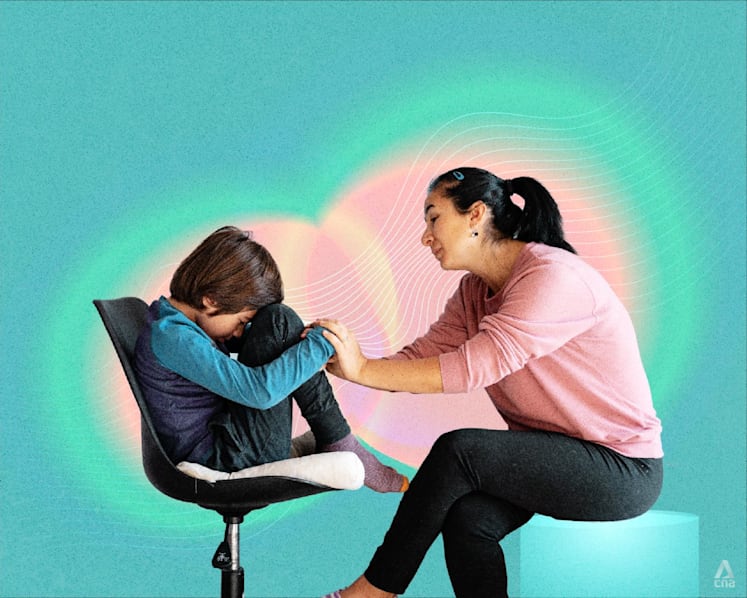
I was taught to share my things as a child. Why is that changing now?
A playground clash over toys forced mum-of-two Jillian Lim to rethink the "let kids share when they're ready" trend in modern parenting and what it means to get children out of their comfort zones.
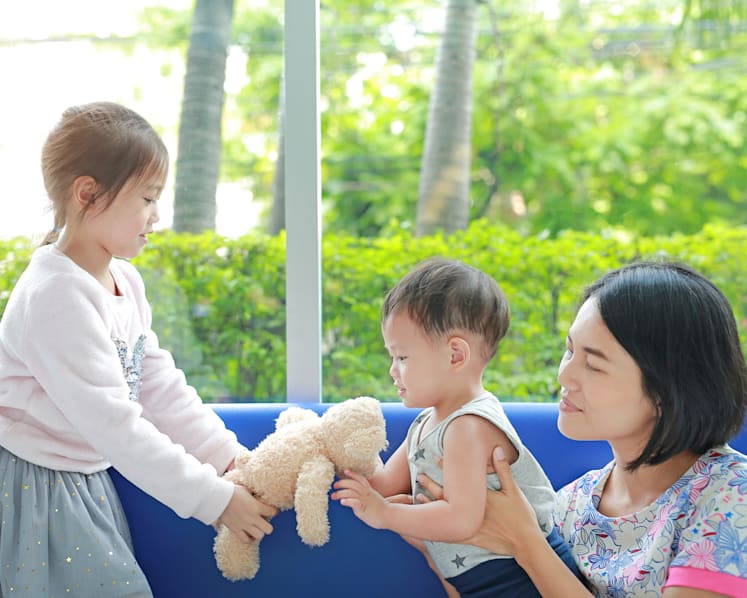
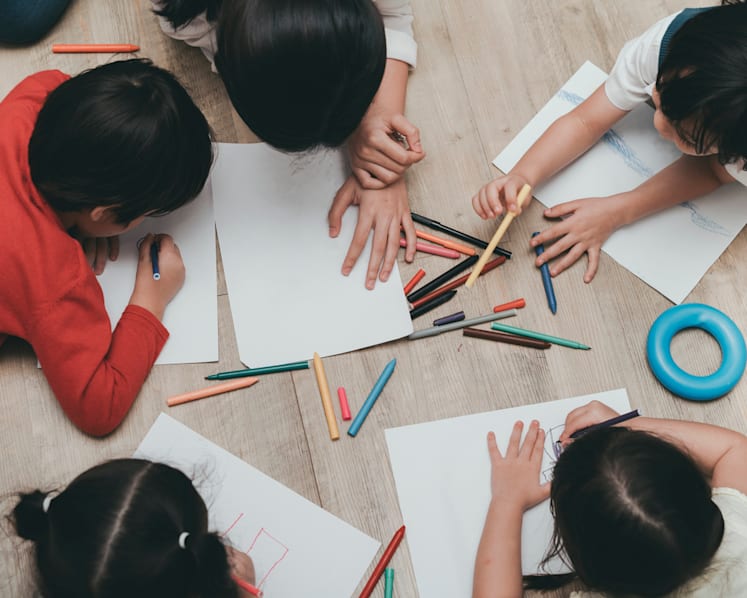
Parents play a part in getting their children out of their comfort zone to consider others, to let them learn kindness during playtime, mother-of-two Jillian Lim says. (Photo: iStock)

This audio is generated by an AI tool.


When I saw my three-year-old daughter snatch a toy from my friend's son at the playground, a wave of righteous indignation came over me.
I wasn't just angry – I was slightly embarrassed. Growing up, every adult in my life had taught me that it was beyond rude to not share my things.
"Hey, Ziggy!" I immediately said to my daughter. "That's not being very nice. Could you share your toys, please?"
Ziggy refused, unrepentant as only toddlers can be.





My chest puffed up, and I turned to my friend's son. "That's okay then, let's not play with Ziggy. She's being selfish right now."
My friend, who was visiting from Australia, looked slightly stunned when I did this.
"I don't make my son share," she said. "He'll share when he's ready."
I was dumbfounded by this. She went on to add: "If you bought a bag of chips at work, are you expected to share it with everyone?"
She had a point. No one would expect you to share unless the chips were placed in a common snack area meant for sharing.
But still, shouldn't it be almost instinctual to offer? Like a casual, "Eh, want some?" At least to me, it is.
It got me thinking: When did something as basic as sharing become negotiable?
LEARNING TO COMPROMISE
Growing up, my sister and I had one Game Boy.
To be precise, the handheld game console was a Christmas present she had received. She was asked – or rather made – to share it with me.
She enforced a rule so we could both enjoy Super Mario: "When I 'die' in the game, you can play. When you 'die', it's my turn again."
This seemed reasonable to my six-year-old brain at the time. However, at 10 years old, my sister was, of course, much better at Super Mario than I was.
While she happily powered through level after level, I often wiped out halfway through a single game. On average, I was holding the Game Boy for barely two minutes before having to hand it back to her. It was an excruciating and frustrating experience.
In our household, complaining was not an option. Any gripes we had about toys were always met with the same response from our parents: "If y'all can't share, I'll just throw it away."
With the TV, we were allowed to watch what we wanted for as long as we wanted – but once the bickering started, the TV would be turned off.
This taught us the invaluable skill of compromising.
WHEN KIDS GET TO SET THEIR OWN RULES
At primary school in the late 1990s, my friends and I had lived by the playground rule: "See no touch, touch no see. See and touch, must pay money."
It was a simple policy for social behaviour. Don't touch anything that doesn't belong to you, unless the owner says it's okay.


As a child, I remember gawking at a classmate's Crayola collection during art class. I had perfectly serviceable Pentel crayons, but having previously seen the glossy, bright Crayola boxes only in American TV shows, I yearned to try them.
I also thought my Colleen twin-head colour pencils were cool until I saw a 60-piece Faber-Castell colour pencil set for the first time.
"Can I borrow your colour pencil?" was usually met with a generous "yes" – albeit sometimes with certain conditions, such as time limits of a few minutes for each use, or having to close my eyes while using the borrowed item. (The indisputable logic of eight-year-olds.)
Looking back, we were learning to set our own boundaries among ourselves. We shared our resources with each other, but with our own rules, limitations and options.
The difference was that those rules were set by us.
When a parent steps in and speaks for a child who is assumed to be too young to voice their own "terms" of sharing, the dynamic inevitably changes.
Often, I've observed that the scenario presented to the child transforms from "How would you like to share?" to "Would you like to share?"
Not sharing at all becomes a much more viable and appealing possibility to a child who may not have considered it in the first place.
BOUNDARIES DON'T MEAN SELFISHNESS
Still, there are times when an adult's presence can make a difference for the better.
A couple years ago, we were at the pool with my oldest daughter Lily, who was about three years old at the time. We didn't have any pool toys with us, so we asked the family playing next to us if we could borrow a ball.
The little girl who owned the ball said "no", even though she wasn't playing with it at that moment. Her mother smiled at Lily and said, "Sorry, she's not ready to share her ball just yet."
Lily was crestfallen, but I explained to her that the toy belonged to someone else, and that we couldn't just take it because we wanted it. Next time, I promised her, we'd remember to take along our own toys to the pool.
Some time later, the same mother swam over to us with the ball, saying her daughter was now ready to share. By then, Lily had forgotten all about the ball – but she accepted it nonetheless and nodded in thanks.
I thought the gesture was incredibly kind. This mother, who was already busy playing with and looking after her child in a crowded public pool, bothered to revisit the topic of sharing her daughter's ball with a random child.
How many of us, as parents, take care to have this conversation with our own children?
Do we ask them questions that may be tough for them to think about and answer? Questions such as: If you aren't ready to share now, why not? Does this toy mean something special to you?
What about the tough questions we parents need to ask ourselves? Questions like: What if our child is never "ready" to share? Is that still okay? If we never push them out of their comfort zone to consider others – even when they don't want to – how then do we teach them kindness?
IS SHARING STILL CARING?
I recently found myself thinking about my friend's chips analogy yet again.
If I brought a bag of chips to the office, I don't think anyone would expect me to share. After all, I was also taught that one shouldn't expect anything from others.
But I'd probably still offer anyway – simply because it wouldn't cost me anything to do so.
Think about it: If someone's phone battery is running low and you have a power bank, wouldn't you hand it over without thinking twice?
If we never push our kids out of their comfort zone to consider others – even when they don't want to – how then do we teach them kindness?
I'm reminded of a cultural emblem every Singaporean will likely be familiar with – the "paiseh piece".
When you're sharing a meal with others, you may automatically offer the last piece of food to others out of politeness, even if you really want it for yourself. Sharing is caring.
How did we go from that, to teaching very young children it's okay to be overtly possessive of their toys – physical objects that can't be consumed or used up – things they can't lose out on by lending them to their peers for a few minutes or so?
My children are still young, and social norms constantly change. As Singaporeans grow more affluent and as it becomes easier to buy whatever catches our fancy – that ships worldwide, at least – there may come a day when sharing feels less necessary. Redundant, even.
But as far as I'm concerned, that day will never come in my own household.
Jillian Lim is a mother to two girls and one Singapore Special pet dog. She has nearly two decades of experience in broadcasting and is now pursuing a degree in business marketing.
If you have an experience to share or know someone who wishes to contribute to this series, write to voices [at] mediacorp.com.sg (voices[at]mediacorp[dot]com[dot]sg) with your full name, address and phone number.