







EU ban on 'forever chemicals' set for delay
The proposed ban of these health-risk chemicals will likely be delayed until the end of this year.
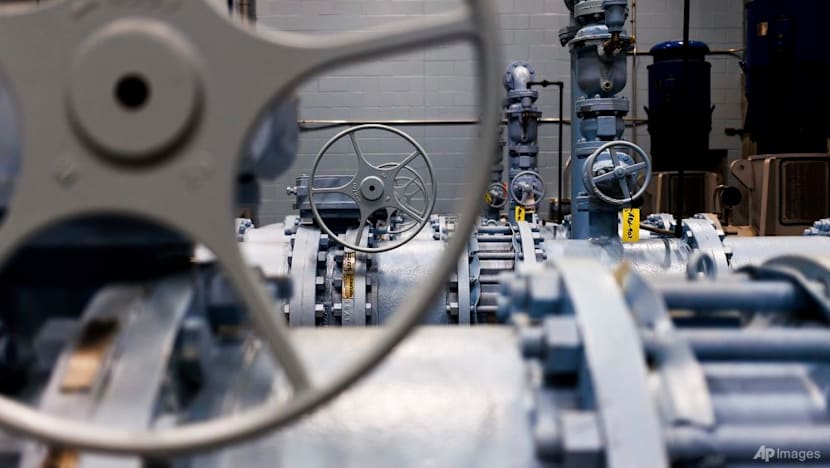
Pumps work inside the Sweeney Water Treatment Plant in Wilmington, NC, Monday, Apr 28, 2025. (Photo: AP/Ben McKeown)
BRUSSELS: EU plans to ban "forever chemicals" will likely not see the light before the tail end of the year, EU officials said Monday (Jan 19), foreshadowing a possible delay.
Brussels has said that prohibiting per- and polyfluoroalkyl substances (PFAS) in everyday consumer goods - from pizza boxes to clothing - is a "priority".
But the related proposal promised for this year is unlikely to be ready before the end of 2026 as it is dependent on external assessments, according to officials with knowledge of the file.
Environment commissioner Jessika Roswall told a press briefing in Brussels that coming up with a legal text was "complicated" but "doable", adding industry was "already preparing" for a ban.
Often called "forever chemicals" as they take an extremely long time to break down, PFAS are increasingly being restricted across the world due to adverse health effects.
Chronic exposure to even low levels has been linked to liver damage, high cholesterol, reduced immune responses, low birth weights and several kinds of cancer.
Brussels is looking to restrict about 10,000 PFAS used in consumer goods like non-stick pans and stain-proof carpets, with exceptions for certain areas including medical equipment.
A proposal was initially promised for the end of 2025, then pushed back to 2026.
On Monday, Roswall remained vague on a timeline, but said the commission was waiting to hear from the European Chemicals Agency (ECHA).
The Helsinki-based agency is conducting a risk assessment, due in March, and a socio‑economic assessment, which it said would not be ready before the end of 2026.
Only once that is ready, the commission will be able to put a plan on the table - making it difficult for Brussels to stick to its 2026 goal.
Negotiations with the European Parliament and member states, which often take months, will follow.
Last year Roswall revealed she had tested positive for "toxic" PFAS after undergoing screening to raise awareness of the health risks linked to the man-made pollutants.




