







US pursues third oil tanker near Venezuela amid sanctions crackdown
The pursuit follows US President Donald Trump’s announcement last week of a “blockade” on all sanctioned oil tankers entering or leaving Venezuela.
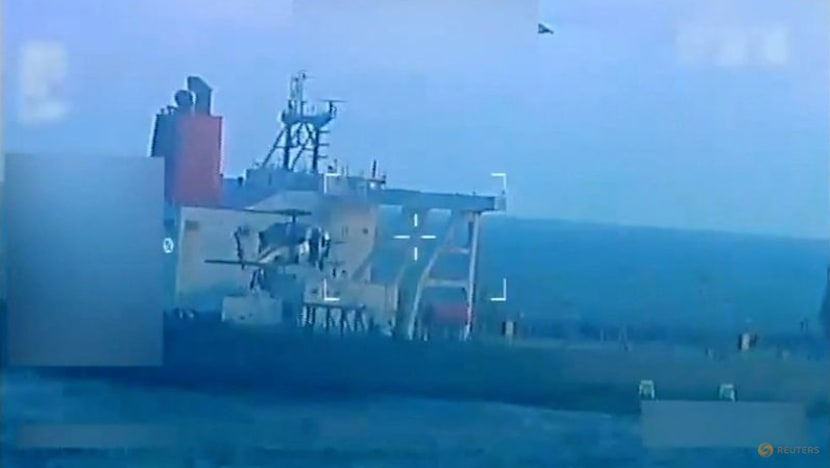
WASHINGTON: The United States Coast Guard is pursuing an oil tanker in international waters near Venezuela on Sunday (Dec 21), officials said, in what would be the third interception of a sanctioned vessel in less than a week as Washington steps up pressure on Caracas.
A US official said the Coast Guard was in “active pursuit” of a tanker linked to Venezuela’s sanctions evasion, describing it as part of a so-called dark fleet and alleging it was flying a false flag under a judicial seizure order. Another official said the vessel had not yet been boarded, noting that interceptions can involve shadowing or aerial monitoring rather than immediate seizure.
The officials, who spoke on condition of anonymity, did not identify the tanker or disclose its precise location. The White House did not immediately comment.
The pursuit follows President Donald Trump’s announcement last week of a “blockade” on all sanctioned oil tankers entering or leaving Venezuela. The move is part of a broader pressure campaign against President Nicolas Maduro that has included a strengthened US military presence in the region and more than two dozen strikes on vessels in the Caribbean Sea and eastern Pacific Ocean. At least 100 people have been killed in those operations, according to officials.
OIL MARKET IMPACT IN FOCUS
The first two tankers seized in recent days were operating on the black market and supplying oil to countries under sanctions, Kevin Hassett, director of the White House’s National Economic Council, said in a television interview. He downplayed the potential impact on US fuel prices, saying the seizures involved only a small number of ships.
Some analysts, however, warned the latest action could lift oil prices slightly when Asian markets open on Monday, as traders weigh the risk of further disruptions to Venezuelan exports. Others said the seizures could heighten geopolitical tensions and add pressure to the shadow fleets used to transport oil from sanctioned producers such as Venezuela, Russia and Iran.
While tighter logistics could force sanctioned crude to be sold at deeper discounts, analysts said the standoff underscores growing uncertainty in global oil markets as Washington intensifies enforcement of its sanctions regime.
Ian Ralby, CEO of maritime law and security firm IR Consilium, said US' actions risk undermining its credibility and could lead to miscalculations and environmental disasters.
The legality of the attacks that killed more than 100 people "is very much in question", he told CNA's Asia First programme.
"The lack of clarity on what the legal basis for all of these operations is brings all kinds of questions to the front, and it does undermine, potentially, the credibility of the US with regional partners in the Caribbean and Latin America, and also around the world," he added.
"And if the US is doing (this), so too could other states - China, Russia, Iran, other states that are under sanctions like North Korea."
Ralby also noted that the risk of a catastrophic oil spill in the Caribbean is huge, which could lead to environmental damage and a loss of income and access to food for coastal communities.
While the US Navy and Coast Guard are "typically very careful" in conducting boarding operations, recent activities have been "outside the norm", he added.
"The blowing up of boats is not a normal counter-narcotics operation, and so we have to be a little bit concerned that that something could go wrong. And when you have force being used towards vessels, there's concern as well that force may be used in response," Ralby warned.




