







Waymo restarts robotaxis after San Francisco power outage paralysed fleet
The company said its cars are programmed to treat non-functioning traffic lights as stop signs, but the scale of the outage caused vehicles to remain stopped longer than usual.
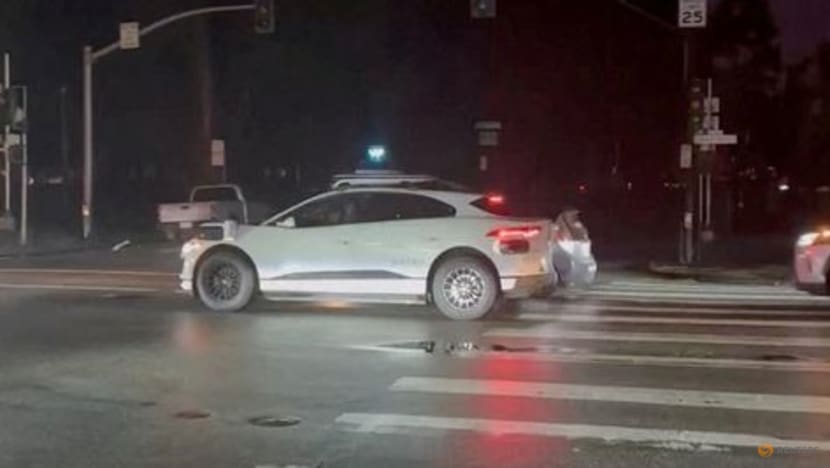
A Waymo car is halted on the road amid a power outage in San Francisco, California, US, on Dec 20, 2025, in this screengrab obtained from a social media video. (Image: Reuters)
SAN FRANCISCO: Waymo announced on Monday (Dec 22) that it had relaunched its robotaxi service in San Francisco after parts of its fleet became paralysed at intersections during a massive power outage over the weekend.
The subsidiary of Google-parent Alphabet had to suspend operations on Saturday evening when a fire at an electrical station left about a third of the city without power.
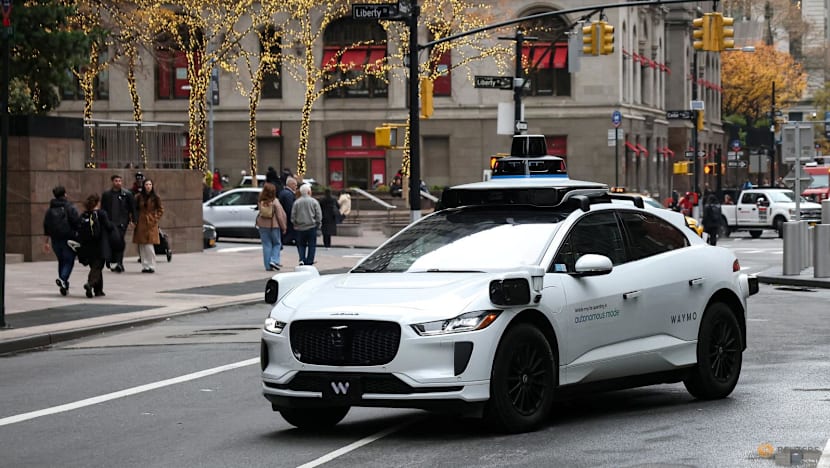
Waymo's white Jaguars, equipped with cameras and sensors, have become a familiar sight on the streets of San Francisco.
With traffic lights out, many of the self-driving vehicles froze at intersections, creating major traffic jams. Videos on social media showed clusters of the confused autonomous cars stuck at crossroads.
"We resumed ride-hailing service in the San Francisco Bay Area on Sunday," a Waymo spokesperson said in an email to AFP on Monday.
The company said its cars are programmed to treat non-functioning traffic lights as stop signs, but the scale of the outage caused vehicles to remain stopped longer than usual.
Waymo then decided to temporarily suspend service for safety reasons.
The breakdown immediately drew mockery from Tesla CEO Elon Musk.
Tesla's Full Self-Driving technology claims to operate independently of infrastructure, navigating with only cameras and artificial intelligence that adapts in real time - though vehicles still require a driver present.
Waymo has favored a more cautious and expensive approach, relying on multiple onboard sensors and complete mapping of areas where its fleets operate.
The outage occurred amid Waymo's rapid expansion.
The company plans to exceed 15 million rides in 2025, up from 4 million in 2024.
Its service, available in 10 US cities by early 2026, aims to expand to about 20 metropolitan areas within a year, including London.
But competition is intensifying. Chinese rivals are conducting international testing, and Uber announced in October its intention to launch robotaxis in San Francisco by late 2026.
Meanwhile, Amazon's Zoox subsidiary is also increasing public testing of its autonomous shuttles in the city.





