







Powering Asia’s energy transition through applied postgraduate training
Newcastle University’s Master of Science in Energy Management (Renewable Enterprise), offered in partnership with Ngee Ann Academy, prepares graduates and professionals for leading roles in renewables, sustainability and energy policy.

The Master of Science in Energy Management (Renewable Enterprise) supports professionals looking to deepen their expertise in energy and sustainability. (Photos: Newcastle University)

This audio is generated by an AI tool.


Brought to you by

Sustainability director, ESG (environmental, social and governance) manager, technical lead in renewables, energy transition lead – two decades ago, many of these roles were still emerging. Today, they are central to a global energy sector shaped by the rapid development of renewable technologies, the integration of new energy sources and artificial intelligence’s (AI) expanding role in energy distribution and consumption.
To meet this shift, Newcastle University has launched a new Master of Science (MSc) in Energy Management (Renewable Enterprise), aimed at building a pipeline of energy professionals equipped to lead innovation in energy management, technology and policy.
“As energy professionals take up new roles in areas like engineering, policy, compliance and analysis, they must be well equipped to meet the industry’s evolving needs,” said Dr Duncan Rayner, chief operating officer of Newcastle University in Singapore.
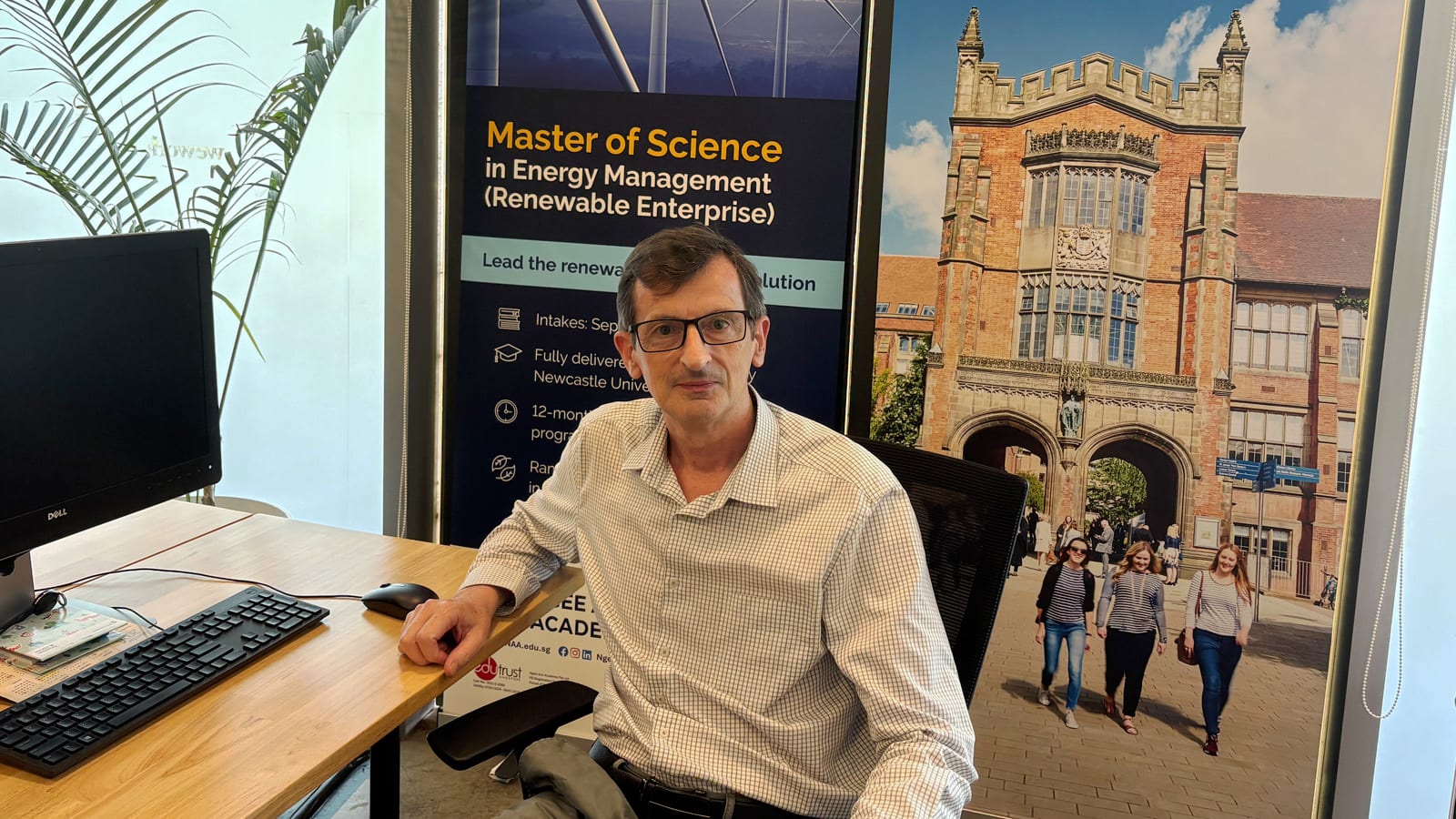
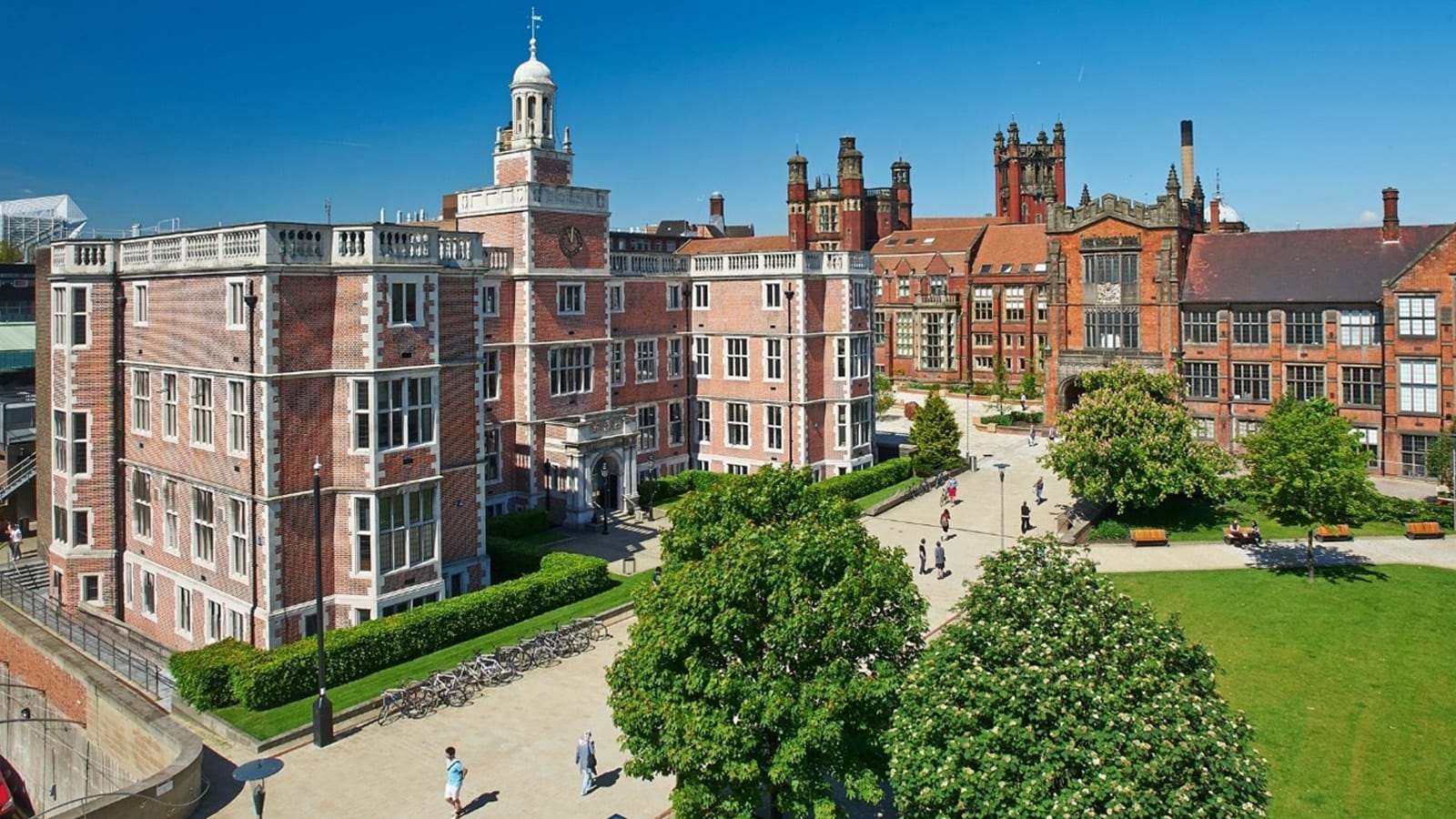
A member of the Russell Group of research-intensive universities, Newcastle University is known for its work across science and engineering, medicine, social sciences and the humanities. It was ranked 144th in the 2026 Times Higher Education World University Rankings and 137th in the 2025 QS World University Rankings.
Designed and delivered by Newcastle-appointed faculty and conducted in person at Ngee Ann Academy (NAA)’s city-centre campus, the programme will commence in September, with full-time and part-time options completed in 12 and 24 months respectively. It follows the same academic standards as the university’s programmes in the United Kingdom.
AN INTERDISCIPLINARY CURRICULUM
Students enrolled at NAA in the MSc in Energy Management (Renewable Enterprise) will develop technical knowledge in solar, wind, hydro and bioenergy systems, alongside modules in business strategy and technology-led innovation.
The programme is led by Assistant Professor Choong Zi Jie at Newcastle University in Singapore’s Faculty of Science, Agriculture and Engineering. His background spans data analytics, automation and system optimisation, with research focused on Al applications in predictive maintenance, machine vision and data-driven decision systems.
“As programme lead, I have been working on a curriculum that integrates AI and data-driven methodologies. The programme will equip students with the skills needed to drive innovation and sustainability in energy production and consumption,” he said.

Developed in consultation with employers and research experts in the UK, the curriculum places equal emphasis on industry relevance and practical application. Beyond renewable technologies and energy management systems, students will explore modules in sustainability management, consultancy, market analysis and policy, providing both technical grounding and commercial awareness.
Modules such as Impact Analysis and Compliance, and AI Applications for Energy are designed to ensure students gain applied, up-to-date knowledge. Others, including Sustainable Futures and Renewable Energy Enterprise, focus on entrepreneurship and innovation, preparing students for leadership roles.
“Newcastle University places equal weight on academic rigour and real-world application,” said Asst Prof Choong. “Faculty members aim to create a collaborative learning environment where students build theoretical knowledge alongside practical problem-solving skills.”
To enrol in the programme, applicants must hold a good undergraduate degree from a recognised university. The programme is open to those from non-science and non-engineering backgrounds. “It includes an introductory module in energy concepts, which provides a foundation in the scientific principles underpinning energy production, distribution and consumption,” said Dr Rayner.
DEVELOPING FUTURE LEADERS IN ENERGY
Through its partnership with Newcastle University, NAA will offer students access to learning experiences aligned with Singapore’s evolving energy ecosystem.
Students will also complete a year-long enterprise project – a supervised industry assignment that allows them to apply classroom learning to real-world challenges. Unique among master’s level programmes in Singapore, it emphasises hands-on learning through case studies, site visits and the use of industry-relevant software tools. Students will receive mentorship and engage with industry practitioners through networking sessions and professional events.
As part of their studies at NAA, students will build a portfolio documenting their projects, research and reflections. This process is intended to help them identify areas of interest within the energy sector. Faculty members will then guide them in securing suitable industry placements and building professional networks.
“This approach gives students confidence in their energy management skills and helps them build professional connections and career opportunities within Singapore and the wider region,” said Dr Rayner.
He hopes graduates of the MSc in Energy Management (Renewable Enterprise) will go on to assume leadership roles and contribute to technical, policy and market innovations.
“There are significant avenues for professionals to make an impact at organisational and national levels – whether as entrepreneurs, infrastructure managers, technical innovators or advisers,” he said.
Applications are open for the September 2026 intake of Master of Science in Energy Management (Renewable Enterprise). Prospective students may contact NAA’s admissions team for more information about the programme. Join a fireside chat, Innovations, Insights and Skills for a Clean Energy Future, hosted by NAA and Newcastle University on May 6 to explore sustainability in the energy sector.




