







SMU Academy: Rethinking higher-education pathways for polytechnic post-diploma and ITE diploma graduates
A recent MOU recognises the experience and prior learning of eligible working adults, allowing them to receive credit exemptions and progress directly into graduate-level higher-degree programmes.
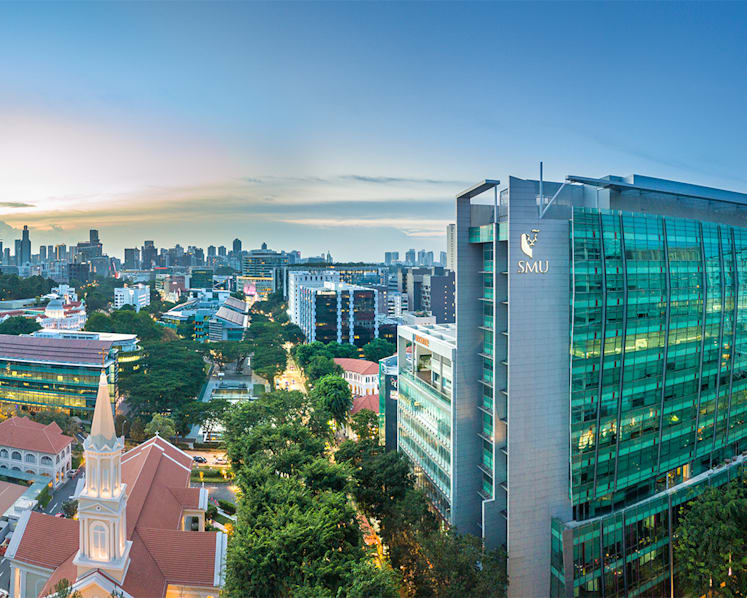
Since its launch in 2017, SMU Academy has expanded to more than 1,500 programmes, reflecting growing demand for flexible, work-integrated learning. (Photos: Singapore Management University)

This audio is generated by an AI tool.


Brought to you by

For many professionals, additional qualifications are still seen as the main route to career progression. This view, however, often overlooks the value of existing skills and workplace experience in accelerating learning and advancement. As emerging technologies and new business models reshape how organisations operate, on-the-job experience is increasingly becoming a viable pathway into higher education.
This shift is shaping new approaches to adult learning. At SMU Academy, the professional training arm of Singapore Management University (SMU), collaborations and learning models are being developed to support mid-career upskilling and job transformation within Singapore’s broader learning ecosystem.
At the SMU Academy Day held last October, the academy signed a memorandum of understanding (MOU) with the five polytechnics and the Institute of Technical Education (ITE). The agreement creates additional pathways for graduates and shortens the time needed to progress into graduate-level study by formally recognising relevant prior learning and professional experience.
“In a world of constant change, standing still is the greatest risk,” said Professor Lily Kong, SMU’s president. “Learners must have a positive and proactive mindset towards lifelong learning, and institutions must collaborate more deeply to create seamless pathways across different stages of learning.”





TURNING WORKPLACE EXPERIENCE INTO ACADEMIC PROGRESSION

Under the MOU, advanced and specialist polytechnic diploma holders may receive credit exemptions towards SMU Academy’s Industry Graduate Diploma (IGD) and Industry Practice Master of Digital Economy (IPMDE) programmes. Depending on their background, they may receive up to six module credits, with an additional one or two credits awarded for relevant work experience, subject to programme relevance.
The agreement also establishes, for the first time, a direct progression into a graduate-level programme at SMU for eligible ITE diploma graduates. Previously, ITE diploma holders seeking admission to the IPMDE were required to first obtain a polytechnic diploma and accumulate 10 years of work experience.
Mr Jack Lim, SMU Academy’s executive director, described the MOU as “a game changer in adult education”. He noted that in the academic year 2024/2025 alone, there were 13,552 ITE graduates and 767 of them had completed the ITE Work-Study Diploma. “This points to a strong pipeline of adult learners who stand to benefit from the opportunities created by the MOU,” he said.
FLEXIBLE ROUTES INTO ADVANCED STUDY
Since its launch in 2017, SMU Academy has expanded its offerings to more than 1,500 programmes, reflecting growing demand for flexible, work-integrated learning among working professionals and organisations.
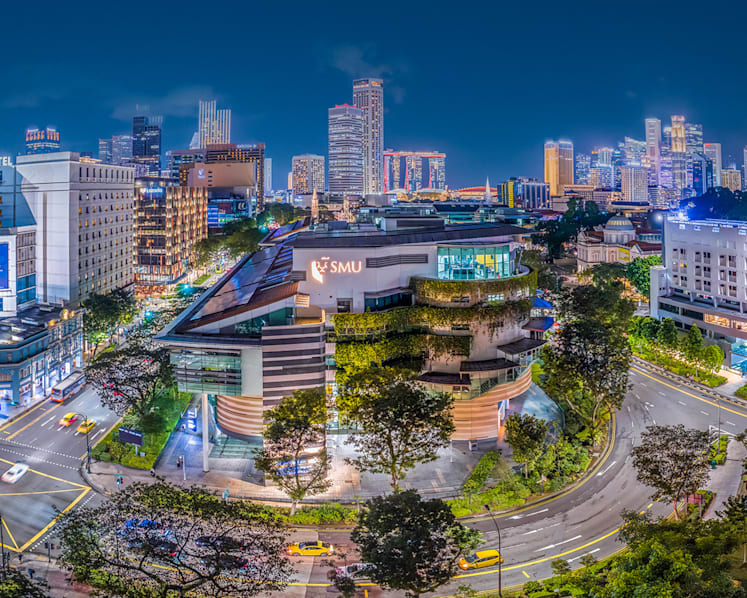
Prof Gary Pan, SMU’s associate provost of lifelong learning, said the IPMDE focuses on hands-on, application-based upskilling, with students working on real-world projects sponsored by companies and government organisations.
“Modules are taught by industry practitioners and offered several times a year, with some delivered online to allow learners to study wherever they are,” he said. “Modules can be completed in no prescribed sequence and learners have up to three years to complete the programme.”
This flexibility is further supported by a suite of specialised IGDs that can be stacked towards the IPMDE across a range of industry-aligned domains focused on digital capabilities. The recent addition of three new programmes – IGD in Carbon Reporting and Lifecycle Management, IGD in Generative AI, Large Language Models and AI Governance, and IGD in Leadership and People Management – expands the existing portfolio, which already includes areas such as the digital economy and innovation, customer experience, procurement, leadership and management, and supply chain and operations. Together, these programmes provide learners with structured pathways to deepen their expertise and stay competitive in a fast-changing landscape.
After completing an IGD, learners can choose to graduate with the qualification or progress directly to the IPMDE. The IGD provides a structured foundation for the master’s programme while serving as a recognised milestone in its own right. The IPMDE combines coursework, competency-based assessments and work-based learning through a capstone project.
Singapore citizens may receive up to 90 per cent SkillsFuture funding for the IPMDE, along with an additional S$4,000 offset on SkillsFuture-funded components through the SkillsFuture Credit (Mid-Career)*.
Working professionals who meet the relevant entry requirements may also enrol in the IPMDE without first completing an IGD. For example, an operations team leader with a Work-Study Diploma from ITE and continuing education and training certifications in cloud computing and cybersecurity may enter the programme directly, allowing him to deepen both technical and leadership skills while continuing to work.
Learning, Prof Kong said, is a journey. Improving access to graduate-level upskilling can give learners clearer pathways and greater confidence in navigating lifelong learning, while supporting workforce transformation in a rapidly changing economy.
Register your interest for the Industry Graduate Diploma or Industry Practice Master of Digital Economy programmes at SMU Academy today.
*Terms and conditions apply.




