AI boom could widen inequality worldwide, with Asia most at risk: UN agency report
Jobs held by women are nearly twice as exposed to automation, while youth employment is declining in high-AI-exposure roles, according to the United Nations Development Programme.

This audio is generated by an AI tool.


As the global artificial intelligence race heats up, the technology could deepen existing inequalities between countries if left unmanaged, according to a new report released by the United Nations’ lead agency on international development on Tuesday (Dec 2).
Such a divide will be most visible in Asia where nations differ widely in income levels, digital capacity and governance, noted the United Nations Development Programme (UNDP).
The agency is tasked with supporting countries and communities to eliminate poverty.
Its latest report, titled The Next Great Divergence: Why AI May Widen Inequality Between Countries, noted that Asia hosts more than half of the world’s AI users and is rapidly expanding its innovation footprint.





For example, China now holds almost 70 per cent of AI patents worldwide. Six economies across the continent are also home to more than 3,100 newly funded AI companies.
However, digital readiness varies significantly across the region, noted UNDP.
Countries such as Singapore, China and South Korea are making substantial investments in AI infrastructure and skills, while others are still working to strengthen foundational digital access and literacy, it added.
UNDP warned that while many lower-income countries have gradually closed the gap with higher-income ones, AI could chip away at these gains.
Its report said such nations lack the infrastructure for any meaningful gains from the technology.
SHAPING AI GOVERNANCE
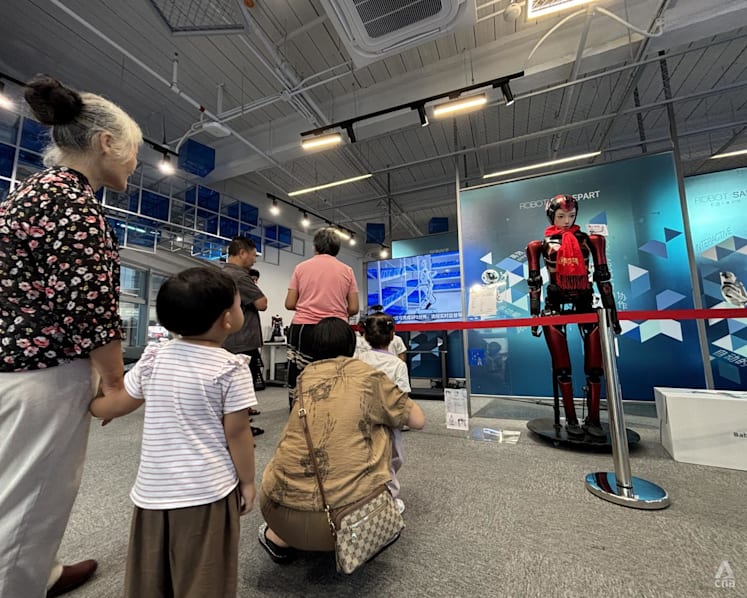
Philip Schellekens, chief economist for Asia and the Pacific at UNDP, said there is “enormous potential” for countries like Singapore and China that are “very much at the head of the AI race” to help shape regional and global AI governance.
“Technology is one thing. But the second thing is, how are people actually using the technology? And then we develop recommendations that are differentiated according to capacity levels,” he added.
The most surprising part of UNDP’s report was that AI can amplify global inequality in the future, which means it should be better managed to benefit developing countries, Schellekens told CNA’s Asia Now programme.
He noted that Asia Pacific is the most unequal region in the world in terms of income disparity.
“We see that there are still 1.3 billion informal-sector workers, 700 million women who are out of the labour force, about half a billion people who are living in various forms of poverty, and 200 million people who are in extreme poverty,” he said.
“So, what needs to be done? It depends really on the starting point. In some countries, it will consist of investing more in hard infrastructure, access to electricity; making sure that digital literacy skills are up to par.”
However, soft infrastructure – like human capital and healthcare – must be developed as well, he cautioned.
Aside from looking at how AI can power economic growth and productivity, Schellekens said UNDP’s report also examined the effect of AI on people and future generations.
AI can be used for social protection to provide benefits to those facing various risks or vulnerabilities. But countries without a decent data registry are unable to take advantage of that, said Schellekens.
“We see, for example, women in South Asia - only about 40 per cent have access to the internet on their cell phones or have a cell phone. That limits the applicability or the potential of AI to help in many different ways, such as providing greater information,” he added.
“So, we think that there is, on the one hand, a capability gap in poorer countries … but there's also a vulnerability gap. In the poorer countries, there will be a greater exposure to the potential negative impacts of AI.”
WOMEN’S JOBS THREATENED BY AUTOMATION
The UNDP report also flagged vulnerabilities faced by women and young people.
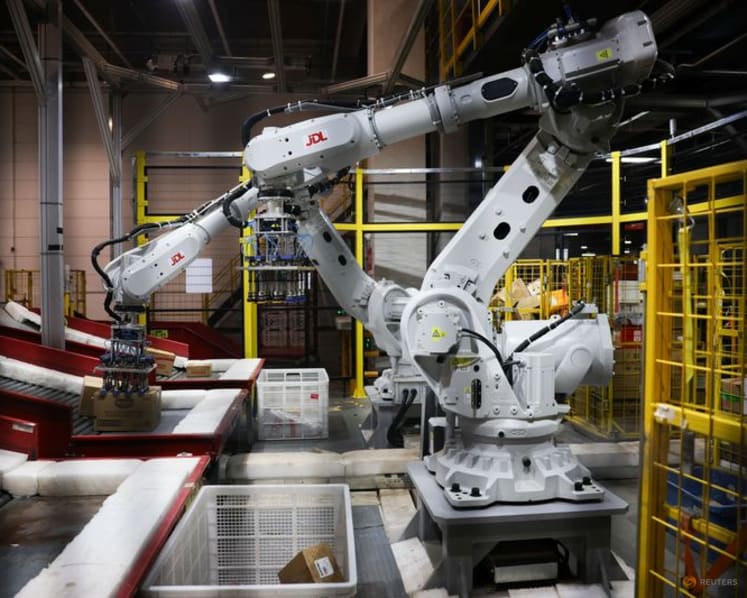
Jobs held by women are nearly twice as exposed to automation, according to the report.
It added that youth employment is declining in high-AI-exposure roles, or jobs with tasks that overlap with AI’s capabilities. This hits those aged 22 to 25 the hardest, threatening their early-career pathways.
Schellekens said in certain countries, women are disproportionately active in labour-intensive sectors where routine work is more prevalent.
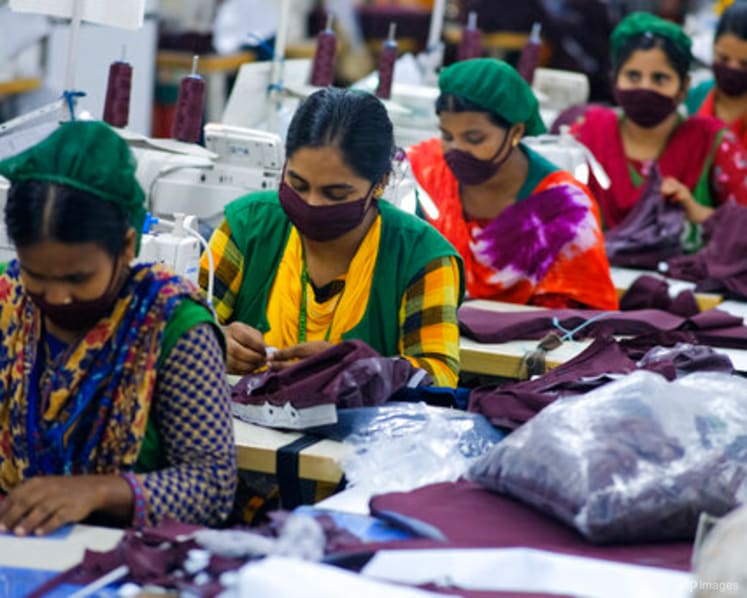
“AI-enabled robotics could herald a next wave of automation in the manufacturing industry. Think of the garment industry in Bangladesh, for example, which is predominantly staffed by women,” he added.
“We can also think about the call centres and the business process outsourcing work that is done in the Philippines, but also in India and Bangladesh and many other countries.”
AI is allowing such workers to be more productive at these jobs, but has also become “a clear rival”, he noted.
“It is also there that many women are active,” Schellekens added.
“It is not necessarily intrinsically a feature of gender, but it is a fact that women are working in sectors that are more likely to be affected by the labour market substitution effects across the region.”