One year after India-Pakistan clash, a fragile truce holds amid rising risks
At the heart of the dispute remains Kashmir, a flashpoint that continues to hinder long-term stability and economic potential in South Asia.
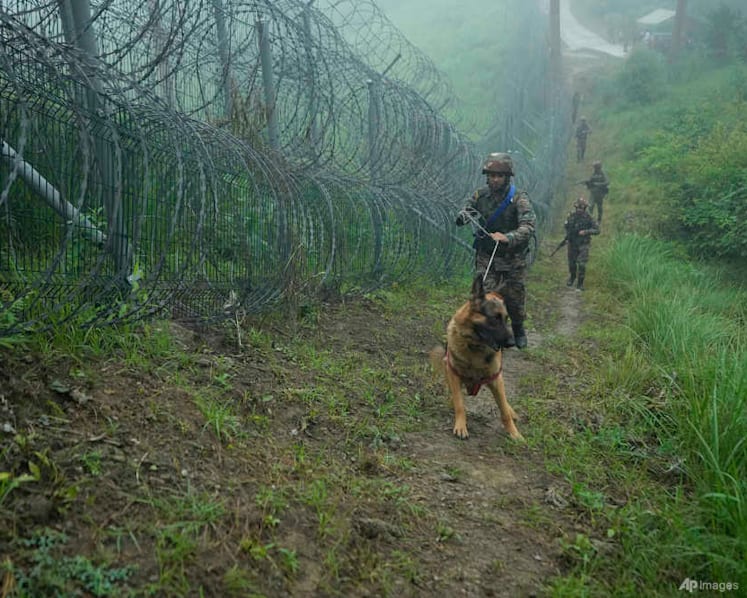
Indian army soldiers take part in a military drill during a media tour ahead of India's Independence Day, near the Line of Control that divides India and Pakistan at Sunderbani, Jammu and Kashmir, India, Tuesday, Aug 12, 2025.(AP Photo/Channi Anand)

This audio is generated by an AI tool.




A year after India and Pakistan came to the brink of their most serious military confrontation in decades, the uneasy calm that followed remains overshadowed by mistrust, hardened military doctrines and the constant risk of renewed conflict.
The four-day escalation – marked by fighter jets, missiles, drones and artillery – was triggered by a deadly militant attack in the part of Kashmir that India controls on Apr 22, 2025.
New Delhi blamed Islamabad, which denied any involvement.
Fifteen days later, on May 7, 2025, India launched Operation Sindoor, striking nine locations it described as “terrorist infrastructure” across Pakistan and Pakistan-administered Kashmir.





Pakistan condemned the strikes as “an act of war” and responded with its own military operation, codenamed Bunya-num Marsoos.
Both countries claimed to have inflicted damage on key strategic targets before eventually agreeing to a truce on May 10.
UNEASY CALM PERSISTS
For India, Operation Sindoor marked a turning point in its counter-terrorism policy.
Its new security doctrine signals a willingness to respond to terrorism with “a swift and proportionate response” regardless of borders or diplomatic sensitivities.
Analysts warn that this keeps the entire region on a knife's edge.
Harsh Pant, vice president at Delhi-based think-tank Observer Research Foundation, said India will “continue to climb the escalation ladder”.
“(This is) because there are costs that have to be imposed on those who believe that under the influence of a certain kind of stability that maybe nuclear weapons provide, countries can perpetrate violence, whether it is state-led or whether it is non-state-led,” he added.
Despite the ceasefire, relations remain strained.
Diplomatic ties are downgraded, India has suspended a key water-sharing treaty, and Pakistan has put on hold a post-1971 peace agreement – moves that underscore the fragility of the current pause.
Experts have urged restraint, saying both countries must de-escalate through dialogue.
Former Pakistani Defence Secretary Naeem Khalid Lodhi, a retired lieutenant general, noted that the stakes are too high for confrontation, saying: “We must have peace with India because more than 1.5 billion people of this region get affected by our animosity and our standoff.”
At the heart of the dispute remains Kashmir, a flashpoint that continues to hinder long-term stability and economic potential in South Asia.
“This region, South Asia, has so much promise, so much potential in economic terms. It (comprises) one-quarter of the world population,” said Pakistani career diplomat Jauhar Saleem, president of think-tank Institute of Regional Studies.
“But that promise has not been realised.”
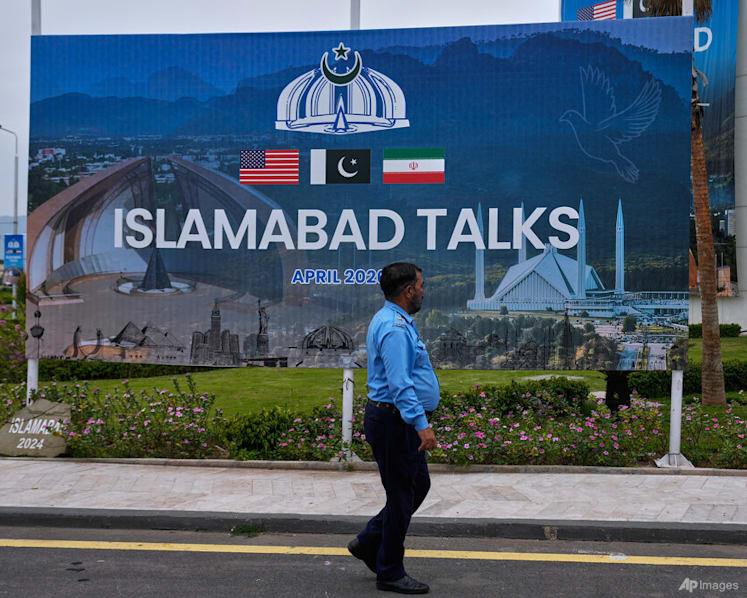
SHIFTING STRATEGIC NARRATIVES
India insists its actions are strictly counter-terrorism measures, deliberately separating them from the broader Kashmir dispute.
Meanwhile, Pakistan has sought to maintain diplomatic relevance, including endorsing United States President Donald Trump’s claims of mediating the truce and positioning itself in other regional conflicts.
But India said the pause in fighting was a result of talks between the two militaries.
Geopolitically, the country is also pushing to redefine its global image, seeking recognition as a major power independent of its rivalry with Pakistan.
Former Indian diplomat Pinak Ranjan Chakravarty argues that widening disparities, including economic ones, have already reduced the tendency to view the two countries as equals.
Yet observers cautioned that the most significant shift over the past year may be a lowered threshold for conflict.
With India’s new doctrine in place and tensions still simmering, the region may now be just one major attack away from another dangerous escalation, they added.