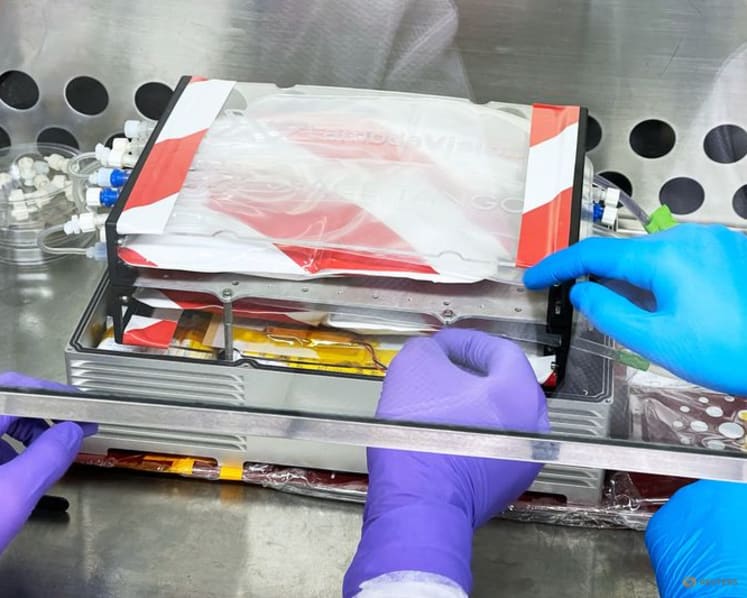





India eyes space-based research to advance drug development
Indian scientists, biotech firms and startups are looking to combine the country’s pharmaceutical expertise with its growing space ambitions.
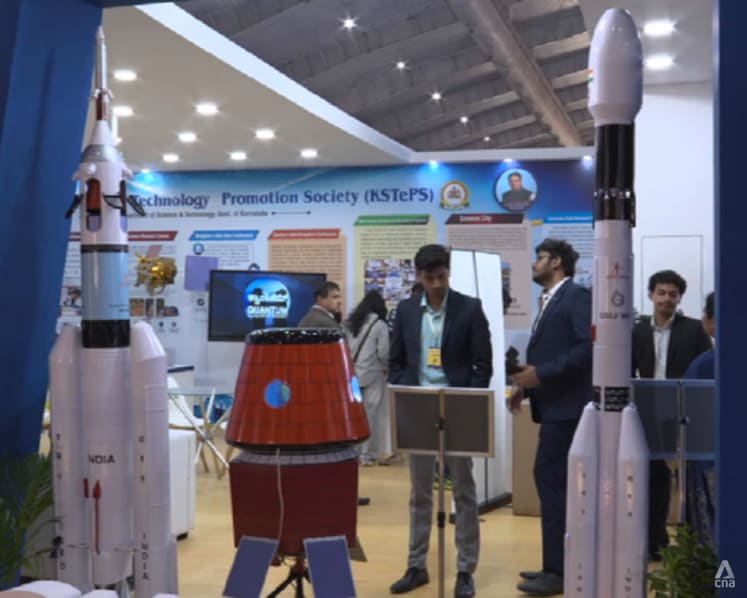
Scientists and space-tech entrepreneurs are exploring how India's planned space station could eventually serve as an orbital laboratory for biotechnology research. (Image: CNA)

This audio is generated by an AI tool.
BENGALURU: India is looking to space for its next breakthrough in pharmaceuticals, with scientists, biotech firms and startups exploring how microgravity could help develop new medicines.
Microgravity is a condition where people or objects appear to be weightless, such as when astronauts float inside a spacecraft in orbit.
Known as the “pharmacy of the world” for its role in supplying affordable vaccines and medicines globally, India is now looking to combine its pharmaceutical expertise with its growing space capabilities.
At the Bengaluru Tech Summit, which wrapped up on Thursday (Nov 19), scientists and space-tech entrepreneurs explored how India’s planned space station could eventually serve as an orbital laboratory for biotechnology research.





HOW MICROGRAVITY WORKS FOR DRUG DEVELOPMENT
The science behind space bio-manufacturing comes down to gravity, or rather, the lack of it. On Earth, gravity can influence how protein crystals form and grow.
In the near-weightless conditions of space, some protein crystals can grow more evenly. This could help scientists study their structures in greater detail and potentially develop better formulations of medicine.
One of India’s major biopharmaceutical companies, Biocon, sees new possibilities for drug innovation using space-based research.
"Structures of molecules can be modified using space tech. That could basically also create new intellectual property, new molecules, new functionality,” said the firm’s executive chairperson Kiran Mazumdar-Shaw.

INDIA’S SPACE STATION AMBITIONS
With the International Space Station expected to retire around 2030, countries and private companies are stepping up efforts to establish commercial orbital laboratories.
India is also looking to establish a foothold in the emerging sector through its planned Bharatiya Antariksh Station, expected to be fully operational by 2035.
At the Bengaluru Tech Summit’s space bio symposium, policymakers and scientists discussed how the station could eventually become a hub for international biotechnology research.
But some scientists say there is no need to wait for the station to become operational before getting started.
"Now, we are also looking at how we can provide alternate on-ground or parabolic flights … so even before you reach orbit, there are possibilities of doing certain periods, small periods of experiments on microgravity,” said former Indian Space Research Organisation (ISRO) chairman A S Kiran Kumar.

COMPANIES EYE COMMERCIAL OPPORTUNITIES
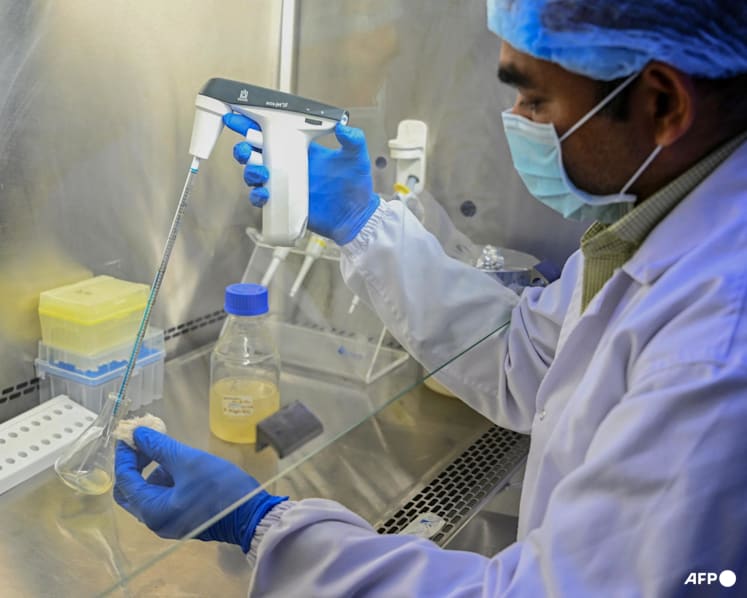
Indian startups are also looking to tap opportunities in the space-based research sector.
Chennai-based Inbound Aerospace is working to enable microgravity research in low-Earth orbit by transporting scientific experiments into space and returning them to Earth.
Inbound Aerospace’s co-founder Abhijit Bhutey said the company has partnerships with Australian and Japanese firms specialising in such payload development.
“Our job is, when the payload is ready, we carry it for them, put it in orbit for up to two months as per the requirement, and then we bring it back safely,” he said.
India’s expertise in biomanufacturing is also attracting interest from overseas space infrastructure developers.
Among them is United States-based HabSpace, which is developing plans for commercial space station infrastructure.
“Markets like India that have already established scale in biomanufacturing have a lot to teach us about what it takes and what is needed … to make sure that we are building the right infrastructure," said HabSpace’s founder and CEO George Weinmann.
Despite the growing interest, commercial pharmaceutical manufacturing in space remains in its infancy.
The high costs of transporting research payloads to and from orbit, regulatory requirements and the long timelines needed to develop orbital infrastructure remain major challenges.
While the commercialisation of medicines manufactured in orbit may still be years away, India is positioning itself to tap into an emerging industry that looks set to transform the future of drug development.