India’s Supreme Court hears case over Aravalli hills definition amid mining, environmental concerns
At the centre of the dispute is a proposed redefinition of the ecologically sensitive Aravalli range, which activists warn could allow swathes of the hills to be opened up for mining and construction.
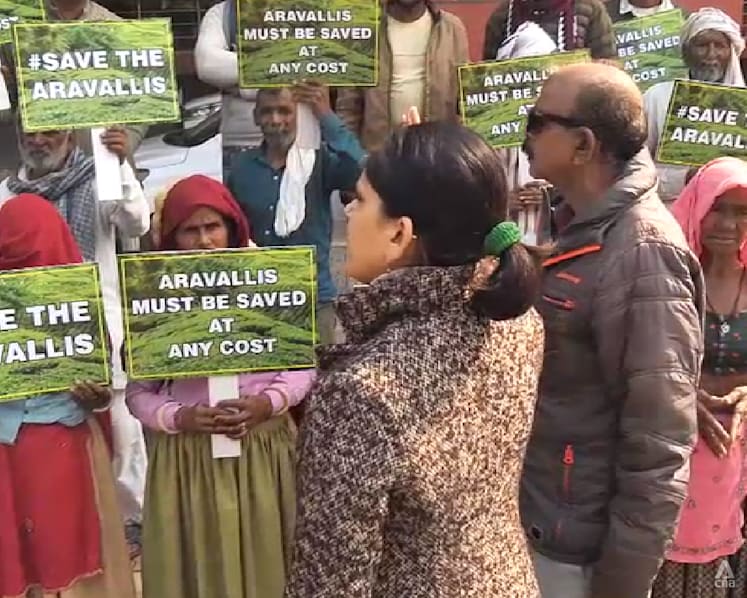
Protests over the closely watched Aravalli hills case intensified last November after the Supreme Court accepted a new definition proposed by a federal government-led committee.

This audio is generated by an AI tool.




RAJASTHAN, India: India’s Supreme Court is set to hear a closely watched environmental case on Wednesday (Jan 21) that could shape the future of the Aravalli hills, one of the world’s oldest geological formations and a critical ecological barrier for northern India.
At the centre of the dispute is a proposed redefinition of the ecologically sensitive Aravalli range, which environmental activists warn could allow large swathes of the hills to be opened up for mining and construction.
They added that this would threaten biodiversity, as well as could worsen air pollution and heat stress in and around New Delhi.
The government has rejected those claims, arguing the new definition brings clarity to land-use rules without weakening environmental safeguards.





The Indian capital is already one of the most polluted cities in the world, with its 30 million residents having experienced three straight days of severe air pollution in recent days.
ENVIRONMENTAL PROTECTION
The Aravalli ranges stretch roughly 700km from Delhi through Haryana and Rajasthan to Gujarat.
Conservationists told CNA that the ancient ridges play a vital role in supporting wildlife, vegetation and human life across northern India.
“The whole of Aravalli should be declared as a protected biosphere across the four states because it is not just about human life,” said Vaishali Rana, a trustee of the Aravalli Bachao Citizens Movement, a grassroots group advocating for the protection of the hills.
“The whole northern India is supported by the Aravallis. But other than that, there is so much wildlife inside, so much vegetation.”
Protests intensified last November after the Supreme Court accepted a new definition proposed by a federal government-led committee.
The panel defined Aravalli hills as landforms rising at least 100m above their surrounding base area, and said that two or more such hills within 500m of each other would qualify as an Aravalli range.
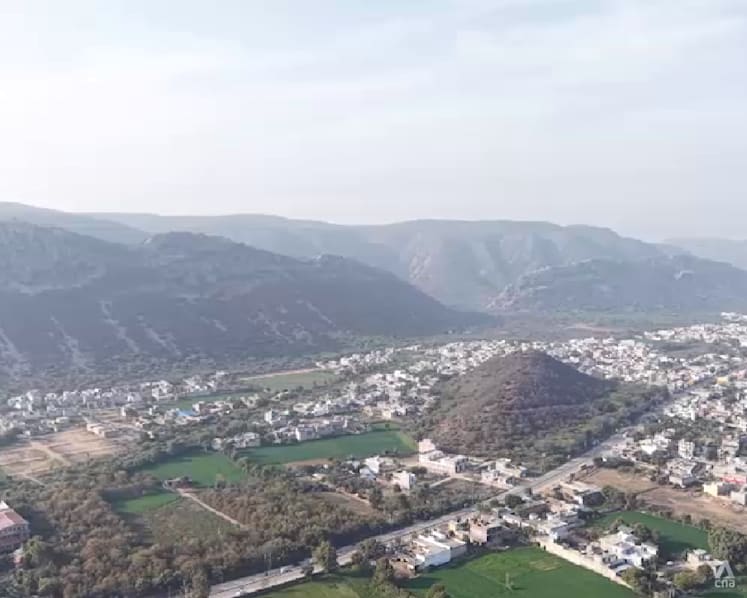
CLASHING CLAIMS OVER IMPACT
Environmental groups argue the criteria are overly narrow and could exclude up to 90 per cent of the hills from protection, leaving them vulnerable to mining.
But the Indian government has dismissed those concerns.
Environment Minister Bhupender Yadav has asserted that less than 0.2 per cent of the total landscape will be eligible for mining, adding that the rest of the Aravallis will remain protected.
The government noted that no new mining leases would be granted until a comprehensive sustainable mining plan is finalised.
India’s strategic minerals mission has identified lithium and rare earth deposits in areas adjacent to the Aravallis, resources that are crucial for reducing dependence on imports and building competitive global supply chains.
Environmentalists counter that the ecological value of the Aravallis far outweighs potential mining gains.
The hills are seen as essential for groundwater recharge and as a natural shield that helps block desertification and dust from the Thar Desert.
“It actually stops the dust from coming from the Thar, and (it is) also a weather and a climate barrier in many ways,” said Vimlendu Jha, founder of youth and environment organisation Swechha.
“Importantly right now, the backdrop of all this conversation is high air pollution. So the significance of greens … and the national forests that are actually present is extremely important.”
Following petitions and mounting public pressure, the Supreme Court last month put its earlier acceptance of the definition on hold and ordered the formation of a new expert committee, citing critical ambiguities in the proposed definition.
Observers said the court’s eventual decision could have far-reaching implications – not only for the future of the Aravalli hills, but for how India balances environmental protection with its economic and mineral ambitions.