10 new TB clusters detected in Malaysia, with Johor recording highest number of cases
New tuberculosis cases were also detected in six other states, according to Malaysia Health Minister Dzulkefly Ahmad.

Malaysia Health Minister Dzulkefly Ahmad speaking to Parliament on Feb 10, 2025 on the latest TB clusters and measures taken. (Photo: Instagram/@dzulkefly_ahmad)
KUALA LUMPUR: Malaysia has detected 10 new tuberculosis (TB) clusters across seven states as of last Saturday, with Johor recording the highest number of cases at 37, Health Minister Dzulkefly Ahmad said on Tuesday (Feb 10).
The Johor cluster involves 29 children and eight adults. The first detected case in the cluster was traced to a 72-year-old female religious teacher in Kota Tinggi, reported local media.
The remaining cases were identified through active testing and contact tracing by Health Ministry officers.
TB is an airborne infectious disease caused by a bacterium called Mycobacterium tuberculosis. It most commonly affects the lungs but can affect almost any tissue or organ in the body, according to Singapore’s HealthHub portal. It can cause permanent lung damage if not treated early. Not everyone who is exposed to TB develops the illness.
“As of Feb 7, we have identified 903 close contacts who went for TB screening. Symptomatic individuals were immediately treated at the Health Ministry facilities,” Dzulkefly told Parliament during Minister’s Question Time, as quoted by Bernama news agency.
He was responding to a question from Kuala Langat Member of Parliament Ahmad Yunus Hairi on the latest status of TB clusters by state, the number of active cases under monitoring and measures in place to prevent further spread.
Media outlets reported last week that at least six students were among those infected in the Kota Tinggi cluster.





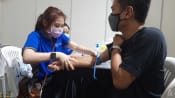

Separately, another TB case involving a primary schoolboy was detected in Pontian, Johor. This was confirmed by the Pontian district health office and Johor education and information committee chairman Aznan Tamin, according to local media.
Health officials have said the Pontian case is not related to the Kota Tinggi cluster despite both occurring in Johor state, according to Malay Mail. The two locations are about 125km apart.
While Johor recorded the highest number of cases as of last Saturday, Dzulkefly said Selangor has the most clusters, with four clusters involving 10 cases in total.
Sabah recorded five cases from one cluster while Pahang recorded four cases from one cluster. Kedah, Kelantan and Perlis each recorded two cases from one cluster.
Dzulkefly said the Health Ministry is conducting symptom screening targeting prolonged cough, fever, loss of appetite, sudden weight loss and clinical lung examinations.
Asked about the effectiveness of immunisation in preventing TB, Dzulkefly said that herd immunity through Malaysia’s National Immunisation Programme has reached nearly 99 per cent of children.
However, he cautioned that Malaysia is far from eradicating tuberculosis and urged the public to prioritise their health and strengthen their immune systems, reported the New Straits Times.
"Tuberculosis can be everywhere. We may have been exposed to it and the bacteria is in our body, but it is latent,” he said on Tuesday. "When our immunity drops, the bacteria will flare up.”
The Health Ministry said in a statement on Tuesday that a total of 2,571 cases were reported from Jan 1 to Feb 7 this year, an increase of 229 cases or 9.8 per cent from the same period last year, when 2,342 cases were recorded.
Malaysia reported a total of 88 tuberculosis clusters involving 254 cases in 2025, with 35 clusters still classified as active, according to the New Straits Times.
The 10 clusters announced by Dzulkefly on Tuesday are newly detected clusters.
Experts have advised those travelling during the upcoming festive season to take precautionary measures.
These include wearing face masks while travelling and seeking medical treatment early if there are symptoms, Universiti Malaya Professor of Epidemiology and Public Health Rafdzah Ahmad Zaki told The Star.
“Wear a mask to prevent bacteria or viruses from spreading, especially on public transport. It is not just TB, there are also other kinds of infectious diseases,” she said.
Rafdzah also encouraged having good ventilation at gatherings and advised that doors and windows be kept open.
Another expert said controlling the spread of TB works best when everyone in the country, including citizens and non-citizens, have access to screening and treatment.
“Any gaps in access, coverage or willingness to seek care can create blind spots for infectious diseases,” said Shanmuganathan TV Ganeson, president of the Federation of Private Medical Practitioners Associations Malaysia.
He told news outlet The Star that TB is most effectively managed when diagnosed individuals can complete treatment without interruption.
“If treatment is disrupted, there is a risk of ongoing transmission and drug resistance,” he said.
TB is usually treated with a combination of drugs to be taken for at least six to nine months, according to Singapore’s HealthHub site.
Patients should complete the entire course of anti-TB drugs or they may not be cured; the TB germs in their bodies may develop a resistance to the drugs, making it more difficult to treat.