The Philippines’ drive to modernise public transport leaves artists caught between progress and loss
For decades, jeepney artists transformed Manila’s streets into moving canvases. Now, as modern transport options replace the traditional military vehicles, they are confronting the possible end of the craft.
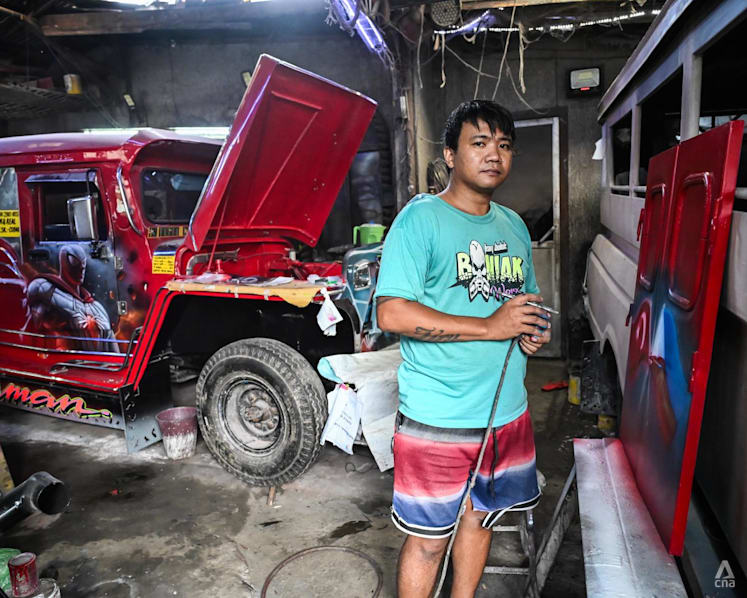
Kenneth Bon Salonga, a jeepney artist in Rizal, a province in the Philippines. (Photo: CNA/Jarupat Karunyaprasit)

This audio is generated by an AI tool.


MANILA: Kenneth Bon Salonga’s garage is a crowded place, a chaotic collection of metal and paint. Spare vehicle parts hang from the ceiling, enveloped in thick cobwebs; it is part treasure trove, part mad scientist laboratory.
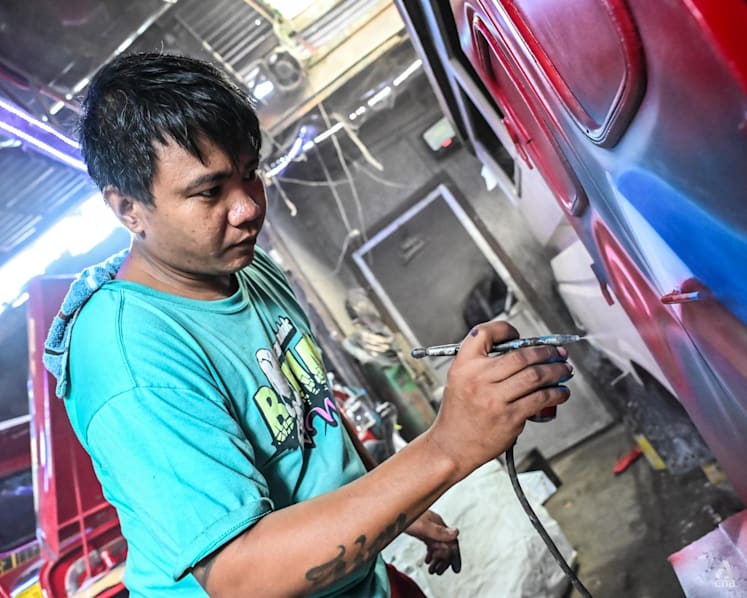
The artist is at work, applying touches to today’s canvas, a side window panel of a jeepney.
Squatting between two of the deconstructed vehicles, Salonga, who has done this work for more than 20 years, uses a deep red paint to methodically apply detailed lines onto the panel, which will eventually form a frieze dedicated to the Marvel superhero, Spiderman.
While the art is neat, the work is dirty and the hands of the 38-year-old are quickly lacquered in paint. The parts will soon be reassembled and ready for their return to the roads.





This is a traditional trade on the streets of Metro Manila. For decades, jeepneys, a stalwart and iconic form of public transport in the Philippines, have been designed and painted on by local artists.
But the art is dying out, as the government tries to phase out and replace jeepneys with alternatives, such as electric vehicles. And as modernisation gathers pace, the artists behind those designs are confronting an uncertain future.
Jeepney artists mostly work informally, so their number is not tracked in official labour or business registries. But in the community, there is a knowledge that while hundreds used to do this work, there might only be a handful of artists remaining.
Most are freelancers ready to take on commissions. A full custom job, increasingly rare, pays about US$5,000 and takes two months. But they might also hold second jobs, for example, as auto mechanics or graphic designers. Salonga said his take-home pay would normally be US$250-340 per month.
The jeepney first emerged in the Philippines following the country’s independence from the United States post-World War II. These former military vehicles were left behind and increasingly locally fabricated using mixed parts for a new role, moving people around at a cheap price, similar to small but flexible buses.
They operate in hop-on, hop-off style on fixed routes around the city.
They resemble “a Frankenstein's monster of different parts and pieces”, and say a lot about the resourcefulness of the population, said Jose Victor Torres, a historian and professor at De La Salle University-Manila.
“It was a symbol of resilience. It was something that was born out of necessity, out of materials that were totally discarded,” he said.
“I'm not saying that Filipinos like getting garbage, but it's something that they got and made use of. And I think that identifies with the Filipino.”
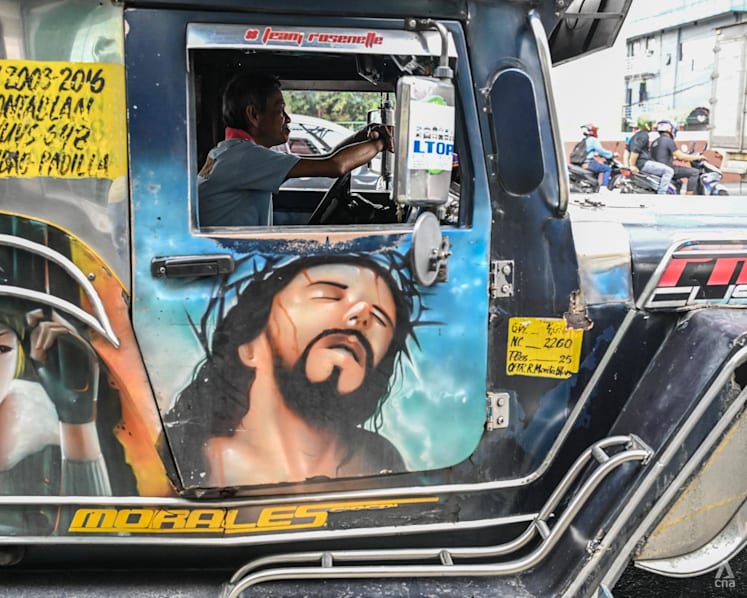
The move toward personalised jeepney art accelerated in the 1980s, he explained, when overseas Filipino workers began investing in jeepneys and decorating them as visible markers of their hard-earned success.
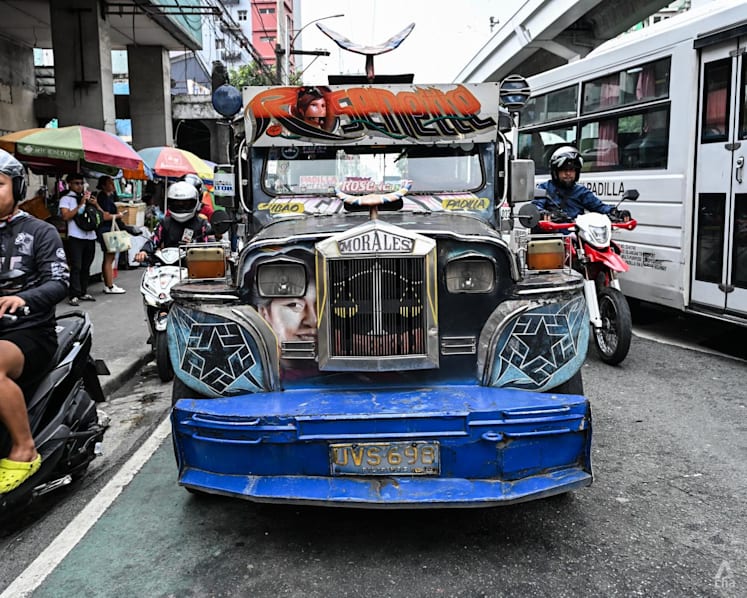
In the decades that followed, jeepneys have doubled as a means of public transport, and moving works of art. The sometimes garish decorations have come to symbolise social trends, political movements and a daily life that is quintessentially local.
Artists will take on commissions from vehicle owners who want something unique on their jeepney. Often, they are loud, colourful and deeply personal.
“You see it from the jeepney imagery, where there’s a graduation photo of a child or a baby photo next to Papa Jesus, next to Pokémon, next to Lord of the Rings, next to gaming monsters. So it’s really a mixed bag,” said Bru Sim, a graphic artist and the author of “Jeepney Biyaheng Langit”, a book documenting the religious imagery of jeepneys.
“We’re not just tacky. We’re also religious. We’re serious, but we’re also funny. Family is very important to us. The Filipino identity is really in flux, based on the jeep,” she said.
PROGRESS AND POLICY
But the forces reshaping Manila’s streets are not just cultural.
Debate about reforming the iconic jeepney system can be traced back several decades. But it gained momentum in 2017 when the national government introduced the Public Utility Vehicle Modernization (PUV) Program, a scheme to rid the roads of the loud, polluting and long outdated vehicles originally intended for combat, not commuting.
The grand plan was to have a fleet including electric and other low-emission vehicles providing safer, cleaner and more efficient transport for millions of commuters daily. But it was met with protests from jeepney operators, who successfully slowed down that process.
They argued that the changes would only benefit large corporations and ensure the death of small business.
While there was recognition of the need to ease congestion, the process of installing practical measures to achieve that has been slow to roll out.
Full implementation dates have shifted multiple times, though elements of the PUV programme remain.
As part of the regulations, modernised jeepneys should have compliant engines, GPS and an automated fare collection system, while vehicles older than 15 years would no longer be able to be registered.
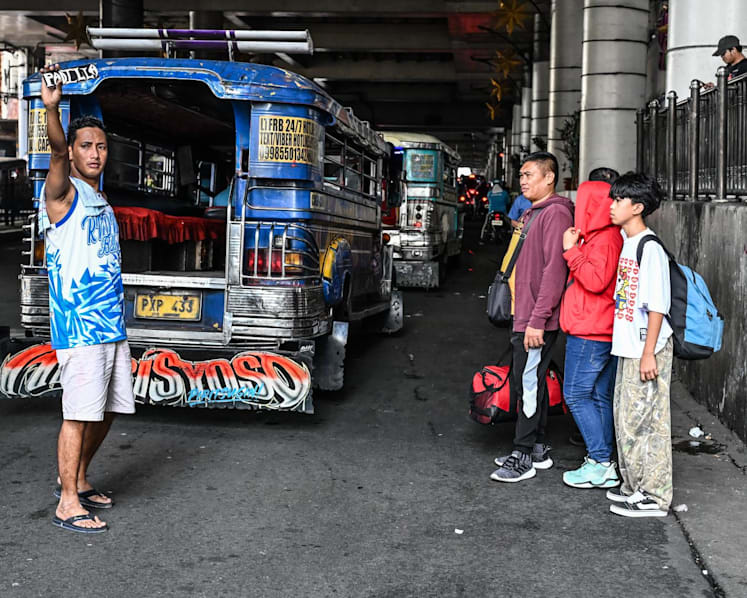
Classic jeepney makers had historically continued to build new vehicles for decades, but production slowed dramatically after the government’s phase-out and modernisation push.
Reporting from 2024 showed that around 150,000 jeepney units had complied with consolidation requirements nationwide before deadlines, 78 per cent of the total fleet.
It is estimated that jeepneys across the country ferry 40 million person trips per day, with their capacity to seat around 20 on rear twin benches. They are especially important to ease the last-mile connectivity problem, connecting residential areas to transport hubs.
ANY SENTIMENT LEFT FOR JEEPNEYS?
Still, a broad transition is underway. Policy and economic pressures have shifted production toward modern alternatives.
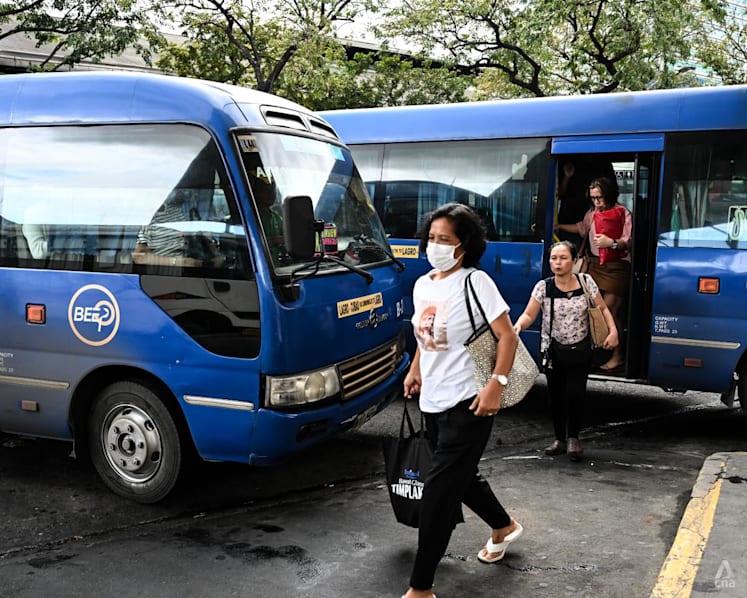
Now, particularly in the capital, electric minibuses are slowly taking over many routes. They are much more uniform in style, without the splashes of colour and character.
While jeepneys are typically privately owned, the newer replacement models normally form parts of company fleets.
As jeepneys disappear from cities, many have resurfaced in the provinces, shifting pollution, safety risks and ageing infrastructure away from urban centres.
The transition has left cities cleaner and more regulated, while rural areas increasingly rely on older vehicles displaced from the capital. Rather than eliminating the problems associated with jeepneys, modernisation has often moved them out of sight.
And for the artists, business has slowed right down
“When I first heard about jeepney modernisation, of course I felt sad. We would lose our jobs, because we would no longer be allowed to design modern units; you are not allowed to touch them, whatever the design of the minibus is, that’s already fixed,” said Salonga.
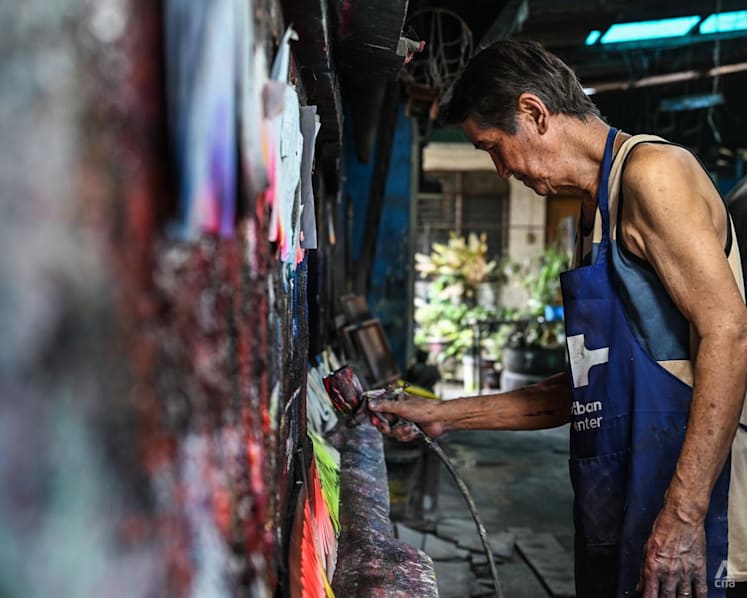
“It's really sad because, imagine, I grew up with that. Every day you see the jeepneys pass by. When I was young I was really obsessed with jeepneys. I would just wait at the corner hoping a new unit would come out,” he said.
There is division in the community about whether the jeepney should be saved.
They can be disruptive, polluting and the drivers are infamous for their reckless behaviour on the roads.
Felomino Cruz Jr has long wielded a paint gun. But the 75-year-old jeepney designer says he is ready for them to get replaced.
“I am in favour of modernisation. Because of the noise of the exhaust, the noise of the engine, the noise of the conductor, sometimes there are even drivers who are drug addicts. And their style is to turn the vehicles into racing cars. Jeeps have become extreme,” he said.
Jeepneys are frequently involved in traffic crashes in cities like Metro Manila, with reports showing thousands of incidents yearly.
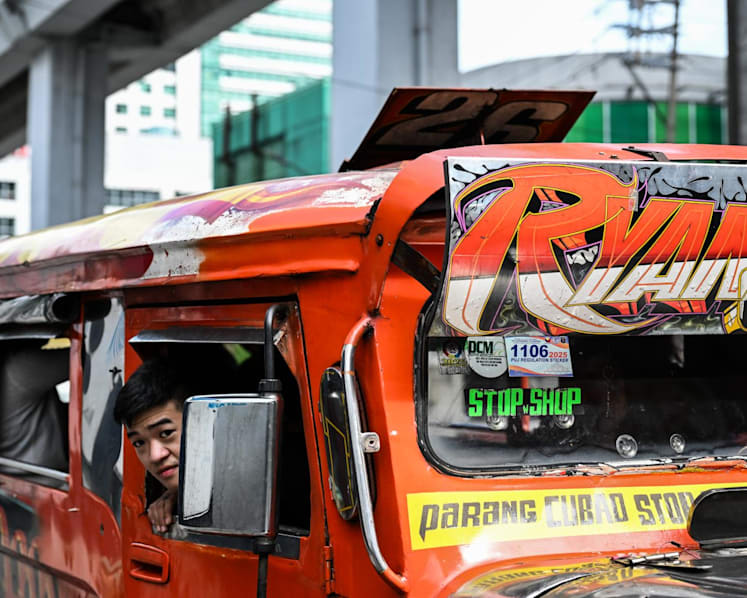
Even those who love the distinctiveness of these vehicles say they will not mourn if they disappear. The art and creativity will live on, just in another form, Sim said.
“It’s just one aspect of Filipino art. There are other ways to express it. Traditionally and culturally, everything is in flux. Filipino identity is in its people. And we’re always evolving,” she said.
“They really should have been overhauled a long time ago. I think it’s time. It’s time to modernise.”
Additional reporting by Jarupat Karunyaprasit and Nicole Revita.