Malaysia steps up search for missing Rohingya boats, toll climbs to 21
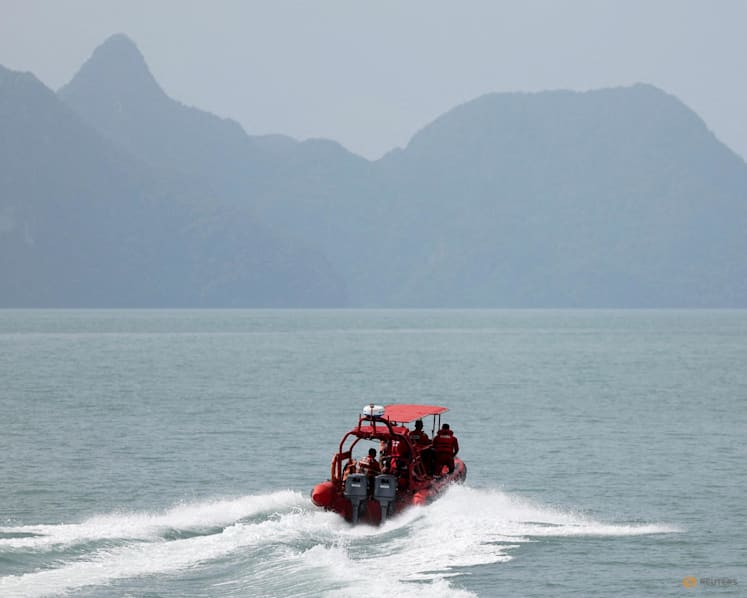
A Fire and Rescue Department boat heads out for a search and rescue operation after a boat carrying members of Myanmar's persecuted Rohingya community sank in waters near the Thailand-Malaysia border off Langkawi, Malaysia, on Nov 10, 2025. (Photo: Reuters/Hasnoor Hussain)
LANGKAWI: Malaysian patrols searched coastal waters in the Andaman Sea on Monday (Nov 10) for dozens of members of Myanmar's persecuted Rohingya minority, after a boat believed to be carrying them sank last week and another went missing.
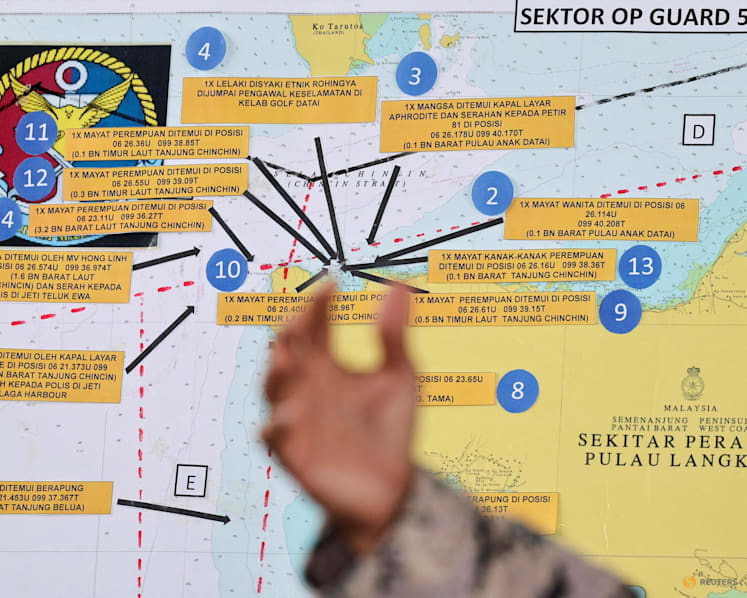
At least 21 bodies have been found since the vessel went down on Thursday - 12 in Malaysia and nine in neighbouring Thailand - the regional head of Malaysia's maritime agency, Romli Mustafa, told reporters.
Without life jackets, it might be difficult for many to survive even 24 hours, but some could be holding on to floating objects and search operations would continue, he added.
"Weather conditions are not so friendly but anyhow, we're trying our level best," Romli said. So far, 13 survivors had been rescued, he added.





Long persecuted in Buddhist-majority Myanmar, the mainly Muslim Rohingya face escalating violence in their war-torn homeland and worsening conditions in crowded refugee camps in neighbouring Bangladesh, where 1.3 million of them live.
Hundreds of Rohingya boarded a vessel bound for Malaysia two weeks ago, and were transferred onto two boats on Thursday, said Khairul Azhar Nuruddin, police chief on Malaysia's northern Langkawi island, from where search operations are continuing across 877 sq km.
The smaller ship carrying around 70 people sank near Langkawi the same day and the fate of the other boat carrying 230 passengers remains unclear, Malaysian authorities said.
"HE LEFT WITHOUT TELLING ANYONE"
Among those who took a boat to Malaysia two weeks ago was 29-year-old Mohammed Ibrahim, according to his elder brother, Mohammed Younus.
"He left for Malaysia without telling anyone," he told Reuters from the refugee camps, where he is frantically trying to find out his brother's whereabouts.
"If I had known, I would never have let him go. He has a wife, three children - a three-year-old son and 10-month-old twin girls. Who will take care of them?"
In the last week of October, multiple boats carrying Rohingya left Cox's Bazar in Bangladesh, said Chris Lewa, director of the non-profit Arakan Project, which tracks the voyages.
It typically takes a week to 10 days to reach Malaysian waters, Lewa told Reuters. The boats might also have stopped in waters off Myanmar to pick up Rohingya coming from inland areas of Rakhine state, where a civil war has made displacement worse, she added.
More than 5,100 Rohingya boarded boats to leave Myanmar and Bangladesh between January and early November this year, and nearly 600 of them have been reported dead or missing, according to data from the United Nations Refugee Agency.
Muslim-majority Malaysia has long been a favoured destination for Rohingya fleeing persecution, although the country does not recognise refugee status. In recent years, it has turned away boats and detained Rohingya, as part of a crackdown on undocumented migrants.
Malaysian police said on Monday that those rescued had been detained pending an investigation into potential immigration offences.
"PEOPLE ARE DESPERATE"
Thailand and Malaysia have deployed air and sea patrols in a search operation that could last a week, Malaysian maritime official Romli said.
Information received by the agency indicated that the first boat the Rohingya boarded had left from Rakhine state, which borders Cox's Bazar in Bangladesh, where the sprawling refugee camps are located, Romli added.
In Thailand, authorities recovered refugee cards issued in Bangladesh from the two children, which identified them as Rohingya living in the Cox's Bazar camps, according to the Thai official.
Some Rohingya say people risk the perilous journeys because they see no future in Bangladesh, where foreign aid is shrinking, and they are too afraid to return to Myanmar.
"People are desperate," said Naser Khan, a Rohingya refugee in Cox's Bazar. "People are dying in the fighting, dying from hunger. So some think it’s better to die at sea than to die slowly here."
Relatively affluent Malaysia is home to millions of migrants from poorer parts of Asia, many of them undocumented, working in industries including construction and agriculture.
However, migrant crossings into the country, facilitated by human-trafficking syndicates, are hazardous and often lead to overloaded boats capsizing.
"Cross-border syndicates are now increasingly active in exploiting migrants by making them victims of human trafficking using high-risk sea routes," Romli said.
Syndicates charge up to US$3,500 per person for passage, Malaysian media have reported.
More than 20 migrants drowned in several incidents off the Malaysian coast in December 2021, one of the worst months.