







analysis Asia
Malaysian property giant Sunway’s US$2.8 billion bid for construction firm IJM stirs controversy in business, political realms
The bid by Sunway for IJM is also presenting a policy challenge for Prime Minister Anwar Ibrahim, who has expressed reservations about the proposed takeover in private sessions, his close associates told CNA.
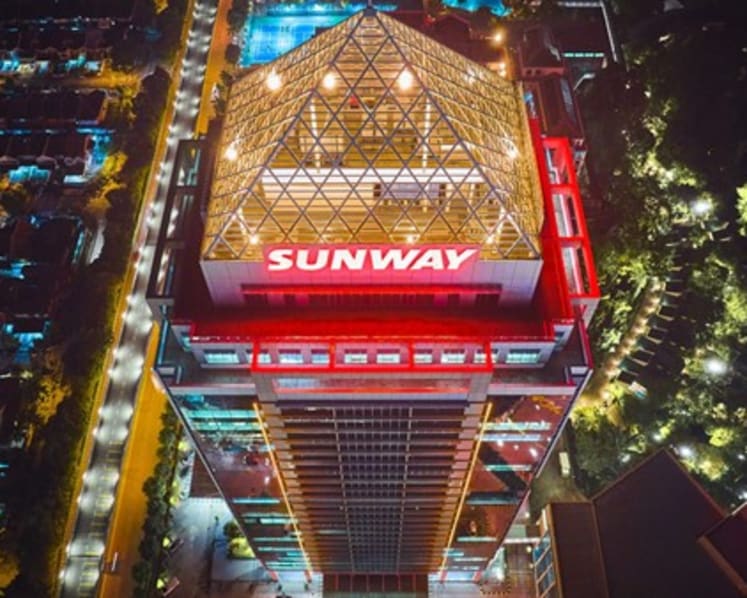
Sunway is a hugely diversified conglomerate with regional interests in real estate, construction, education, healthcare, hospitality, retail and leisure. (Photo: Sunway)

This audio is generated by an AI tool.

KUALA LUMPUR: A bold takeover bid by Malaysia’s diversified property conglomerate Sunway Group for construction giant IJM Corp is shaking up its corporate sector, triggering debate over race in the country's highly politicised economy and raising the prospect of a bidding war for one of the nation's most successful companies.
At stake is a RM11.1 billion (US$2.81 billion) deal that would rank as the country's largest corporate manoeuvre in recent memory and mark a major consolidation in the property and construction sectors.
Yet the proposed transaction has drawn fire from political and business interests who warn it could set a dangerous precedent: a majority Chinese-controlled company absorbing an entity widely viewed as a proxy for ethnic Malay economic representation.
Sunway's unsolicited offer has already drawn criticism from the youth arm of the United Malays National Organisation (UMNO), a senior partner in Prime Minister Anwar Ibrahim's coalition government.
"Bumiputera stakes in major companies could be lost," said UMNO youth chief Akmal Salleh on his closely tracked social media channels after the offer was announced on Jan 12, referring to the term designating Malays and other indigenous groups.
"This could undermine national and Bumiputera interests, especially considering that the Bumiputera stake in Malaysia is already limited."
Race has remained central to Malaysian politics since the 1970s, when government policies began aggressively lifting Malay participation in an economy long dominated by the country's commercially-minded Chinese minority.
In such a climate, perceived threats to Malay interests are seen to potentially inflame public tensions.





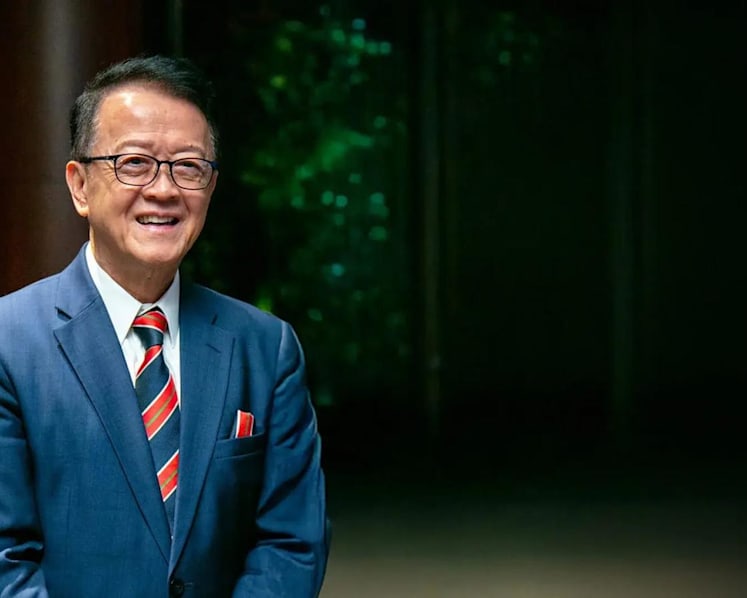
Sunway, founded in 1974 as a tin-mining company and controlled by politically well-connected businessman Jeffrey Cheah, is a hugely diversified conglomerate with regional interests in real estate, construction, education, healthcare, hospitality, retail and leisure.
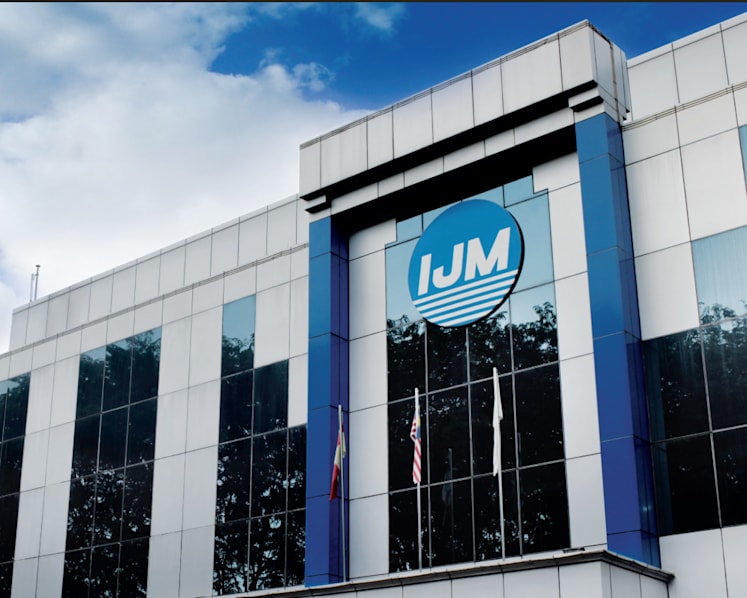
IJM, meanwhile, counts government-linked investment firms holding roughly 45 per cent of its shares — entities that serve as standard-bearers for Malay-majority economic interests.
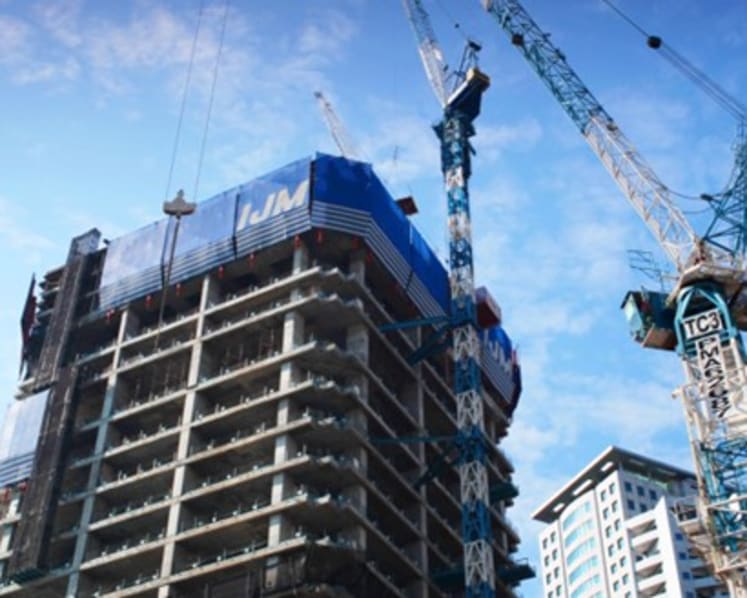
The company, which has a strong presence in construction and infrastructure development of highways and ports, owns lucrative toll-road concessions, quarrying activities and the manufacture of concrete products.
It also has a sizable landbank of over 3,300 acres in Malaysia with a gross development value of RM41.6 billion, according to the research division of Hong Leong Investment Bank.
Apart from Sunway and IJM, the other big players in the construction and infrastructure development sectors are Gamuda and YTL Corporation, companies which are controlled by ethnic Chinese groups.
HOSTILE BID, BEHIND-THE-SCENES INTRIGUE
Apart from the race debate clouding the Sunway-IJM corporate tango, the proposed deal is also coming under scrutiny by Malaysia's closely knit business community because of the behind-the-scenes intrigue where politics and business have long intertwined.
"Whenever a takeover bid is unsolicited and takes on a strong political dimension, the likelihood of it getting derailed rises. That is how the Sunway bid for IJM appears to be turning out," said the CEO of a Kuala Lumpur-based boutique consulting firm, who asked not to be named because he did not want to risk his firm being blackballed from potential advisory work on the Sunway-IJM deal.
A week after Sunway's takeover offer on Jan 12, IJM became the target of an investigation by the Malaysian Anti-Corruption Commission (MACC) and the national tax department, known as LHDN, company executives told CNA on condition of anonymity.
Pressure on IJM intensified on Feb 5, when MACC officers turned up at the home of its chairman Krishnan Tan in the port city of Klang, located about 40 km from the capital Kuala Lumpur, at around 6.30 am to detain him for investigations.
A senior MACC official, who confirmed Tan's detention with CNA, said he was released after more than 12 hours of questioning and that investigations are ongoing. The official declined to elaborate.
A senior Finance Ministry official with direct knowledge of the MACC probe noted that investigations are not related to the Sunway general offer but rather concern the company's dealings over an investment in the United Kingdom in 2024. The Finance Ministry official declined to elaborate on the overseas investment.
MACC chief commissioner Azam Baki was quoted by local media on Feb 11 as saying that his agency was cooperating with the UK Serious Fraud Office in its ongoing investigations into IJM, which he added involved financial transactions and overseas investments amounting to RM2.5 billion.
“So, we’re in the midst of exchanging information now, not yet evidence. My officers are currently communicating with the SFO,” he said in an interview with several Malaysian media outlets.
Tan declined requests from CNA to discuss the MACC probe and also Sunway's bid for IJM.
In a statement issued on Feb 8, Tan said that he has fully cooperated with the authorities.
"At this juncture, it would not be appropriate for me to comment further as investigations are ongoing."
HOW DID THE OFFER UNFOLD?
A senior IJM executive, who spoke on condition of strict anonymity, told CNA that the company considers the Sunway takeover offer as "unsolicited and hostile".
"There has been speculation since the middle of 2025 that IJM could be a takeover target, but we always felt we were protected because we were majority owned by GLCs," said the IJM executive, referring to the company's government-linked corporate equity owners.
He added that IJM chairman Tan met with Cheah over a lunch meeting on Jan 12 where the Sunway boss informed his IJM counterpart about the general offer, just hours before it became public through notifications to IJM and the Malaysian stock exchange, Bursa Malaysia.
Later that afternoon, Sunway announced a conditional voluntary general offer for IJM shares listed on Bursa Malaysia at an offer price of RM3.15 per share — a 14.5 per cent premium over IJM's stock price of RM2.75 per share on that day.
Sunway noted that it intends to finance 90 per cent of the acquisition through a share swap of the company's own shares for IJM stock, with the remainder in cash.
The RM11.1 billion offer is conditional on receiving acceptance of at least 50 per cent plus one share, along with necessary shareholder and regulatory approvals, and is set to close on April 6.
"Sunway has proposed an offer to all shareholders of IJM, which we believe is fair and will allow IJM shareholders to participate in the continued upside of the combined company," a Sunway spokesman said in response to queries from CNA.
MIXED REACTIONS
Reaction to Sunway's offer has been mixed.
Several equity research outfits in Kuala Lumpur, such as Hong Leong Investment Bank research division and Nomura, have welcomed the proposed voluntary general offer.
Hong Leong Investment Bank said in a report to clients that "the deal has been structured to preserve the upside for IJM's existing shareholders".
The bank added that current shareholders of the construction company will own 20.6 per cent of the new merged entity, should the deal secure their full acceptance.
That in turn would create a merged entity ranking among the top 10 companies on Bursa Malaysia, with a market capitalisation of roughly RM48 billion.
Nomura noted that the general offer provided IJM shareholders "access to a larger, more diversified platform with enhanced institutional appeal due to Sunway's size and broader investor base".
But there are also sceptics to the proposed deal.
Kenanga Research has recommended in a recent report that IJM shareholders reject the offer, arguing that the offer price is unfavourable and undervalues IJM, which the firm believes carries a valuation of RM3.40 a share.
Another dampener to Sunway's offer is the oversized share-swap component of 90 per cent to finance the acquisition of IJM shares, which analysts and bankers said was a reflection of Sunway's limited financial capacity and its reluctance to take on additional debt, which currently stands at RM13 billion.
Shareholders of IJM, a company with cash reserves of over RM2.8 billion, also face the downside of potential dilution by accepting Sunway shares in the long run, detractors to the deal argue.
Under the share swap in the general offer, Sunway shares are being priced at RM5.65 a piece. Sunway stock is currently trading at a slight premium of RM5.74 a share.
IJM's stock price has remained subdued and trades at around RM2.70 a share, lower than the RM3.15 a share offer extended by Sunway in the takeover deal.
A senior IJM executive noted that the company has appointed M&A Equity Holdings as advisers to evaluate the Sunway offer and provide recommendations to guide minority shareholders on whether to accept the general offer or reject it.
The recommendations from M&A Equity Holdings are due in the coming days, and the IJM executive noted that initial feedback from the advisory outfit is "leaning heavily towards an evaluation to reject the Sunway bid".
POLICY CHALLENGE AND PROSPECTS OF A RIVAL BID
Sunway's bid for IJM is also presenting a policy challenge for PM Anwar, who, close associates said, has expressed reservations about the proposed takeover in private sessions.
According to senior government officials scrutinising the Sunway-IJM corporate kerfuffle, the debate over race is not of major concern for the premier.
More troubling, the government officials noted, is the prospect that the mega-sized corporate takeover would effectively remove a major competitor from the construction sector, a development that would reduce competition, increase market concentration and strengthen the pricing power of the merged entity when bidding for government contracts.
"This deal would increase the prospect of a tight oligopoly situation in construction and infrastructure development, potentially holding the government to ransom with a few players capable of bidding for large contracts," said a government official involved in ongoing discussions about the Sunway-IJM deal.
This government official noted that the Anwar government will not interfere to block the Sunway bid because it would have negative implications for the capital market. But the administration would welcome other corporate proposals for IJM.
Government institutions control roughly about 45 per cent of IJM shares, and according to Kenanga Research, the main shareholders are the Employees Provident Fund (EPF) with roughly 20 per cent, state-owned investment company Permodalan Nasional Bhd (PNB) with roughly 13 per cent and the civil servants' pension fund known as KWAP (Kumpulan Wang Persaraan) holding 9.6 per cent.
For the Sunway bid to succeed, IJM's state-controlled shareholders will need to overwhelmingly support the transaction.
Separately, bankers noted that the government institutions could jointly increase their equity interest to above 51 per cent through additional open market purchases of IJM shares and vote against the Sunway general offer.
Government sources involved in ongoing discussions about the Sunway general offer also noted that financial advisers close to the state-owned institutions in IJM are exploring options of a separate consolidation in the construction and property sectors.
One plan that is being bandied about, according to the government sources, is a corporate exercise to merge IJM and the UEM Group, an engineering and property business controlled by state-owned strategic investment fund Khazanah Nasional.
The sources added that businessman Halim Saad has emerged as a possible Bumiputra candidate to lead the exercise.
Halim was a prominent business figure in the 1990s, when he controlled the UEM under a separate publicly listed entity Renong, and both firms were dominant players in construction and infrastructure development.
But both UEM and Renong ran into troubles during the regional financial crisis that hit in 1997 and 1998, leading to the government taking over both entities.
Halim, who has oil and gas investments in Kazakhstan, did not respond to a request for comment.





