









PRESENTED BY


CATALYSING WORKFORCE TRANSFORMATION THROUGH A SKILLS-FIRST APPROACH
Content share and bookmark
With its mandate to drive skills-first practices, the new Centre for Skills-First Practices at the Institute for Adult Learning is transforming how organisations nurture their talent.
As rapid technological change, evolving business models and persistent talent shortages reshape the future of work, organisations in Singapore and around the world are rethinking their approach to workforce planning and growth.
On Oct 10, the Institute for Adult Learning (IAL), in support of the SkillsFuture movement, launched the Centre for Skills-First Practices (CSFP) to promote the adoption of skills-first practices in Singapore. It also aims to position the country as a global reference point for transformative talent development.

“It’s no longer about finding the ‘perfect’ job candidate,” said Mr Edwin Tan, director of IAL’s CSFP. “Increasingly, companies must look within to identify and harness the skills that their employees already possess.”
This means embracing a skills-first approach, where the focus is placed on skills in hiring, training and career progression. The aim is to build an agile workforce that can respond to a changing business environment.
See how the Centre for Skills-First Practices is shaping a future-ready Singapore - with skills at the core. Video: Mediacorp Brand Studio
Gracing the event as guest-of-honour, Mr Desmond Lee, Minister for Education and Minister-in-Charge of Social Services Integration, emphasised the need to “double down on our efforts to move decisively towards a skills-first approach”. He called on all stakeholders to do their part – urging businesses to proactively invest in their workers’ skills, individuals to be deliberate in their learning journeys and training providers to ensure that training meets real-world needs.
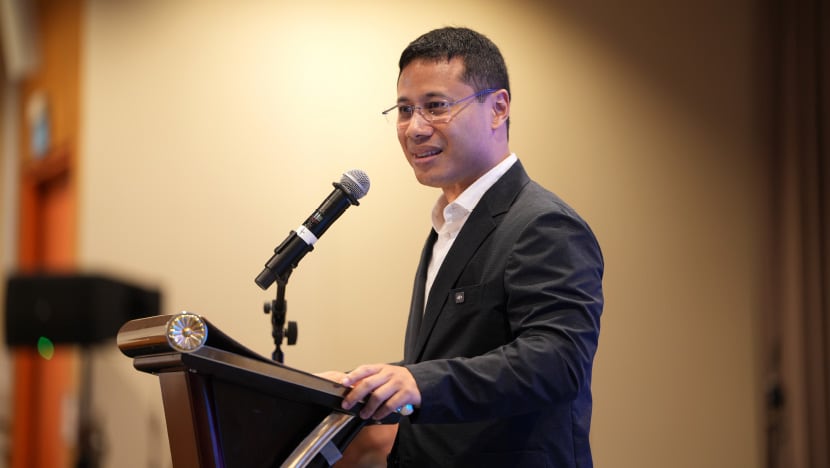
“If we succeed in this endeavour, we will open more economic opportunities and pathways for Singaporeans and empower our businesses to be more adaptable and progressive”, he added.
A SKILLS-FIRST APPROACH
What is it?
• Focuses on what an individual can do – beyond their credentials or past job titles
How does it benefit individuals?
• Expands access to jobs through skills beyond paper qualifications
• Supports career mobility through the recognition of transferable skills
• Strengthens employability by aligning learning with evolving industry needs
How does it benefit employers?
• Makes hiring more targeted and inclusive
• Expands the available talent pool
• Enables smoother movement across roles
• Eases the formation of cross-departmental project teams with complementary skill sets
THE NEW MEASURE OF WORKFORCE CAPABILITY
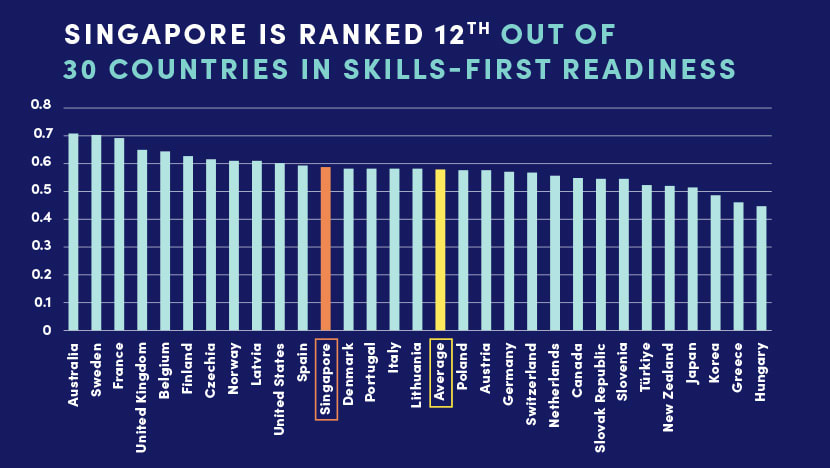
At its launch, CSFP introduced the Skills-First Readiness and Adoption Index, developed in collaboration with the Organisation for Economic Co-operation and Development (OECD). This first-of-its-kind index provides a global framework to assess how ready and willing countries are to adopt skills-first practices at a national level. It examines three core dimensions of a skills-first labour market: the learning ecosystem, talent recognition and enabling environment. The index draws on data from sources including the OECD Programme for the International Assessment of Adult Competencies and the World Economic Forum’s Future of Jobs survey.
“Working together allowed us to create the first-ever framework for measuring skills-first readiness and adoption,” said Dr Glenda Quintini, head of OECD’s Skills and Future Readiness Division. “It allows countries to benchmark their progress and provides a foundation for more effective action globally.”

The index ranked Singapore 12th out of 30 countries. While the result reflects meaningful progress, it suggests the city-state still has ground to cover before matching the adoption levels seen in economies like Sweden and Belgium.
Singapore was also ranked 10th and 11th in the Learning Ecosystem and Talent Recognition sub-indices respectively, recognised for its strengths in training, career guidance and digital infrastructure. However, it ranked 25th in the Enabling Environment sub-index that assesses whether a country has the foundational structures to support a shift towards skills-first approaches. Even so, the index found that rates of adult learning participation in Singapore are above the OECD average.
According to Dr Quintini, the index highlights that progress towards a skills-first economy is complex and multi-dimensional. It requires more than strong learning systems and recognition tools – scaling up adoption also requires infrastructure, policies, data systems and cultural shifts.
A NATIONAL ENABLER AND GLOBAL THOUGHT LEADER
CSFP will focus on three priorities: building ecosystem-wide capabilities to adopt skills-first practices, leveraging advanced analytics to inform policy and practice, and forging global partnerships to exchange insights and best practices.
To strengthen ecosystem-wide capabilities, CSFP has rolled out initiatives such as the Skills-First Working Paper Series, published between June and September, and a series of roundtables that fosters open dialogue and co-creation. “These give stakeholders space to discuss challenges, test ideas and prototype solutions,” said Mr Tan. “The aim is to help organisations integrate skills into their business and people strategies, while supporting individuals to manage their careers, skills and learning.”
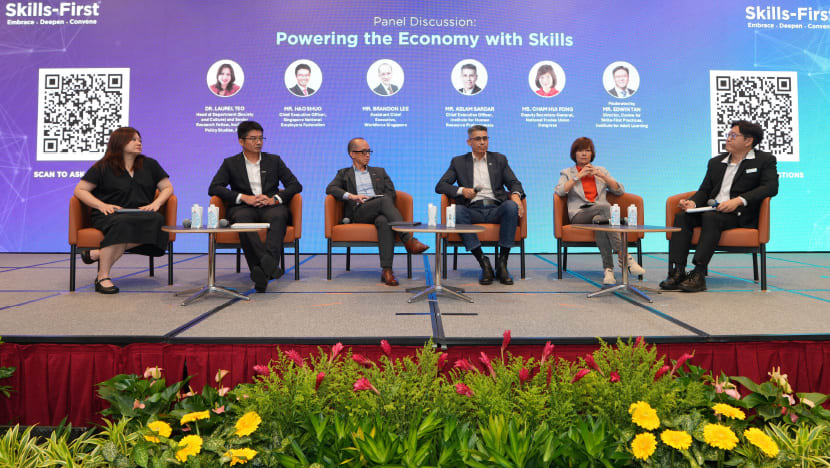
These are supported by broader capability development efforts that enable employers, training providers and practitioners to adopt and apply skills-first practices. One such initiative is the Capability Development Programme on Job-Skills Insights, which will help training providers identify in-demand skills to guide curriculum design and review.
CSFP also plans to nurture a community of jobs-skills specialists who will “help businesses embed skills-first practices, mentor leaders in work redesign and guide enterprises in using jobs-skills insights more effectively”. Mr Tan added: “Together with industry partners, CSFP and the community of jobs-skills specialists will help keep Singapore’s jobs and skills taxonomies current, ensuring the workforce stays aligned with the needs of a rapidly evolving economy.”
Beyond the Skills-First Readiness and Adoption Index, CSFP has developed a Skills Learnability Index to further inform practice and policy through advanced analytics. This is an analytical tool that adds a learnability dimension to skills and job roles, enabling individuals to gauge how easily a skill or job role can be acquired alongside factors like demand, growth and transferability.
At the launch, CSFP also signed three memoranda of understanding with the National Trade Unions Congress, NHG Health and the Burning Glass Institute, underscoring its commitment to exchanging insights and best practices globally.
BUILDING VALUE ACROSS THE ECOSYSTEM
Mr Tan noted that a skills-first approach strengthens collaboration across the ecosystem, aligning the efforts of businesses, employees and government to build future-ready capabilities. By focusing workforce planning on skills rather than roles, organisations gain clearer visibility of emerging competencies, allowing for more strategic deployment of talent and closer alignment between enterprise and national priorities.
He added that this approach also encourages a more connected learning culture, where employers and workers share responsibility for continuous development. Human resource teams, training providers and policymakers can collaborate more effectively to anticipate new demands, shape relevant programmes and create smoother transitions between jobs and industries.

Workplace training also becomes more targeted as it addresses specific skills gaps. Beyond formal programmes, employees can tap on more diverse forms of learning, including on-the-job experiences and industry-recognised credentials.
“For the government, a skills-first mindset sharpens the effectiveness of policy levers,” Mr Tan said. “It helps ensure that the supply of skills better matches industry demand, positioning citizens to take on quality jobs and contribute to economic growth.”
To unlock these benefits, a decisive shift towards valuing demonstrated skills alongside formal qualifications is essential. Challenges such as creating more upskilling opportunities, making training flexible and relevant, and ensuring employer adoption of skills-first practices must be addressed, said Dr Quintini.
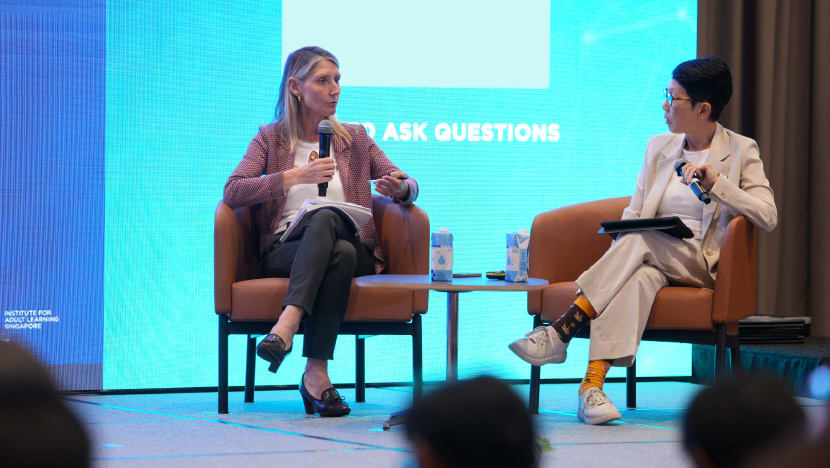
She added that Singapore’s commitment to building an inclusive environment for skills-first approaches and bringing stakeholders together to develop analytical tools like the Skills-First Readiness and Adoption Index serve as a strong foundation for overcoming these challenges.
“The global scope of CSFP’s initiatives facilitates meaningful exchange of knowledge and practices,” she said. “In an interconnected world, this sharing of insights is critical to shaping more agile and resilient workforce strategies worldwide.”

