









PRESENTED BY

EPSON AT 50: CHARTING
A VISION FOR B2B GROWTH
IN SOUTHEAST ASIA
Content share and bookmark
As Epson marks a major milestone, the electronics giant underscores the region’s importance and its commitment to support business transformation with innovative, sustainable technology.
Epson celebrates the 50th anniversary of its brand in 2025 – a marker that reflects both its legacy and the evolution of its business. Its roots actually stretch back to 1942, when it began as Daiwa Kogyo, a watch parts and precision instruments maker in Suwa, Japan. That foundation in fine engineering later shaped the technologies it introduced, beginning with the EP-101, the world’s first compact digital printer. This breakthrough inspired the Epson name – “EP” for electronic printer and “son” for its successors – when the brand was officially established in 1975. Over the decades, that pioneering approach has grown into what Mr Junkichi Yoshida, global president, representative director and CEO of Seiko Epson Corporation (Epson), described as “the expansion of sons and grandsons” – a growing lineage of innovative products.
Discover how Mr Junkichi Yoshida, global president, representative director and CEO of Seiko Epson Corporation, is steering the company’s next phase of B2B and sustainability-led growth. Video: Mediacorp Brand Studio
While Epson has since become familiar to consumers around the world, its next chapter lies in becoming a trusted partner for businesses navigating the demands of operational efficiency and sustainability. During a recent visit to Southeast Asia, Mr Yoshida underscored this direction. He highlighted Epson’s longstanding philosophy of Sho-Sho-Sei – “efficient, compact and precise” – a principle rooted in its engineering history and still reflected across its printing, projection and automation technologies. “We will leverage our strengths, such as Sho-Sho-Sei, to deliver value that customers truly recognise,” he said. “Our focus is on becoming a solution-driven brand that empowers sustainable growth and operational resilience.”
POWERING BUSINESS TRANSFORMATION
Epson holds strong market positions across Southeast Asia in categories such as printers, projectors and large-format printers. The company’s next phase of growth focuses on helping organisations digitalise operations, reduce emissions and strengthen supply chains. Many of these challenges – from managing energy use and improving workflow efficiency to enabling more effective hybrid collaboration – increasingly require holistic, interconnected systems rather than standalone hardware upgrades.





This is where Epson’s business-to-business (B2B) cross-solution strategy comes in: delivering holistic ecosystems that combine hardware, software and services. “We want to utilise our network in Southeast Asia to provide tailored solutions to customers,” said Mr Yoshida.
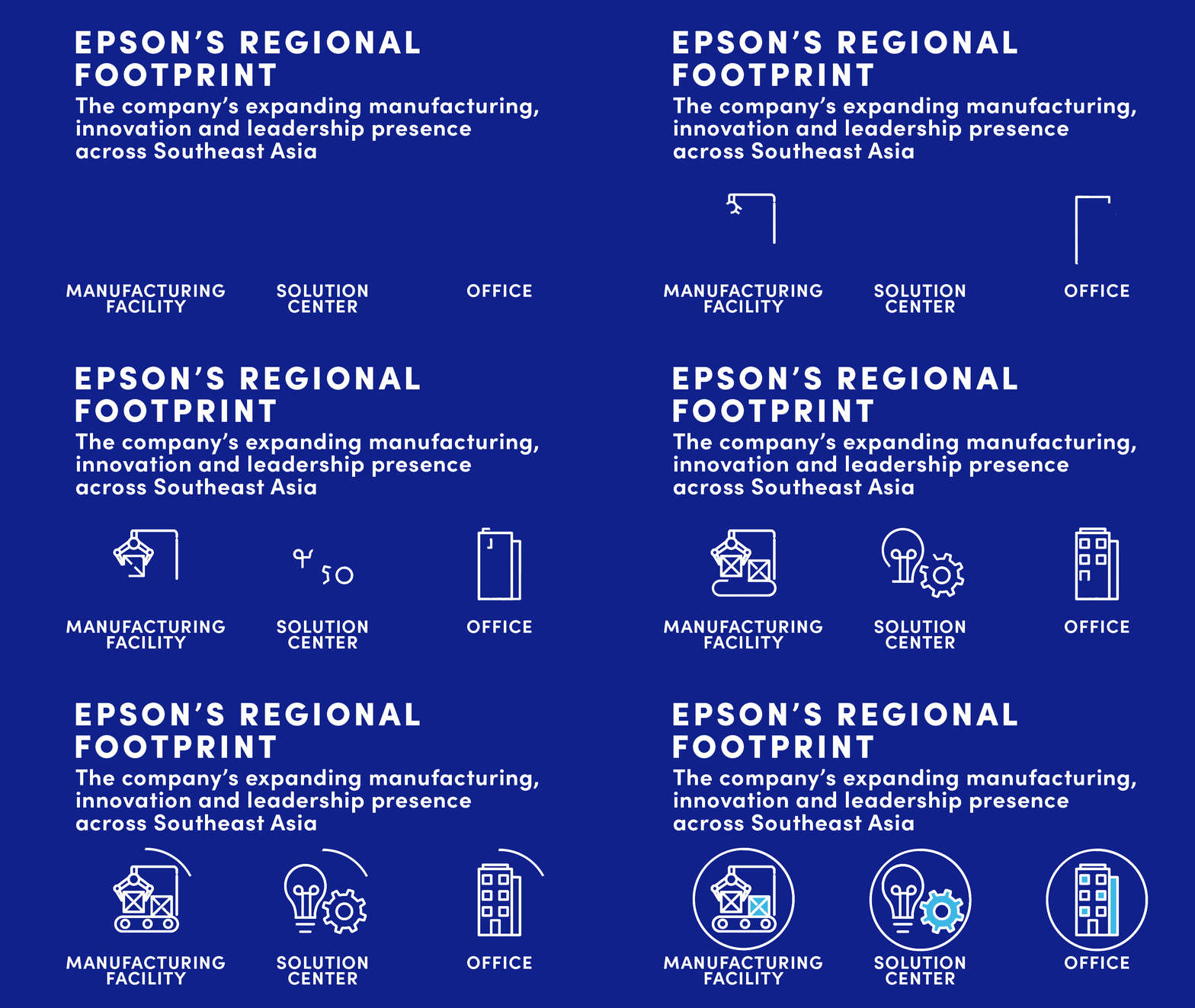
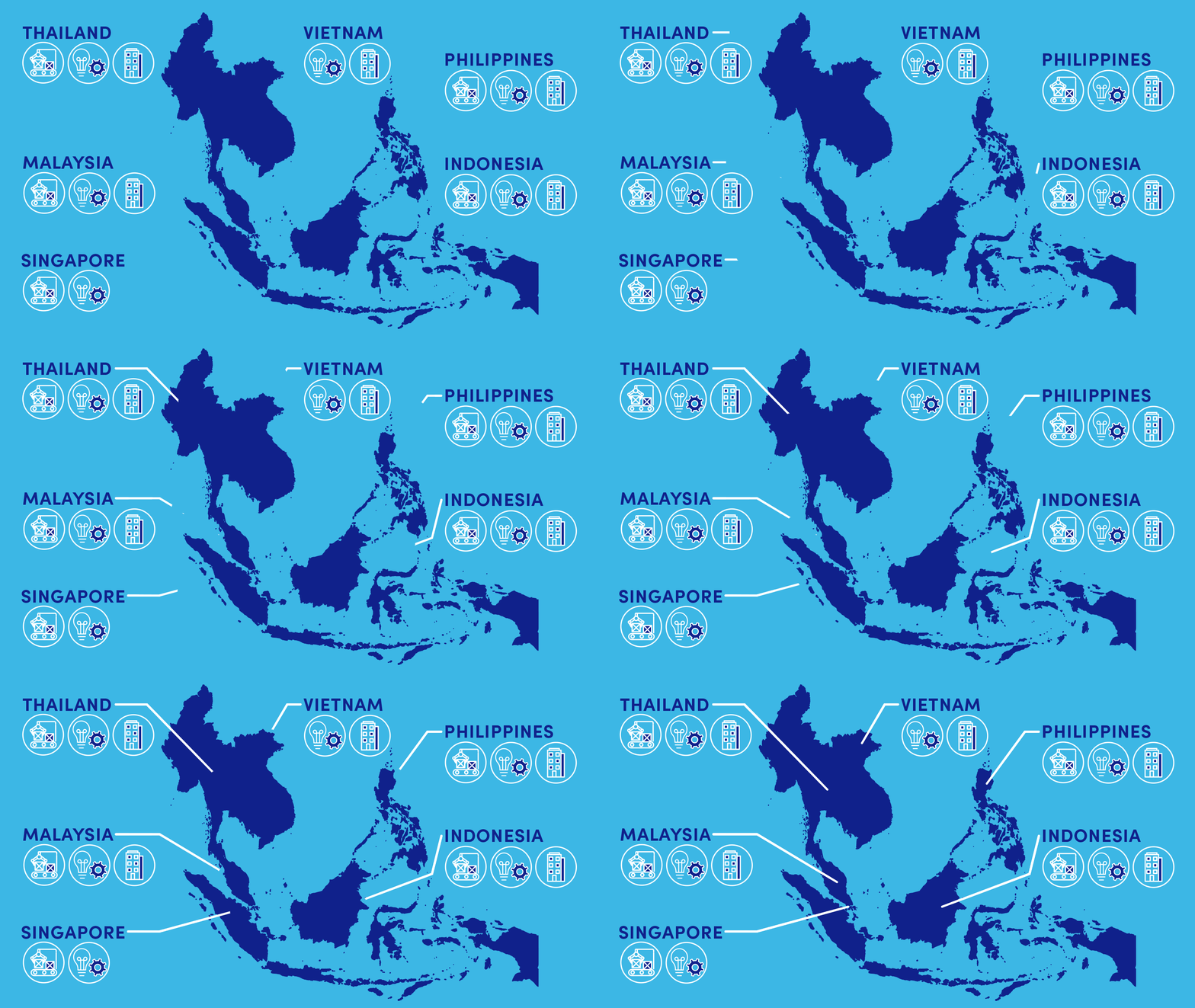
The company’s extensive and long presence in the region – including manufacturing facilities, solution centers, service outlets and offices, as well as its regional headquarters in Singapore – has enabled it to develop a deep understanding of local business needs. The recent acquisition of Fiery, a company specialising in professional printing software, further strengthens its ability to deliver complete solutions for commercial and industrial printing.

TECHNOLOGY ENGINEERED FOR BUSINESS NEEDS
Sho-Sho-Sei remains the foundation of its business innovation. This philosophy guides solutions designed to help organisations work more productively while using resources more responsibly.
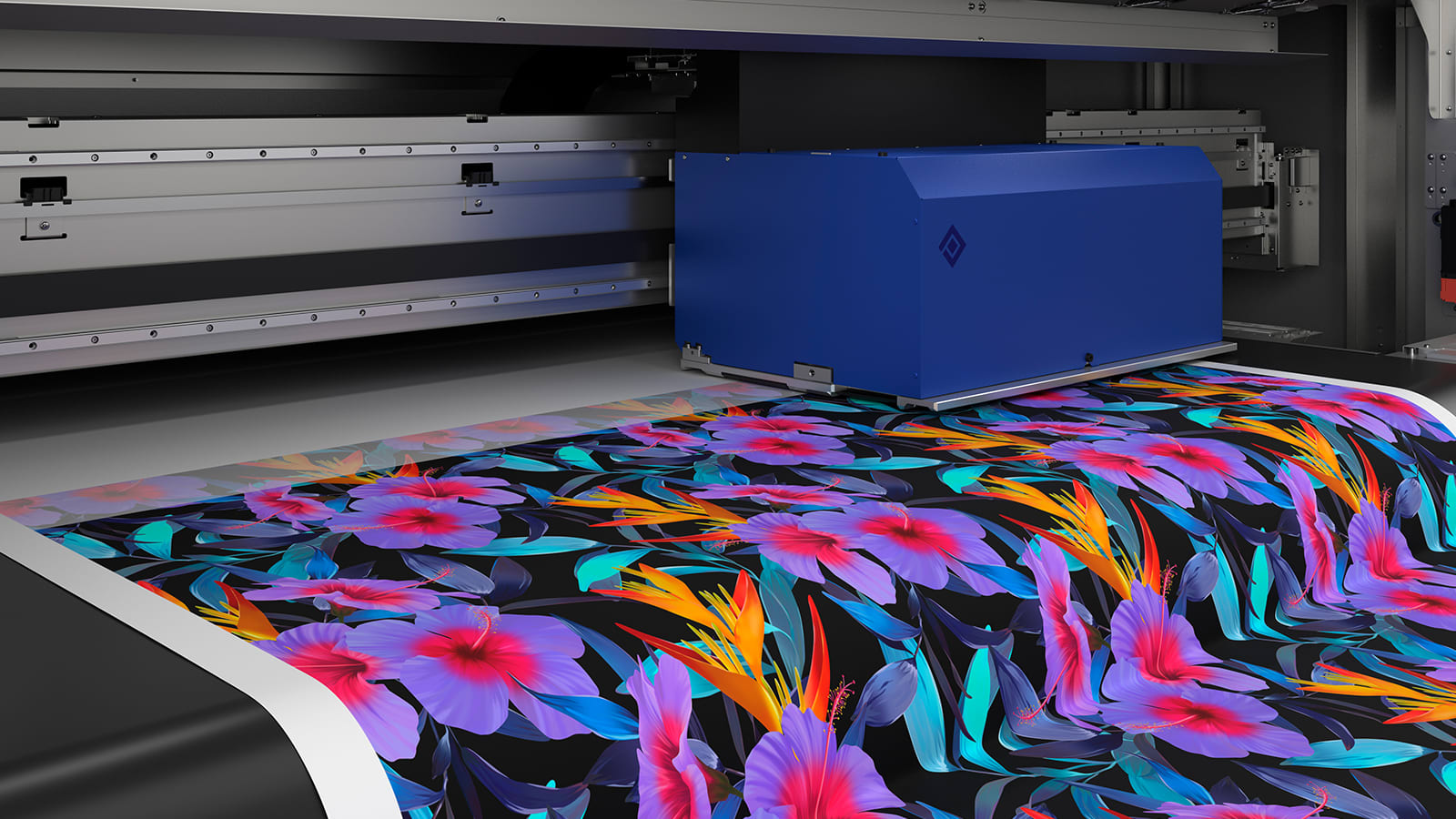
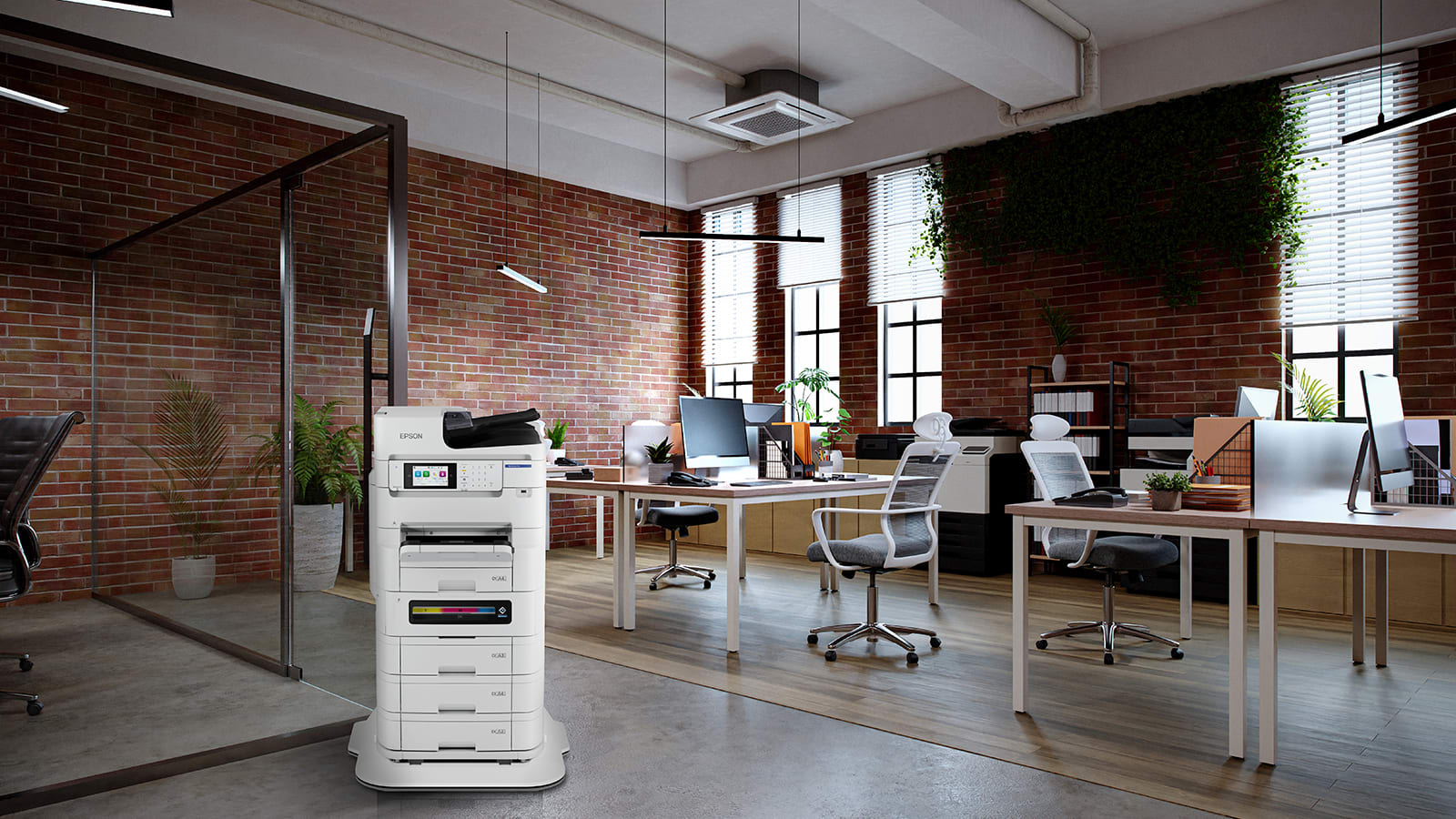
Epson’s core product pillars – including heat-free inkjet printers, large-format printers, projectors and precision robots – reflect this philosophy. These technologies address practical needs across a range of work environments, whether lowering energy consumption in offices or enhancing precision on the factory floor.
The cross-solution strategy builds on these capabilities by integrating devices with software platforms and services. Solutions, such as Cloud Solution PORT (for managing and monitoring professional printers remotely), Epson EcoFleet Management (allows contract, device and invoicing management in one central platform) and Epson RC+ software (for creating robot automation solutions), give organisations the ability to manage devices centrally, improve uptime, streamline workflow and support collaboration across teams working in different locations.
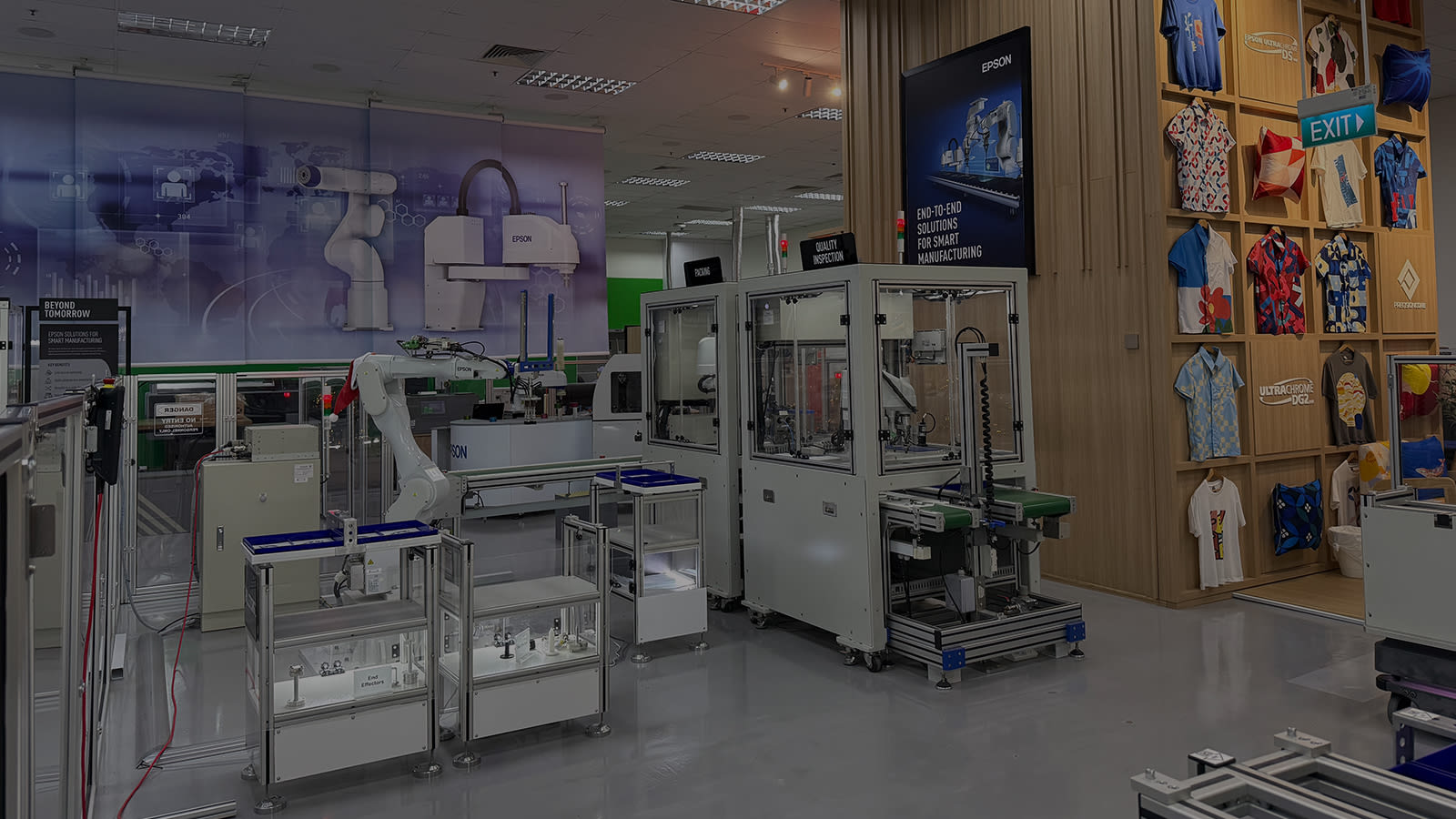
Epson’s solution centers across Southeast Asia play a key role in this approach. They allow organisations to test technologies firsthand, see how different systems work together and co-develop integrated solutions tailored to their needs.



A COMMITMENT TO SUSTAINABLE B2B LEADERSHIP
For Epson, sustainability is not limited to its product design – it is a principle applied across its global operations. The company has taken steps to lower its environmental footprint throughout its value chain.
Epson became the first Japanese manufacturer among RE100 member companies to transition fully to renewable electricity, supporting its goal of reducing emissions across all business activities. It is also improving logistics efficiency by optimising transportation routes and adopting alternative fuels to lower supply-chain emissions. In manufacturing, Epson recycles unused metals – such as scrap and moulds – into raw materials used for metal-powder products. These circular practices help reduce waste and conserve resources.
For business decision-makers, these efforts provide practical value. Choosing technology from a partner with robust environmental practices can strengthen an organisation’s environmental, social and governance profile, reduce indirect emissions and offer assurance that their technology provider is aligned with long-term sustainability expectations.
Together with its regional presence and engineering expertise, these commitments reinforce Epson’s role as a partner focused on responsible and future-ready innovation.

LEADING THE FUTURE WITH TRUST AND INTEGRITY
As Southeast Asia moves towards more digital and connected economies, organisations face a pivotal choice: remain tied to legacy systems built for a different era, or adopt technology designed to meet today’s dual priorities of performance and environmental responsibility. The gap between early adopters and those slower to transform is becoming increasingly visible.
With decades of precision engineering and a deepening regional footprint, Epson has established itself as a reliable partner for organisations preparing for the future. Its focus on B2B cross-solution, environmental stewardship and continuous optimisation reflects a broader commitment to helping businesses in Southeast Asia modernise responsibly.
Mr Yoshida noted that the company’s core values will remain central to its evolution. “In the next 50 years, Epson will continue our growth strategy by combining technological innovation, market engagement and environmental commitment,” he said.

