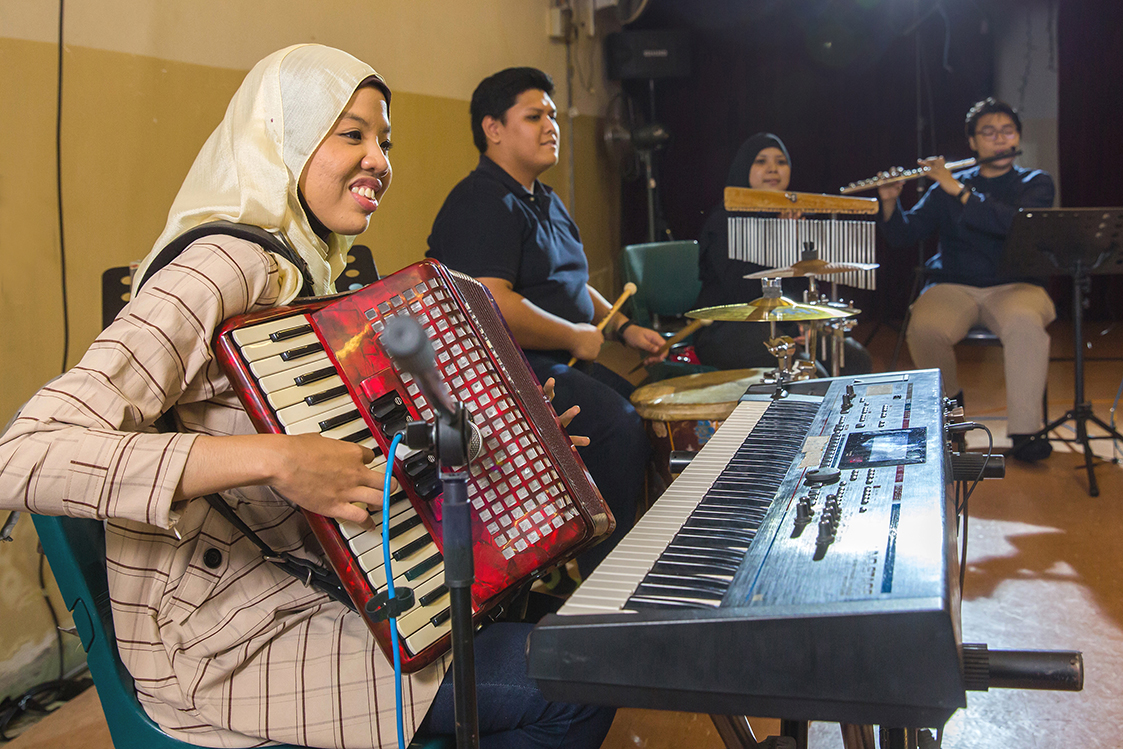
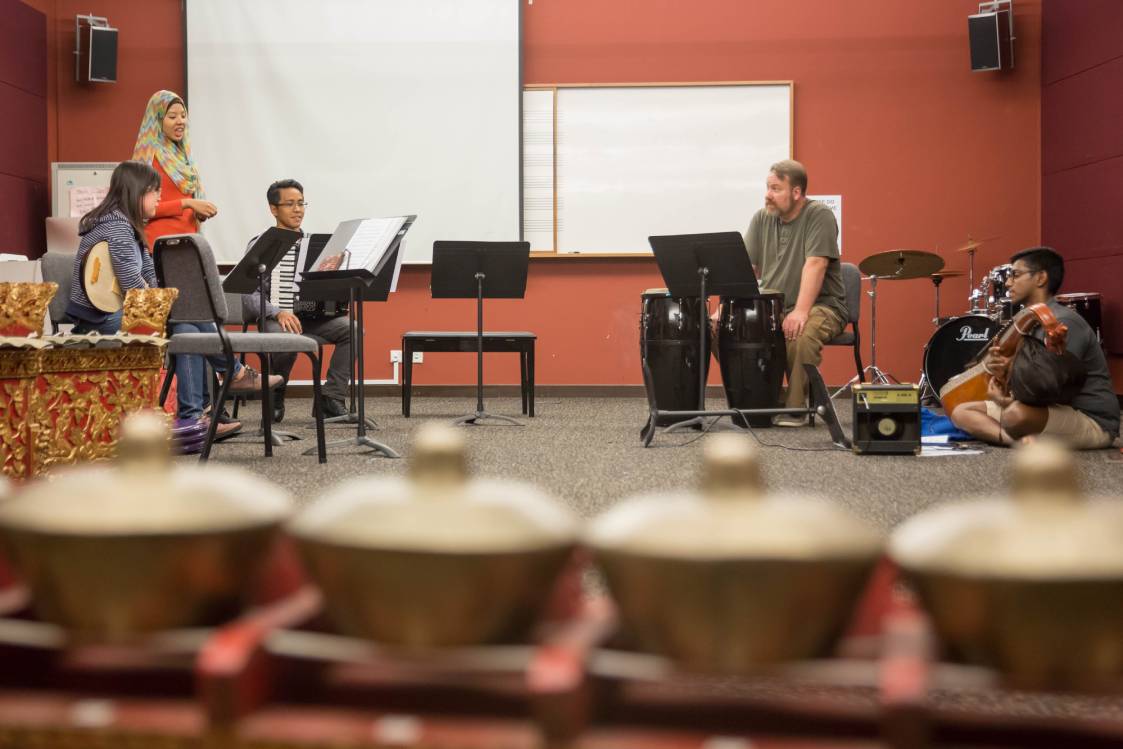
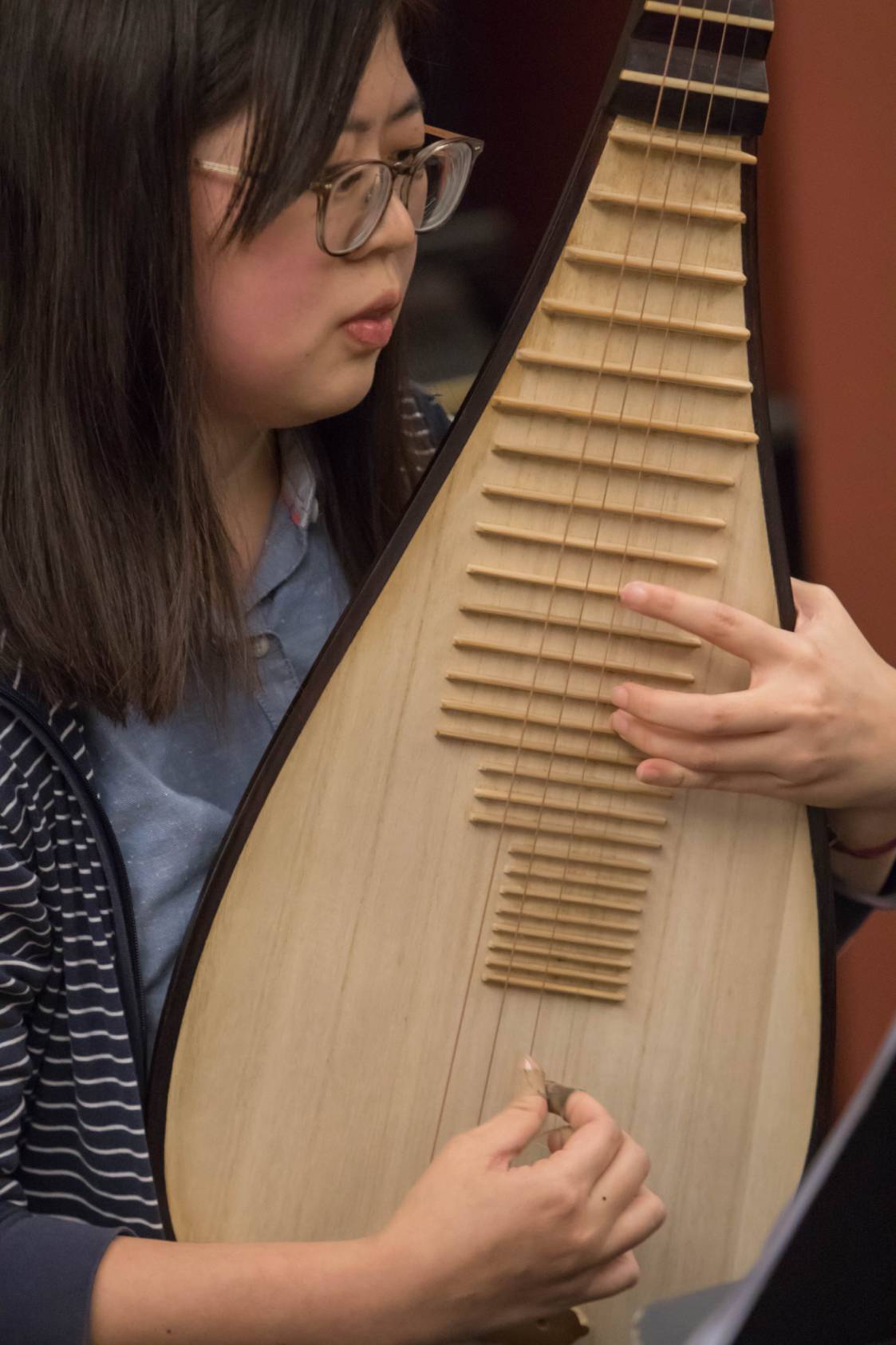
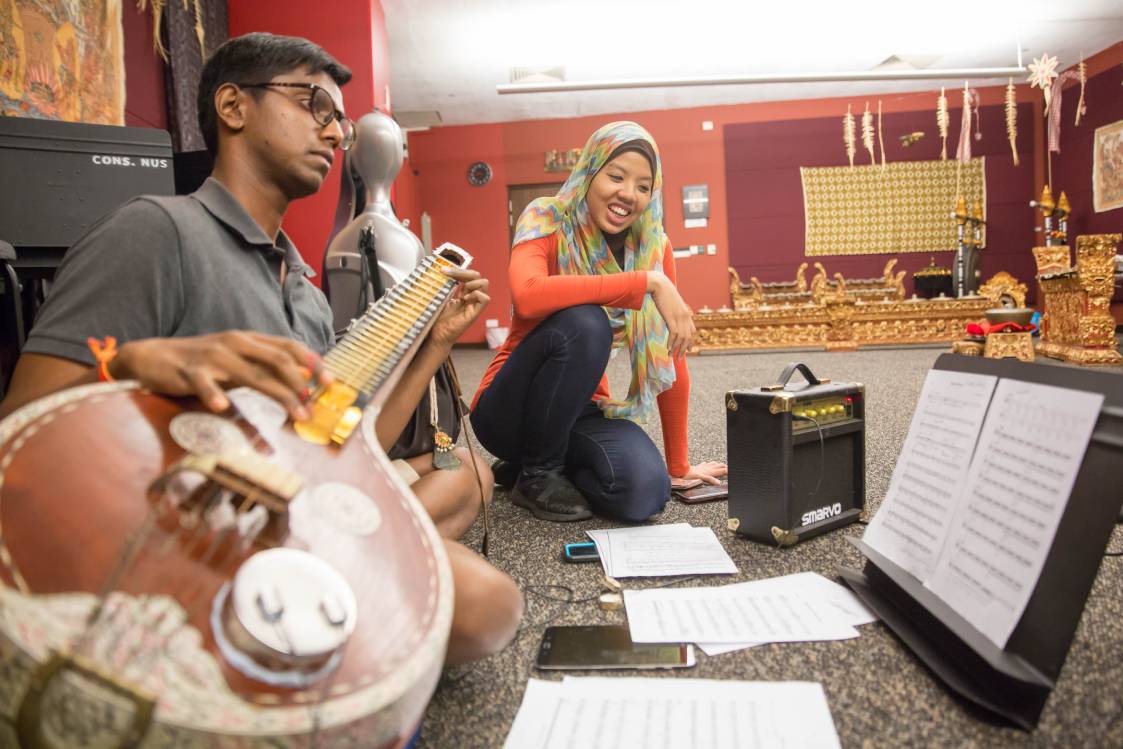
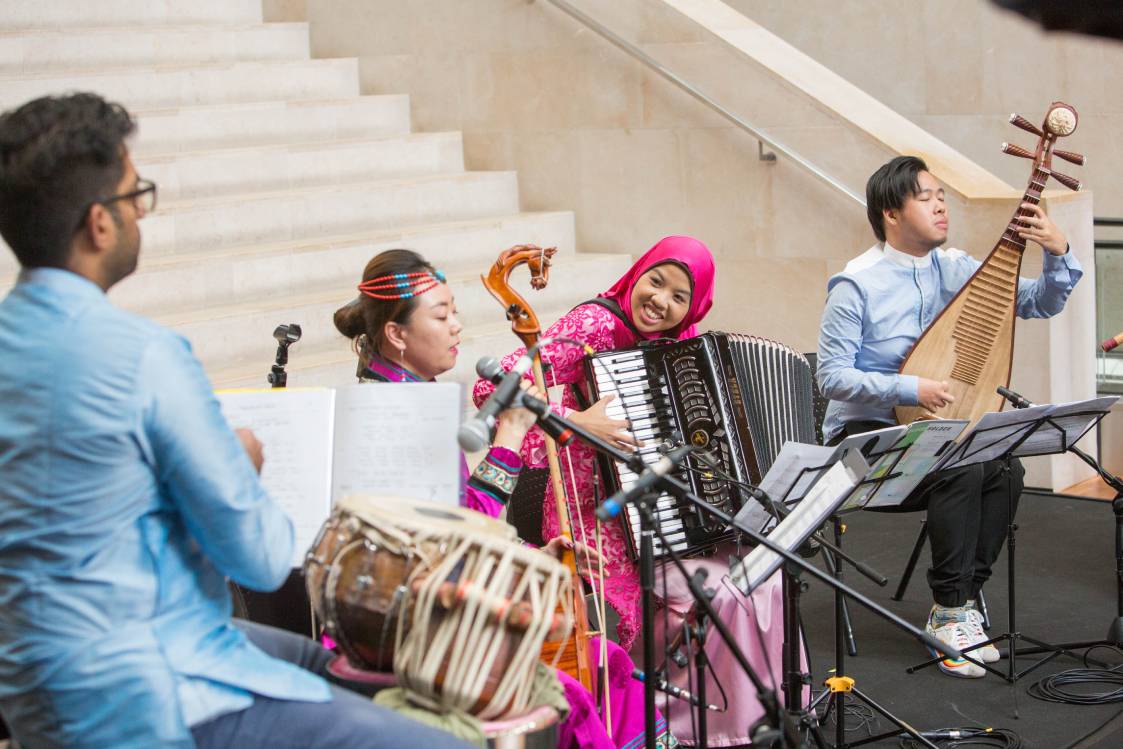
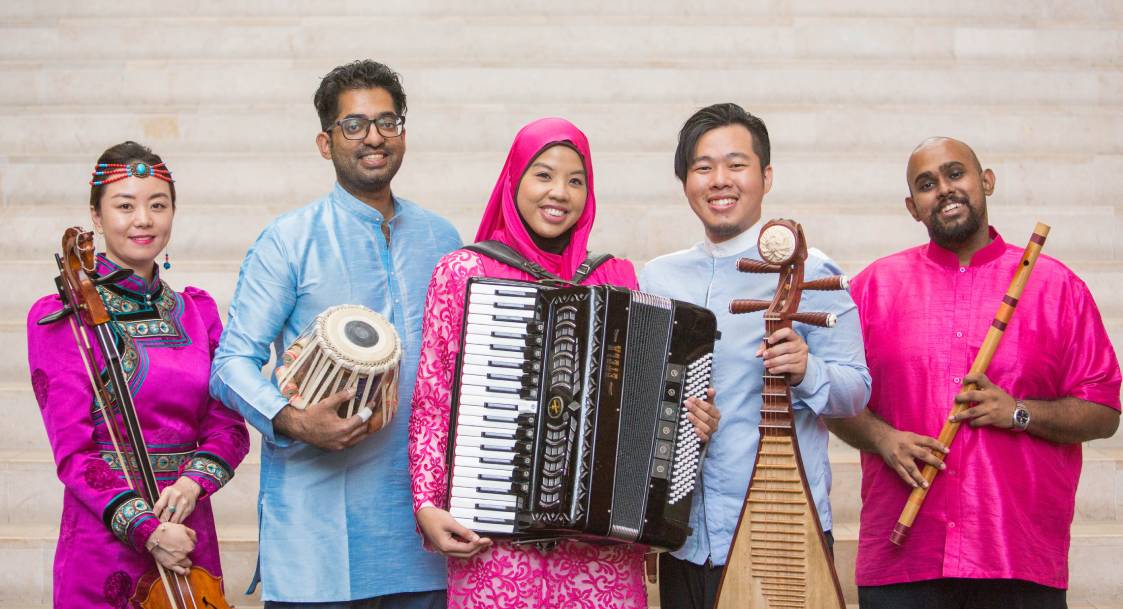
THE PIPA OPENS WITH ENERGETIC TRILLS. Soon after, steady thumps of the
conga kick in. The accordion joins the group, adding a reedy finish to the music. The melodic
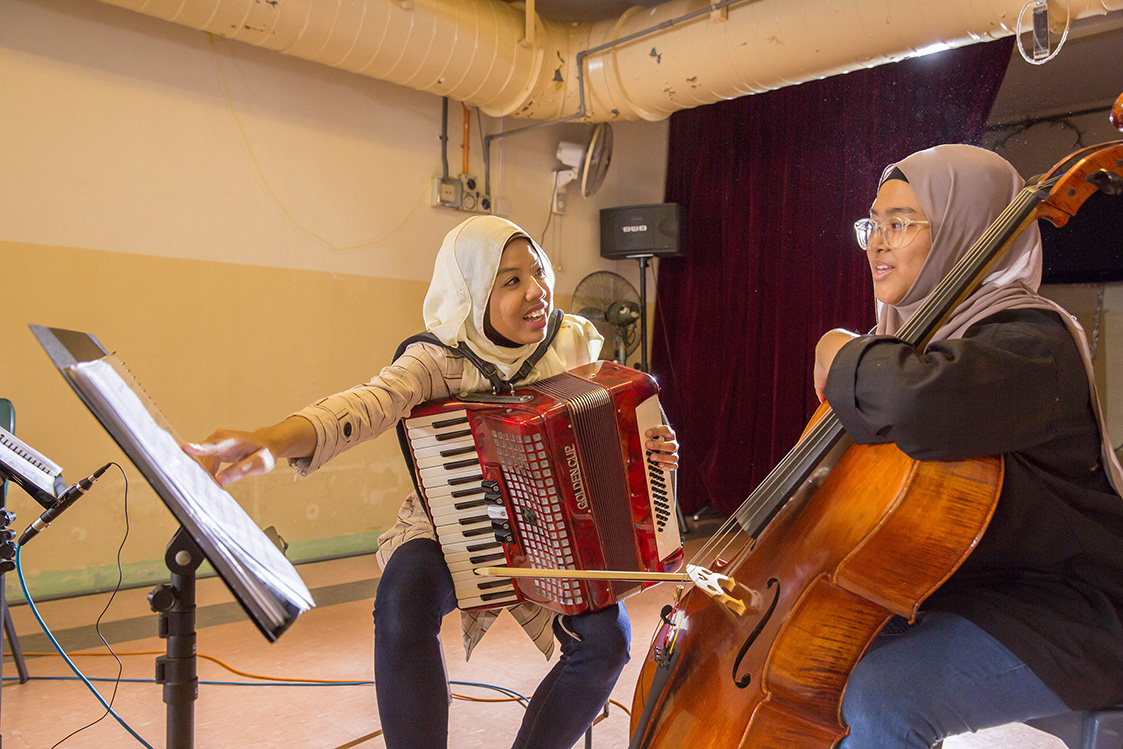
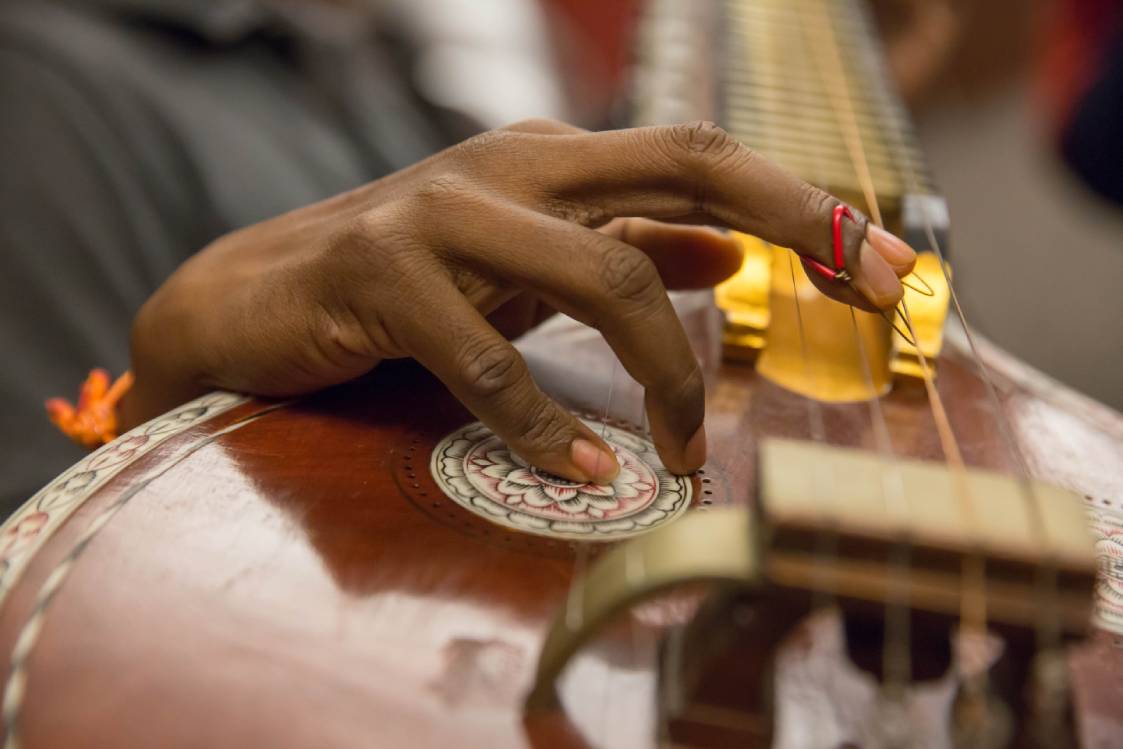
veena follows before the cello sweeps in to ground the piece with its powerful but mellow
voice. In an instant, the curious collection of instruments come together to produce a truly
unique sound.
It is a bold sound. While local audiences are familiar with different ethnic instruments and
musical styles – Malay, Indian and Chinese – they are more accustomed to listening
to each
separately. “It hasn’t been easy,” said Syafiqah “But I have a message
– there is beauty in
combining diversity – and I want to put this out there.”
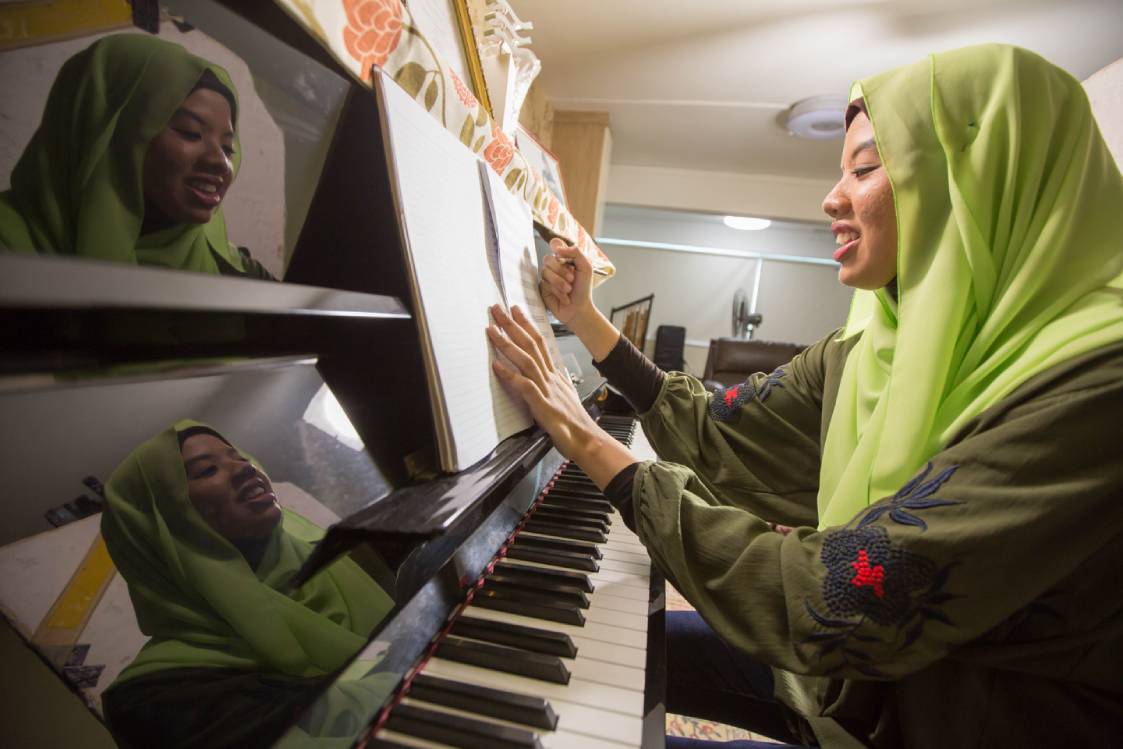
SYAFIQAH SHOWED MUSICAL PROMISE SINCE YOUNG . Her father remembers
the first song he heard her play on an electronic keyboard at home. Syafiqah was only four
years old then. “With just one little finger, she played ‘Where do I
begin‘,” recounted her
father, Mohamed Sallehin. “I was amazed and asked her, ‘Do you want to learn to play
the
piano?’ She smiled.” It was a particularly apt choice of song for little Syafiqah
– it marked the
beginning of her lifelong journey in music.
Money was tight for the family of six living off her father’s single income. To pay for
Syafiqah’s
piano lessons, he took on a second job moonlighting as a driver. The work was tough and
when her piano teacher told him students tended to drop out when they reached Primary 5,
he was secretly relieved, thinking it was a matter of time. “I was so surprised that she
stuck
with it all through secondary school,” said Mohamed Sallehin. “Growing up, she has
always
been very persistent.”
Syafiqah‘s journey has been a series of ups and downs. Even now, she sometimes feels
pressure for having chosen an unconventional career path. She remembers one family
gathering where a distant relative passed disparaging remarks on her career choice as a
musician. “I felt so, so small, but their words fuelled me to push myself harder and be
the
best I can be,” recounts Syafiqah. “It is always a constant struggle.”
At 19, Syafiqah won a full scholarship to study music at the Yong Siew Toh Conservatory at
the National University of Singapore. It was a high point, but she also developed a love-hate
relationship with music during her time there. Syafiqah felt that many of her peers were more
talented than her and questioned her own abilities. “I went through phases of self-doubt
and
I had moments where I wanted to quit my studies completely,” she recounts. “But I
overcame
them by holding onto my voice and stance as a musician with a unique message.”
Syafiqah persevered and eventually became the Conservatory‘s first Malay-Muslim
Singaporean graduate. But whilst training in Western classic music, she also became
increasingly aware that local traditional music was being neglected. “Malay music, for
example, is not well-represented in Singapore and the world,” she said. “I asked
myself, how
could I change that?”
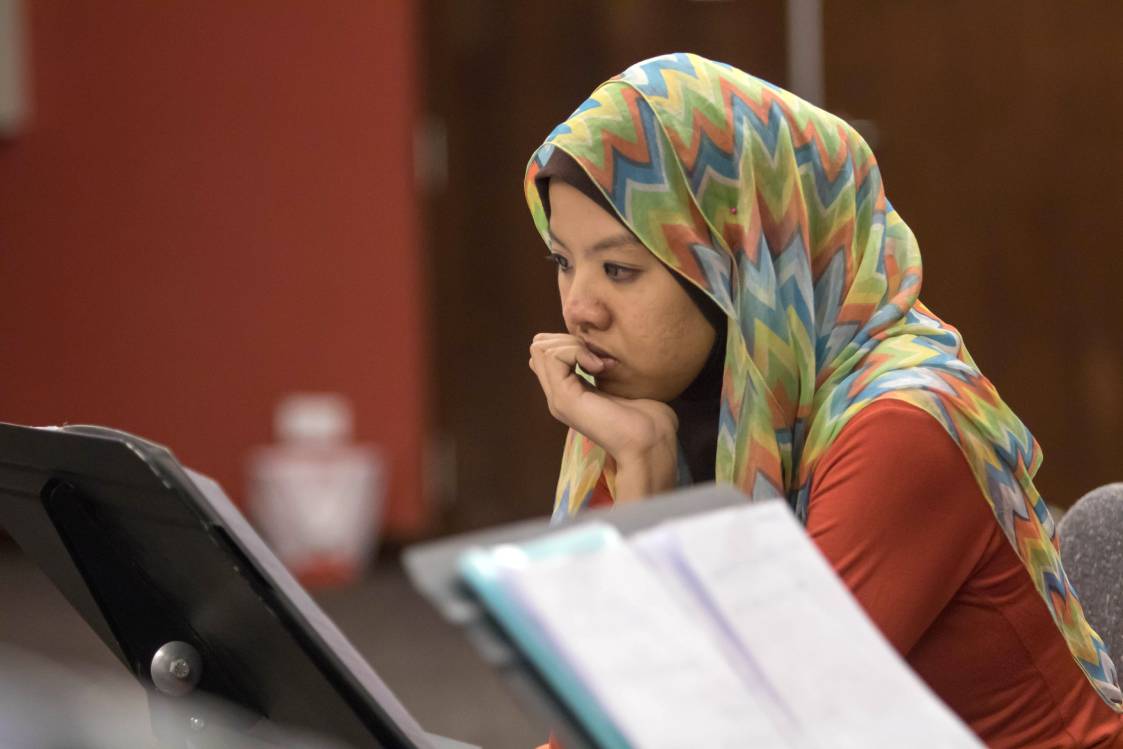
SYAFIQAH SET OUT ON A PATH TO MAKE A DIFFERENCE. She taught herself
the accordion, an instrument commonly used in Malay folk music, and joined Malay folk
band Gendang Akustika. The group plays traditional Malay music and has performed at
festivals and in venues including the Esplanade. Syafiqah also began arranging music that
blended Asian and Western instruments for groups like the locally-renowned T‘ang
Quartet
and Singapore Wind Symphony. Shortly after, she started the fusion ensemble, Open Score
Project with musician Gildon Choo.
Syafiqah’s journey has been one of finding her voice and confidence, with support from
her
parents and the community around her. In 2010, Syafiqah won a prestigious youth award by
MENDAKI, which recognised Malay/Muslim youths who are role models in the community.
Three years later, her percussion trio composition “Dance of the Merlions” won
second prize
in the Asian Composers League Young Composer Competition. Since then, Syafiqah has
gone on to represent Singapore at several international music festivals around the world,
at times helped along with grants from the National Arts Council (NAC). “I can push
ahead
because of the support I‘ve had and also the many sacrifices my parents made for
me,” she
said. “I feel empowered by this.”
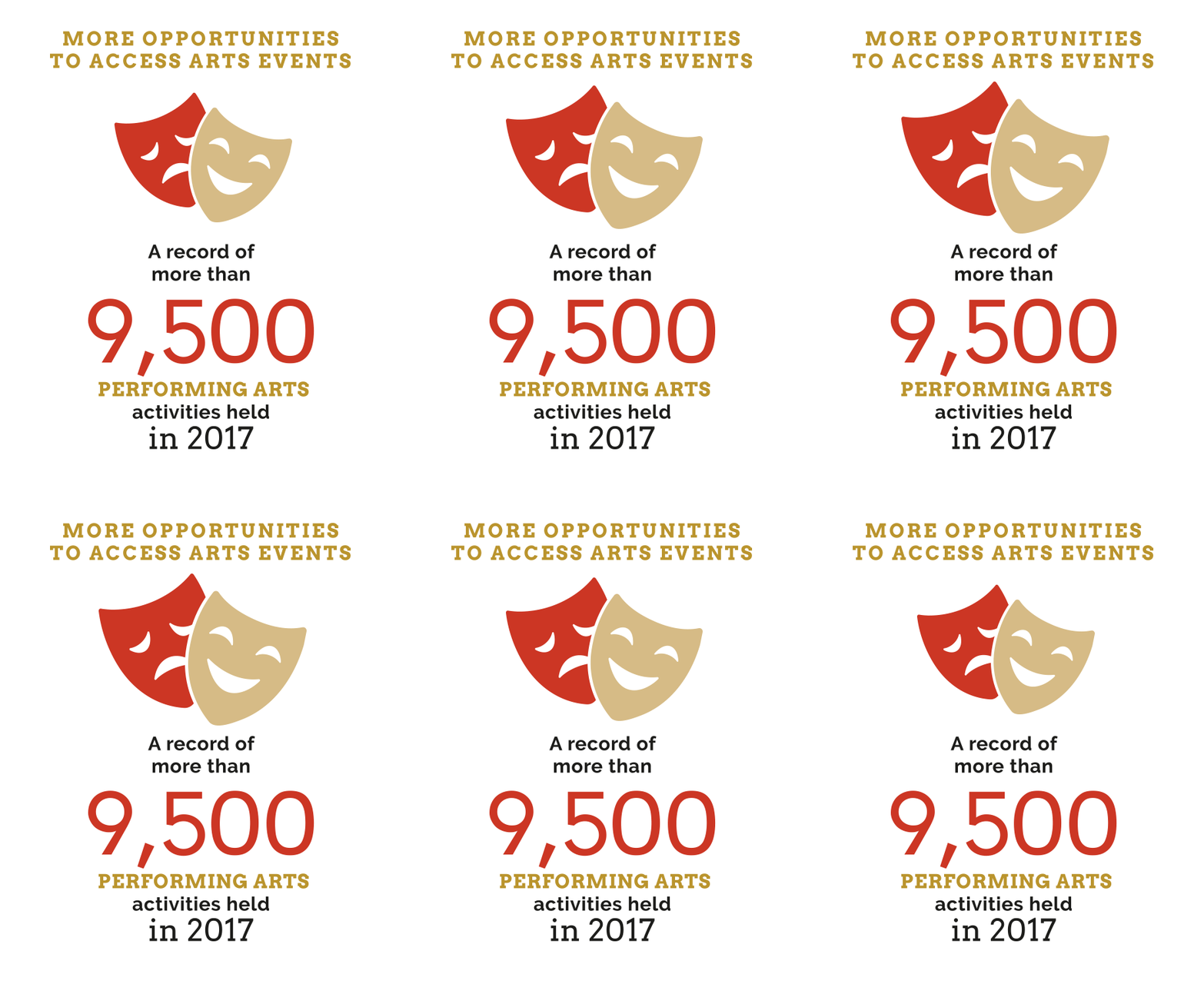
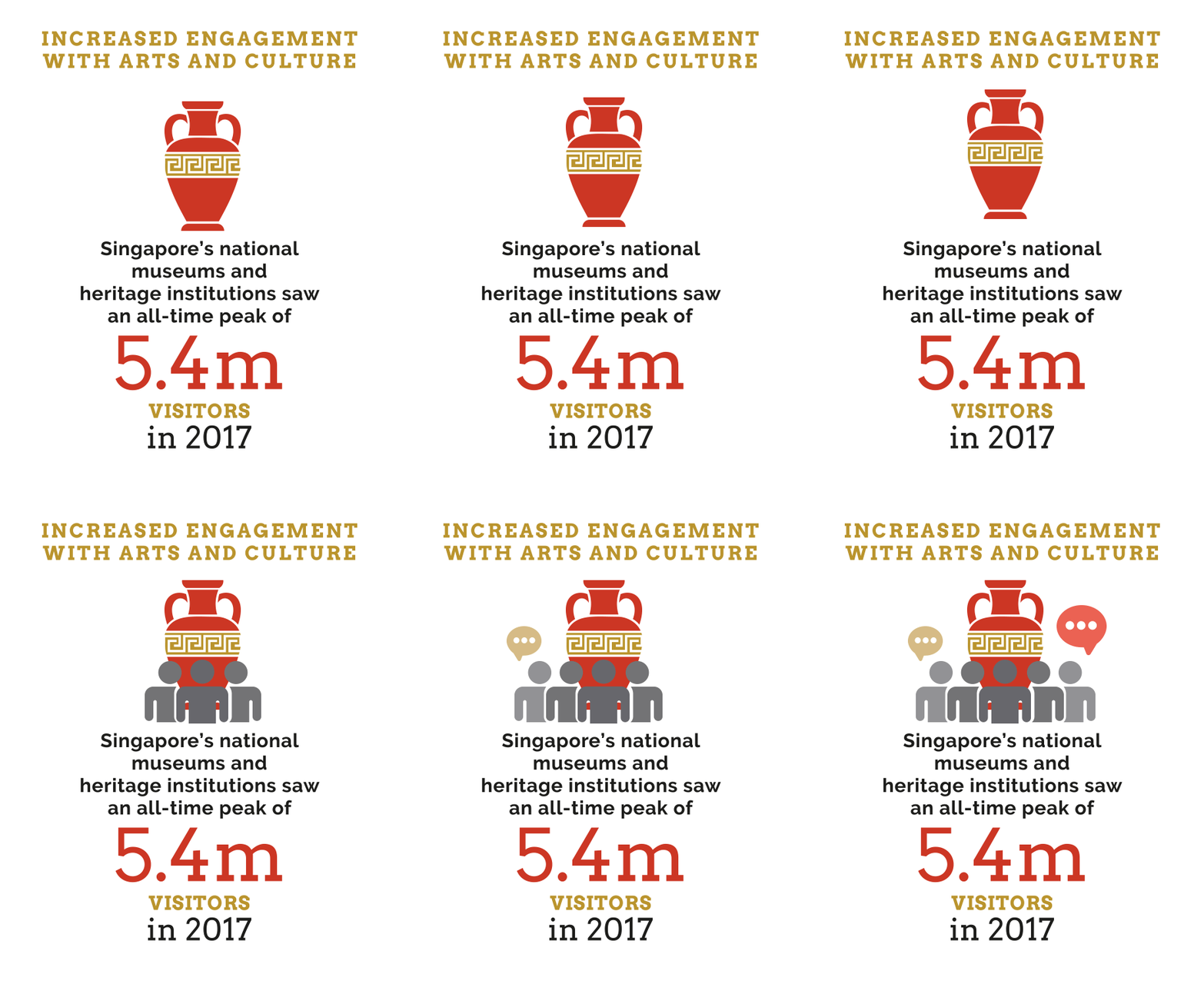
Much of Syafiqah’s music incorporates elements of national
identity
and cultural heritage. Her work has gained more recognition,
reflective of Singaporeans’ increasing engagement with the
arts and heritage. Here’s a snapshot:
Source: Singapore Cultural Statistics
Between performing with the accordion and composing symphonies for music festivals,
Syafiqah still finds the time to spread her love of music as a part-time teacher at School
of the Arts Singapore (SOTA), where she also leads the school’s Malay Fusion Ensemble.
“I
find it really fulfilling,” she said. “I‘m imparting my skills in traditional
and fusion music to a
generation of younger musicians.”
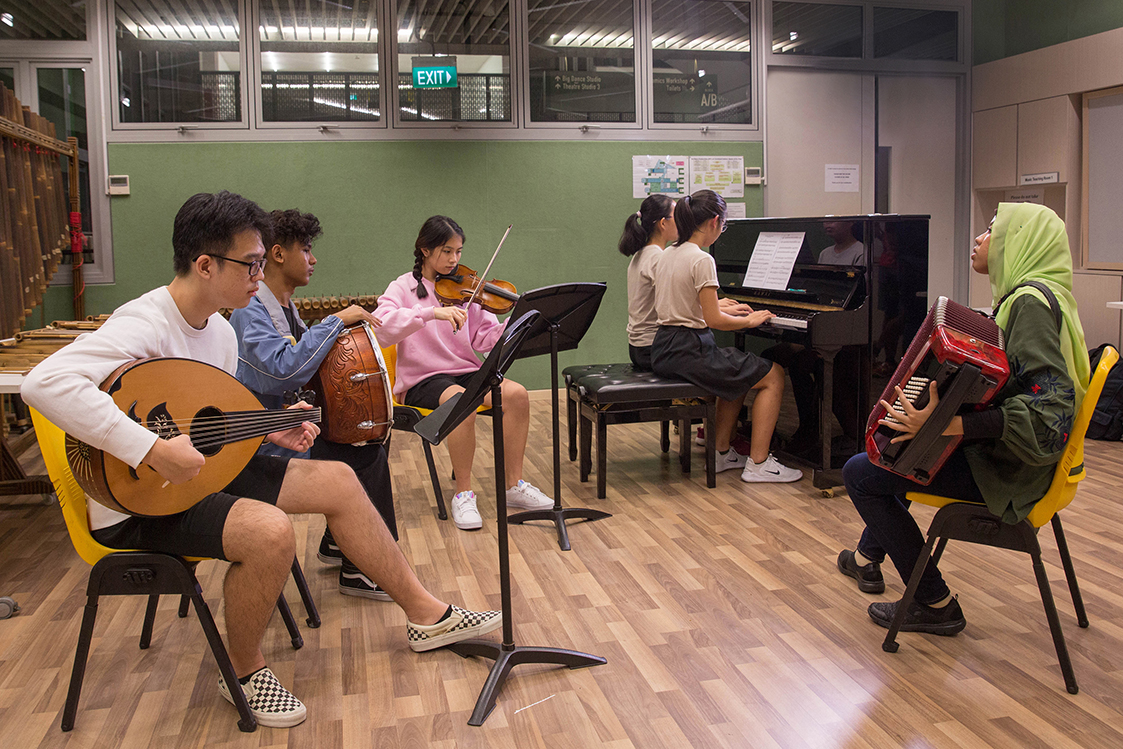
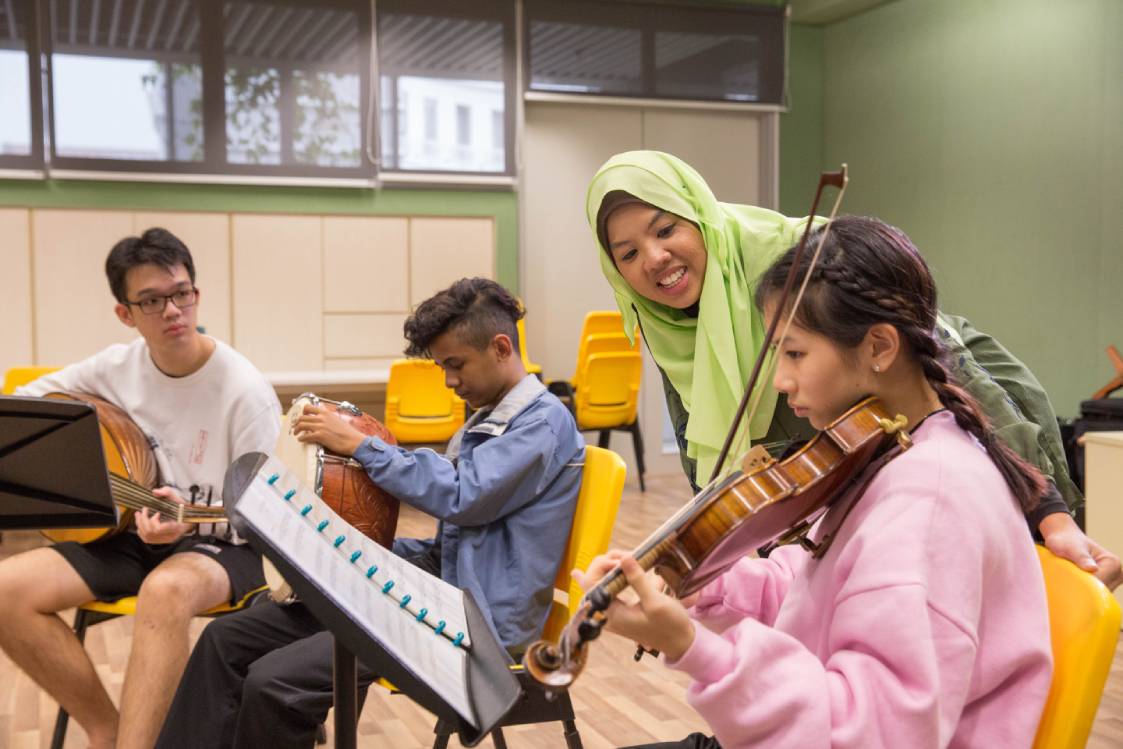
THE STUDENTS STROLL QUIETLY INTO THE STUDIO. Syafiqah hands out the
score for “Mak Inang Pulau Kampai”, a traditional folk song commonly played at Malay
weddings. They whip out an assortment of instruments, among them a violin, a rabana – a
hand drum used in Malay music – and an oud, a lute with Persian origins. Within minutes
they begin playing from the score.
“Folk music has a lot of ornamentation, so don’t just follow the notes,” says
Syafiqah, coaxing
the students to be bold and improvise. “It‘s about being brave and being
free.”
Some of her students, having been classically-trained, struggle to improvise to the unique
style of folk music. Syafiqah patiently encourages them to try again. “This ensemble
wouldn’t
have survived this long if not for her confidence,” said Year 3 student Rayyan Rizdiun,
who
plays the rabana. “Without her, our self-esteem as musicians wouldn’t have
grown.”
The students begin to get into the groove of the new piece. Some of them grow bolder and
glance away from their scores. Others allow their fingers to wander as they add musical trills
to their improvisation. Syafiqah looks on proudly as she accompanies them on her accordion.
“It‘s always about the music,” said Syafiqah. “It means something to me
and I believe it means
something to others. That gives me the confidence to keep going.”