







Analysis:Big investors hunt for tomorrow's AI winners as capex angst fades
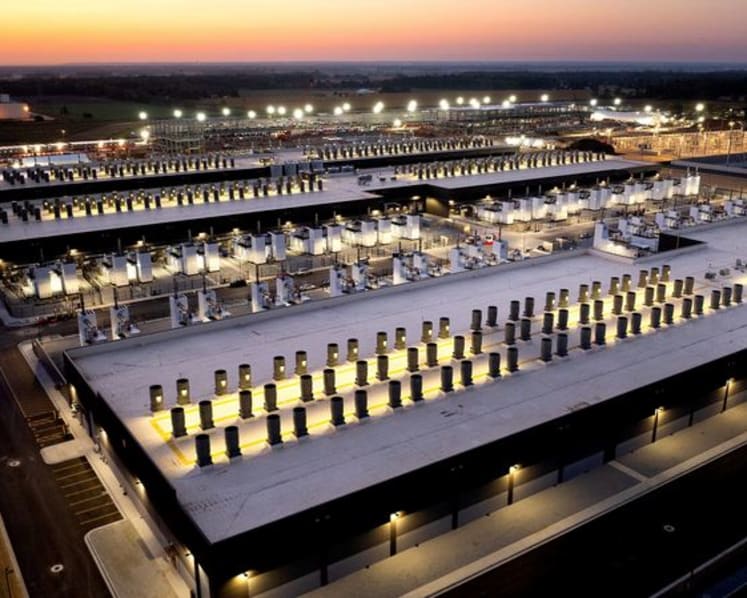
MILAN, Aug 17 : The rally in AI-linked stocks that marked the latest earnings season has shifted the focus of the AI investment story from whether Big Tech's spending spree will pay off to the kind of companies that will deliver returns over the longer term, investors say.
Results Microsoft and Amazon reassured markets that demand remains robust for the infrastructure that underpins artificial intelligence.
Cloud growth is accelerating, and capacity constraints persist.
The question for some of the world's biggest asset managers is which companies can sustain profit growth once those constraints ease.





Many retain significant positions in semiconductor stocks even after a sector rout in July when doubts set in over whether AI spending was worth it and the challenge of rising Chinese competition.
At the same time, they are adding exposure to the hyperscalers, or the biggest cloud service providers whose scale allows them to rapidly expand AI infrastructure to meet customer demands.
"The hyperscalers are being recognised in this moment as companies that are likely to be very large beneficiaries of this AI paradigm shift," said Brian Barbetta, co-head of the technology platform at Wellington Management, which manages about $1.3 trillion in assets. "They remain core holdings in our portfolios, and we've in fact increased our positioning in many of these companies recently."
BIGGEST SPENDERS' PERFORMANCE LAGS
Shares in the four biggest AI capex spenders all lagged a 75 per cent surge in the Philadelphia Semiconductor Index.
They also lagged a rally in Nvidia-backed CoreWeave - up around 50 per cent - and Nebius - up over 200 per cent. Known as neocloud providers, the companies rent computing power to customers, ranging from AI labs to businesses, and have capitalised on elevated spot pricing for scarce AI capacity.
Janus Henderson's Bankers Investment Trust portfolio manager Richard Clode, however, said that over time hyperscalers were likely to benefit from their investments.
"By later next year into 2028, we think you're going to start seeing these companies growing profits and cash flow faster than the incremental capex growth," he said.
Clode said Amazon was one of his fund's biggest overweight positions.
"Today's capex is tomorrow's sales," he said.
A Reuters analysis estimates hyperscalers will generate about $340 billion more in annual operating cash flow in 2027 than in 2025, while capex is expected to rise by roughly $534 billion.
NOT AS SIMPLE AS CHIPMAKERS VERSUS CLOUD PROVIDERS
John Lamb, equity investment director at Capital Group, which manages about $3.6 trillion in assets, said investors should view AI as an expanding ecosystem.
"It's not about whether chips are better investments than hyperscalers. It's about having both in your portfolio," he said, noting that data centres typically take 12 to 18 months to move from construction to producing revenue.
"We're just starting to see from the latest quarterly earnings this inflection point."
PICK YOUR WINNERS
Clode says those companies that control both computing capacity and the layers that help customers deploy AI efficiently across different models, optimising cost and performance, will gain a competitive edge.
He says companies such as Amazon, Microsoft and Google have more lasting advantages than neocloud providers because of their scale and customer relationships.
Hyperscalers' valuations have compressed this year and remain below their post-pandemic peaks. Microsoft trades at about the highest multiple of 24.6 times forward earnings and Meta at the lowest of 17.6.
BCA Research Chief U.S. Equity Strategist Noah Weisenberger said neocloud providers could be vulnerable if new computing capacity comes online and pricing normalises, given their heavier reliance on debt and high pricing.
He said the hyperscalers' shift to a more capital-intensive business model could restrain valuations even if earnings remain strong. Yet, he recommends a long-hyperscalers, short-neoclouds trade.
FEWER FUTURE WINNERS THAN PLAYERS TODAY
Even for the winners, there are challenges. Swiss wealth manager LGF+ZEST CIO Alberto Conca estimates AI monetisation needs a fivefold to thirteenfold increase to justify current spending plans.
Barbetta expects competition to narrow the field of AI winners as the market matures, with those companies with the broadest technology portfolios, deepest customer relationships and greatest control over their own infrastructure likely to pull ahead of more specialised rivals.
"There are absolutely going to be fewer winners in the future than there likely are players today," he said.





