







Asian shares pulls back from record highs as oil gains on Iran risk
Japan's Nikkei vaulted to a new high for a second day before falling over 1 per cent, with markets in Taiwan and South Korea also hitting new highs and then turning lower.
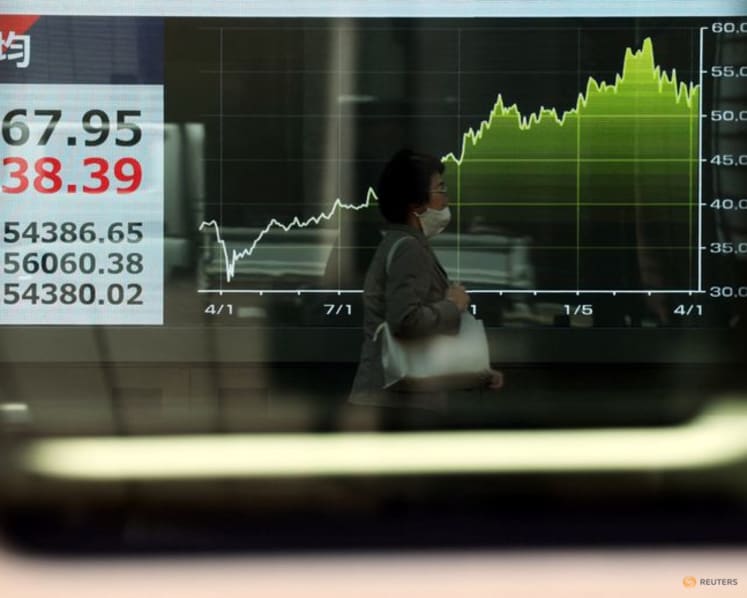
A woman walks past a screen displaying Japan's Nikkei share average and a graph showing recent movements of the average, outside a brokerage in Tokyo, Japan on Apr 8, 2026. (File photo: Reuters/Issei Kato)
SYDNEY: Asian shares retreated from record highs on Thursday (Apr 23) as investors took some money off the table from a technology-driven rally, while oil prices rose for a fourth straight day as a fragile ceasefire in the Middle East hung in the balance.
Overnight, the S&P 500 climbed 1 per cent and the Nasdaq jumped 1.6 per cent to close at new record highs, helped by a strong start to an earnings season that has eased concerns about the health of the US consumer despite rising energy prices from the Iran war.
MSCI's broadest index of Asia-Pacific shares outside Japan had earlier tracked Wall Street and rallied to a record of 831.56 points, but selling soon kicked in. It was last down 0.7 per cent.
Japan's Nikkei vaulted to a new high for a second day before falling over 1 per cent. Markets in Taiwan and South Korea also hit new highs and then turned lower.
China's blue chips rose 0.3 per cent and Hong Kong's Hang Seng index slipped 0.9 per cent.
Higher oil prices were partly to blame, with Brent crude futures up another 1.3 per cent on Thursday to US$103.18 a barrel, having jumped 3.5 per cent overnight to cross back above US$100.
Iran on Wednesday captured two container ships seeking to exit the Gulf via the Strait of Hormuz, tightening its grip on the crucial waterway, as a fragile ceasefire hangs in the balance for now.
Nick Twidale, chief market strategist at ATFX Global, said the increased tension in the Middle East is starting to spook investors as further ship seizures erode hopes of more peace talks.
"We saw the spike to record highs on the back of Wall Street's overnight performance, but then the pullback as a bit of a reality check on what is happening in the Middle East."
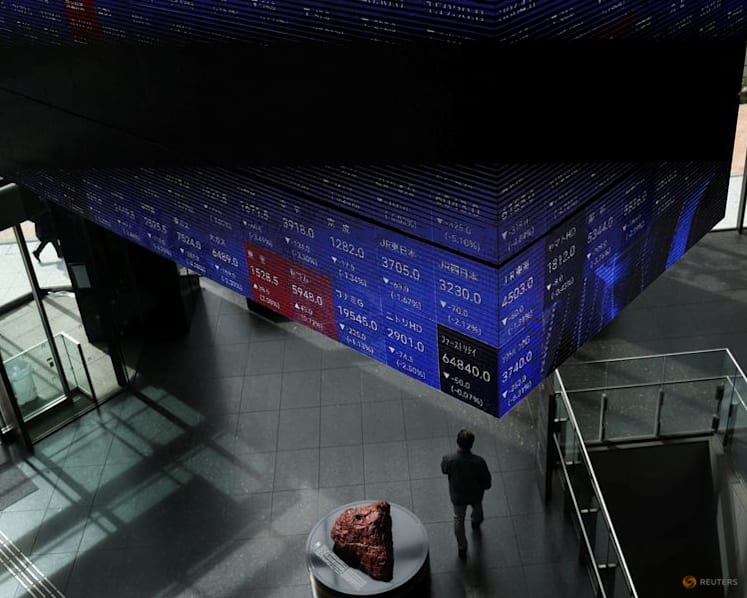
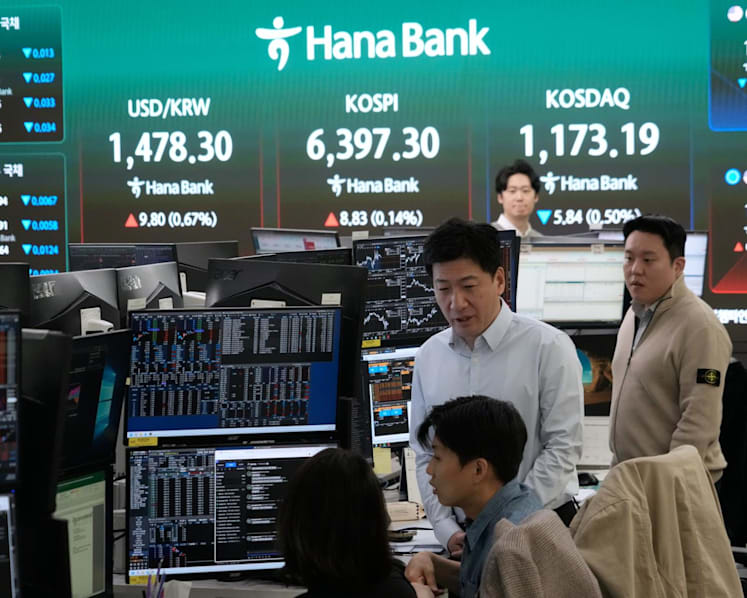
Wall Street futures slipped in Asia after the earnings-driven rally, with the Nasdaq futures off 0.5 per cent and S&P 500 futures down 0.7 per cent. European stock futures are bracing for a much weaker open, with pan-region futures down 1.1 per cent.
Shares of GE Vernova surged 13.75 per cent after the power equipment maker raised its annual revenue forecast on the AI boom, and Boeing advanced over 5 per cent after a smaller-than-expected quarterly loss.
Electric automaker Tesla reported a surprise positive free cash flow in the first quarter, but its projection of sharply higher spending plans on AI and robotics drew scepticism from investors, with its shares last down 2 per cent after the bell.
Treasury yields edged up. The two-year US Treasury yield rose 2 basis points to 3.8106 per cent, after inching up 1 basis points on Wednesday. The 10-year yield increased 2 basis points to 4.3174 per cent, after finishing little changed overnight.
Currencies were mostly calm, with the dollar holding onto small gains from overnight. The euro was steady at US$1.17, just above a 10-day low of US$1.1691, having lost 0.3 per cent overnight.
"Markets have been remarkably effective at looking through risks - and may continue to be. But the list of risks is growing as resolutions remain elusive," said Laura Cooper, global investment strategist at asset manager Nuveen.
"The dissonance cannot hold indefinitely ... At some point, the weight of what is being ignored could become the only one that matters."





