Bank Indonesia to hold key rate at 4.75% on March 17 as Middle East war weighs on rupiah - Reuters poll
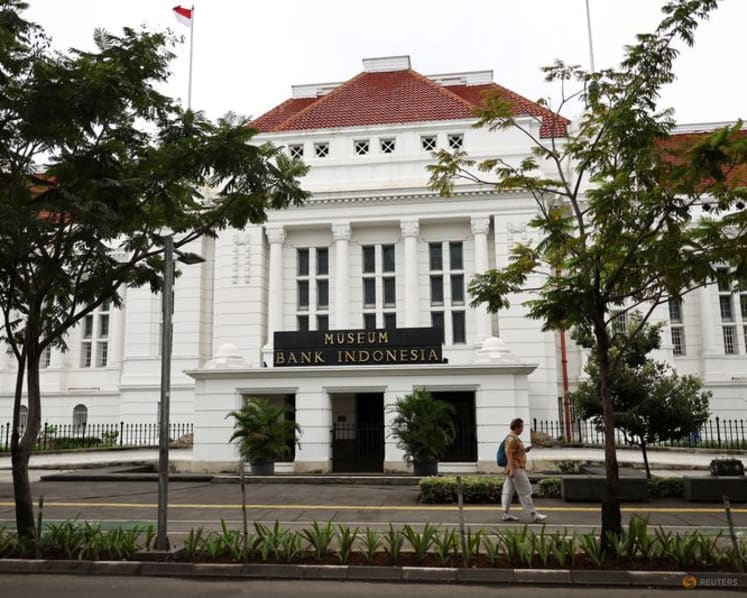
A person walks past Bank Indonesia Museum at the "Kota Tua" or the Old Town area in Jakarta, Indonesia, February 19, 2026. REUTERS/Willy Kurniawan
BENGALURU, March 12 : Bank Indonesia (BI) will keep interest rates steady for a sixth consecutive meeting on Tuesday, according to a majority of economists in a Reuters poll, as renewed pressure on the rupiah from the Middle East war limits the central bank's room to ease policy.
While BI has previously signalled its willingness to support economic growth, it has stood pat on policy since October as a fresh bout of rupiah weakness forced it to prioritise currency stability - its main mandate.
Investor unease over fiscal credibility amid worries President Prabowo Subianto's spending plans could widen deficits and questions over central bank independence after the appointment of his nephew as a deputy governor have also hit sentiment, spurring capital outflows.
Those pressures have intensified following the U.S.-Israeli war on Iran. The rupiah hit a record low on Monday and has fallen more than 1 per cent this year after losing around 4 per cent last year, virtually closing the door on a rate cut on Tuesday.





A majority of economists, 24 of 26 polled between March 9 and 12, expected BI to keep its benchmark seven-day reverse repurchase rate unchanged at 4.75 per cent on March 17, with the overnight deposit and lending facility rates also seen steady at 3.75 per cent and 5.50 per cent, respectively.
"The central bank will hold as it can't resume its accommodative stance given how much the rupiah has weakened over the past month, especially in the last couple of weeks after the U.S.-Iran conflict," said Tay Qi Hang, an economist at the Economist Intelligence Unit.
DOVISH BETS FADE
While a pause is certain at this meeting, at least 70 per cent, or 14 of 20 economists, expected BI to cut rates next quarter despite inflation breaching the central bank's 1.5 per cent to 3.5 per cent target range and rising to 4.76 per cent last month, the highest in nearly three years.
Of those 20 economists, 11 forecast a 25-basis-point cut to 4.50 per cent by the end of the second quarter, while three predicted the policy rate would fall 50 basis points to 4.25 per cent. Six expected no change from the current 4.75 per cent.
That marks a notable shift from the previous poll, in which about 85 per cent of economists had expected rate cuts in the second quarter.
"I don't see the high February inflation print by itself having a significant influence on BI's decision. The timing of its next rate cut will likely be delayed until June at the earliest, as rupiah weakness constrains both the willingness and ability of the central bank to ease earlier," Hang said.
Looking ahead, more than half, or 11 of 19 economists, expected the policy rate to end the year 50 basis points lower at 4.25 per cent, although there was no consensus on when the cuts would come.
(Other stories from the Reuters global economic poll)