China's BYD steps up assisted-driving push
Chairman Wang Chuanfu said the carmaker aimed to achieve "zero traffic accidents" through intelligent-driving technology.
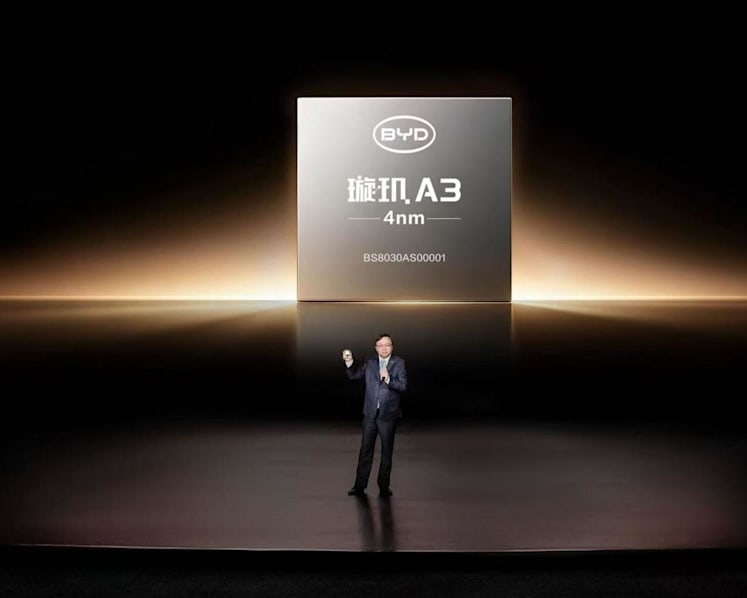
BYD shows a new self-developed 4-nanometre chip that it says supports L3 and L4 autonomous driving during a presentation on May 28, 2026. (Photo: BYD)
BEIJING: China's BYD announced new service packages aimed at encouraging more drivers to use its "God's Eye" assisted-driving system on Thursday (May 28).
The move marks the latest push by the world's largest EV maker to build trust in assisted-driving and boost adoption of its three-tier God's Eye system, as price pressure mounts, domestic demand slows and profits fall.
Chairman Wang Chuanfu said the carmaker aimed to achieve "zero traffic accidents" through intelligent-driving technology.
BYD said it would fully cover compensation and repairs for any accidents arising when drivers use its City Navigation function, without affecting their insurance premiums the following year, in one of its pledges to deploy assisted driving systems more widely.





BYD's quarterly profit recently posted its steepest decline since 2020, even as the company rolls out new technology. Its major battery upgrade, the first in six years, has failed to reverse the slowdown in domestic sales.
On Thursday, the company also showed off a new self-developed 4-nanometre chip that supports L3 and L4 autonomous driving.
Global rival Tesla is still awaiting full regulatory approval to deploy its most advanced driver-assistance features in China, while domestic peers such as Xpeng, Nio and Li Auto have accelerated the roll-out of AI-based systems that use large driving models and real-world scenario training.
Wang said its budget models could be upgraded to God's Eye B smart-driving capability at a price of 12,000 yuan (US$1,770.02).