Conflict concerns weigh on indexes, bolster oil and US debt
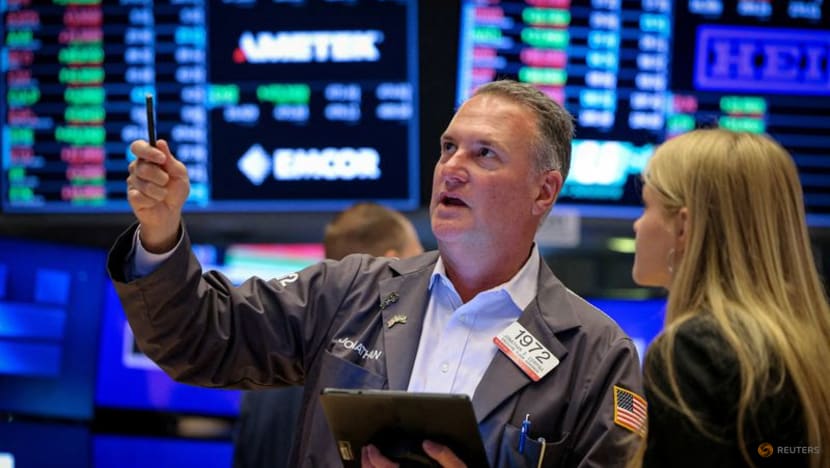
NEW YORK :Wall Street indexes ended lower, oil kept climbing and U.S. borrowing costs fell on Tuesday as U.S. President Donald Trump left the Group of Seven summit early and investors awaited a series of interest rate decisions by major central banks.
Trump returned to Washington a day before the summit ends as the Israel-Iran conflict intensified, saying U.S. patience was wearing thin but that he would not kill Iran's leader "for now."
Yields on 10-year Treasuries fell, indicating stronger demand for a safe haven as investors weigh the conflict as well as preparing to parse Fed Chair Jerome Powell's tone at a scheduled update on Wednesday.
Trump's early departure from Canada nixed hopes for more progress on issues like the tariffs he has promised to impose.





"The market was anxious to hopefully hear updates on trade agreements out of the G7 and the news of Trump leaving early was disappointing, although we all know why," said Eric Sterner, chief investment officer at Apollon Wealth Management.
"The market is paying attention to the (Middle East) conflict but it feels that's contained to those two countries," Sterner said. "It does cause concern, especially if Iran does anything with the Strait of Hormuz," he added, noting that around 20 per cent of the world's oil supply passes through that waterway.
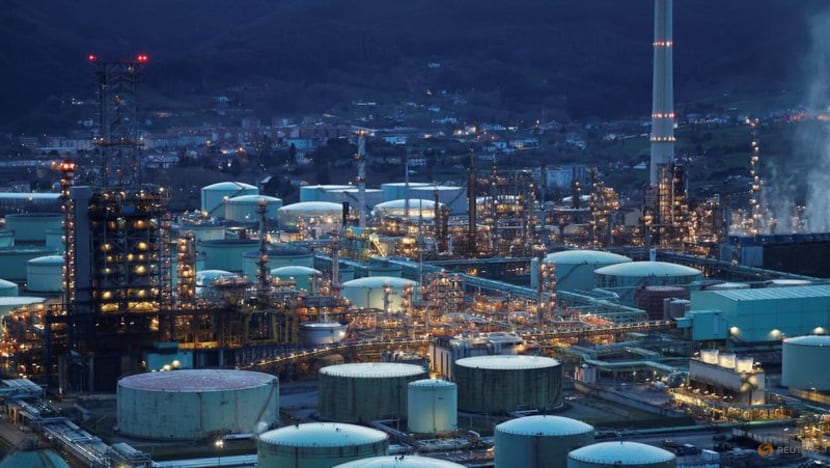
U.S. crude continued to surge and settled 4.46 per cent higher at $74.97 a barrel, while Brent rose to $76.54 per barrel, settling up 4.52 per cent on the day.
Stocks stayed under pressure, with the Dow Jones Industrial Average extending losses to end 0.70 per cent lower on the day. The S&P 500 fell 0.84 per cent and the Nasdaq Composite shed 0.91 per cent.
There was no noticeable interruption to oil flows, and Qatar said its production at the world's largest gas field was steady after an Israeli air strike led Iran to partially suspend production.
Money managers noted that the VIX volatility index, sometimes known as Wall Street's fear gauge, has risen in the last week and hit a more than four-week high on Tuesday, but at 21.6 is well below historic highs. A tariff-induced rout sent it above 60 in April, closer to records above 80 hit during the 2008 financial crisis.
"This is like Stage 1 of moving towards a little bit of volatility," said Matt Thompson, co-portfolio manager at Little Harbor Advisors. "The way I read it right now, the VIX marketplace thinks (the conflict) is going to be contained."
The VIX futures curve, which reflects longer-term volatility expectations, has lifted, Thompson added, "which indicates to me there is increasing demand for protection but the market is not really rushing."
Earlier in the day, in Europe, the STOXX 600 closed around its lowest in three weeks.
CENTRAL BANKS LOOM
Investors awaited meetings this week among governors of the Federal Reserve, Bank of England and Swiss National Bank. The Bank of Japan left short-term interest rates unchanged on Tuesday, at 0.5 per cent as expected.
The Fed is widely expected to leave interest rates unchanged at Wednesday's meeting, but market participants will be monitoring new projections on how Trump's tariffs could affect growth and inflation.
Traders are pricing in two cuts by the end of the year.
"One thing that settled the markets earlier this year was the independence of the Fed and the fact they would not be influenced, but data-driven," said Matt Rubin, chief investment officer at Richmond, Virginia-based Cary Street Partners.
"Jerome Powell is going to continue to express that they are focused on data at this point, and that data does not warrant a cut."
The U.S. 10-year note last yielded 4.389 per cent, 6.5 basis points down from 4.454 per cent late on Monday.