







Toyota's Denso bids for chipmaker Rohm in potential $8.3 billion deal
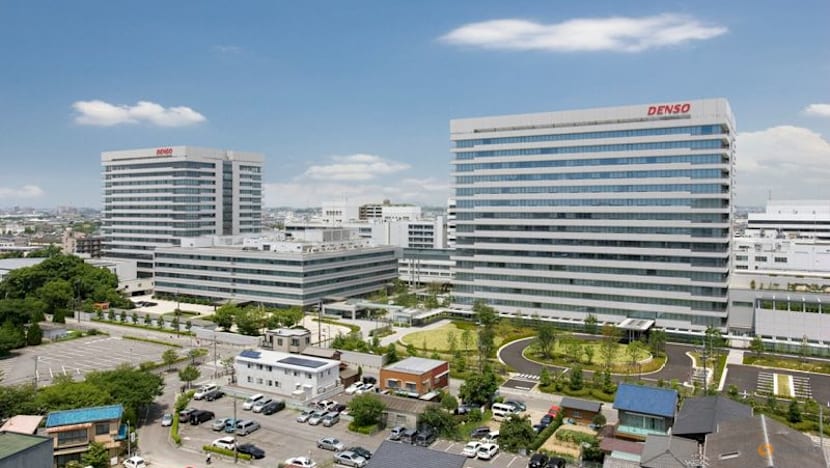
FILE PHOTO: A general view of Denso's headquarters in the city of Kariya in central Japan January 2020. Denso Corporation/Handout via REUTERS/File Photo
TOKYO, March 6 : Toyota supplier Denso has made a bid for chipmaker Rohm, a potential $8.3 billion deal that will expand the auto parts giant's hold on power management chips used in electric vehicles and data centres.
Denso, a pillar of the Toyota group and one of the world's largest makers of automotive components, has approached the Kyoto-based chipmaker about acquiring its shares, Rohm said in a statement on Friday, adding that nothing had been decided.
Shares of Rohm ended the day flooded with buy orders, up by their daily limit of 18 per cent. Denso shares were down 3.4 per cent.
STRATEGIC PARTNERSHIP
In May, the two companies agreed to form a strategic partnership in semiconductors, with a focus on integrated circuits used in EVs. Following that, they have discussed different strategic options, including a share acquisition, Denso said in a statement.
It, too, said that nothing had been decided. Denso owns around 4.8 per cent of Rohm, according to LSEG data.
Rohm is a significant player in power chips, which are used to efficiently control electric power in cars, electronic devices and industrial equipment.
It is an area where Japan still holds strength despite its shrinking presence in the global chip industry. Still, the Japanese industry remains fragmented and Japan's powerful trade and economy ministry has long said that consolidation was needed in the space.
CHIP SUPPLY
Automakers have become increasingly focused on securing adequate supply of semiconductors since the painful supply-chain breakdowns erupted in the aftermath of the COVID-19 pandemic.
The recent crisis at Dutch chipmaker Nexperia has highlighted the importance of power chips, after shortages forced production cuts at Honda and Nissan and drove Germany's Bosch to curtail working hours.
The news of the potential deal was first reported by the Nikkei business daily, which said the transaction could reach as much as around 1.3 trillion yen ($8.3 billion).
($1 = 157.4700 yen)





