Dollar declines for second straight day but set for weekly gain
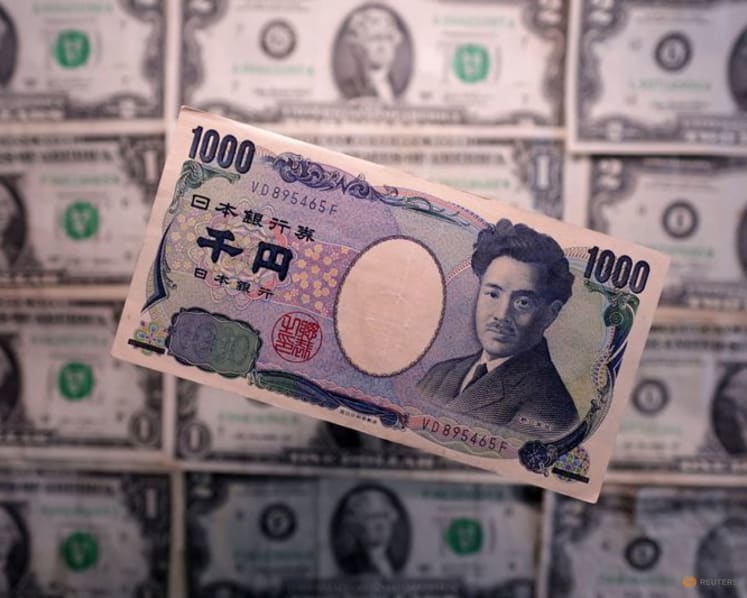
Yen and U.S. dollar banknotes are seen in this illustration taken March 19, 2025. REUTERS/Dado Ruvic/Illustration
NEW YORK, June 26 : The dollar fell for a second straight session on Friday as recent economic data and a drop in oil prices slightly cooled expectations for Federal Reserve rate hikes, although the yen remained in territory that left it primed for an intervention.
Despite the recent declines, the greenback was still up for the week and on pace for its strongest monthly percentage gain since July after hitting a 13-month high earlier in the week.
Thursday's data showing a key measure of U.S. inflation met economists' expectations and easing oil prices, down about 4 per cent on Friday, have moderated rate-hike bets slightly.
Markets are still pricing in an increase in rates of roughly 25 basis points from the Fed this year, according to LSEG data.





The dollar had kicked off the week with three straight days of gains, continuing an uptrend that began the prior week after a policy statement from the Fed, and first under new Chairman Kevin Warsh, was largely seen as hawkish by market participants.
"Not only has it been Warsh and some new data, but it's also been kind of a dollar bull market since January," said Joseph Trevisani, senior analyst at FXStreet in New York.
"So a little bit of pullback is not surprising."
Inflation data that was softer than feared on Thursday helped spark the retreat in the dollar.
CONSUMER SENTIMENT RISES SLIGHTLY
On Friday, the University of Michigan's Surveys of Consumers said its Consumer Sentiment Index increased to a final reading of 49.5 this month, slightly below the 50.0 estimate of economists polled by Reuters, from 44.8 in May, although concerns about inflation remain.
The dollar index, which measures the greenback against a basket of currencies, fell 0.19 per cent to 101.32 but was on track for a second straight weekly gain, with the euro up 0.18 per cent at $1.1389.
Minneapolis Fed President Neel Kashkari said on Friday that the central bank may need to raise rates amid broad inflation.
On Thursday, Federal Reserve Bank of New York President John Williams said that while inflation pressures are likely to moderate this year, they remain too high, and pushed back his timeline for getting inflation back to the Fed’s 2 per cent target.
U.S. crude dropped 3.6 per cent to $69.33 a barrel and Brent fell to $72.02 per barrel, down 4.34 per cent on the day, and were on track for weekly declines of nearly 10 per cent as more oil tankers exited the Strait of Hormuz.
Sterling strengthened 0.09 per cent to $1.3203 but was on track for a second straight weekly decline.
Against the Japanese yen, the dollar shed 0.02 per cent to 161.74. Crossing the 161.96 mark would take the Japanese currency to its weakest level since 1986. For the week, the greenback is up 0.29 per cent and poised for a second straight weekly advance.
Data showed on Friday that core inflation in Tokyo accelerated in June, providing additional support for the yen.
Analysts at Wells Fargo said the risk reward is to be tactically short the dollar against the yen heading into the U.S. jobs report next week, "given intervention risks," as "authorities could capitalize on a weak or even a slightly soft U.S. payrolls print."
They stressed, however, that this is a near-term play and still want to be long beyond early July.