





Dollar slips from 18-month high as oil prices fall, inflation data in focus
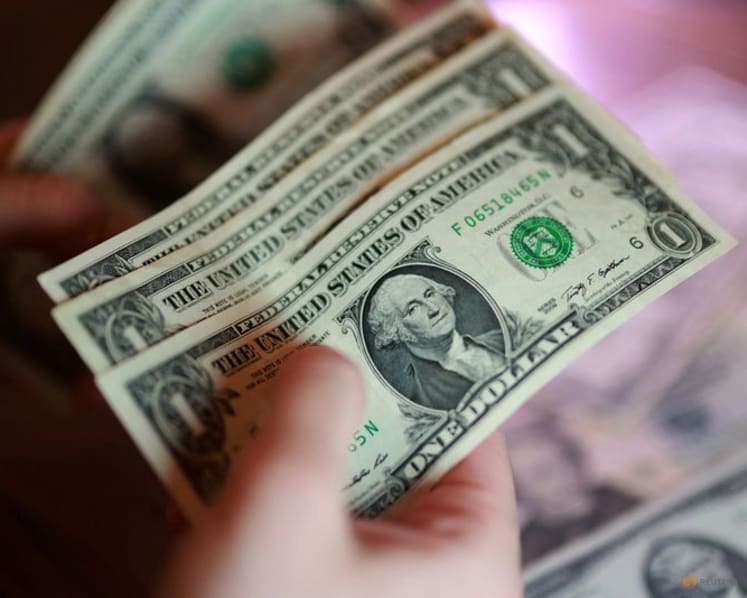
U.S. dollar banknotes are seen in this illustration taken March 24, 2026. REUTERS/Dado Ruvic/Illustration
NEW YORK/LONDON, Oct 13 : The dollar slipped from an 18-month high on Tuesday as oil prices retreated and investors reassessed the AI-fueled rally that has supported demand for US assets this year, while awaiting fresh clues on the Federal Reserve's interest rate path.
Markets expect US President Donald Trump to avoid escalation in the Middle East, as a wider conflict could hurt his standing ahead of the midterm elections next month.
Trump said last week the US will not attack Iran before the elections, and mentioned an energy ceasefire between Russia and Ukraine on Sunday.
Oil prices fell 0.86 per cent to $105.75 per barrel on Tuesday, as traders weighed the prospect of additional Russian diesel supplies. Russia said it can restore diesel exports beyond levels Trump outlined in a deal with Moscow.





"The dollar (is) a little weaker on slightly lower oil. Large bank earnings this morning were mixed, shedding little light on the broader equity outlook," said John Velis, Americas macro strategist at BNY. "With bond yields slightly off recent highs, the dollar looks to trade slightly softer on the day."
Beyond energy, some analysts said the dollar's recent rally is also being challenged by growing doubts about the artificial intelligence-driven investment story.
"In our view, the 'US exceptionalism' trade has once again become overextended, and is exposed to a technical pullback," said Karl Schamotta, chief market strategist at Corpay in Toronto.
The US dollar index, a measure of the greenback's strength against a basket of six currencies, slid 0.25 per cent to 102.27 after reaching 102.61 on Monday, its highest level since April 2025.
Investors are now awaiting the release on Wednesday of the US Consumer Price Index for September, which should provide further clues about possible Fed policy tightening.
Traders see about an 80 per cent chance that the Fed will leave rates unchanged at its October 27-28 meeting, up from 51 per cent a month ago, while pricing in about 75 basis points of tightening by late 2027, CME Group's FedWatch Tool showed.
"This report will have to factor in this escalation we have seen particularly on the Saudi front. I wouldn't be surprised if the numbers are worse than expected," said Erik Bregar, director of FX and precious metals risk management at Silver Gold Bull in Toronto. "I'd go with a December rate-hike odds. I think the market is rationally priced for one more hike."
Investors abandoned bets on a Fed rate hike later this month after two policymakers argued for gathering more evidence before deciding whether further tightening is needed, while Fed Governor Christopher Waller said inflation expectations remained "well anchored."
Rising oil prices recently have been supporting the dollar at the expense of currencies such as the euro and yen, which are linked to economies far more dependent than the US on imported oil.
EURO REBOUNDS DESPITE GAS PRICES HITTING HIGHS
The euro rebounded from a roughly 17-month low on Tuesday despite another jump in gas prices, a key driver of euro zone inflation, while concerns over France's fiscal outlook persisted. It was up 0.3 per cent at $1.1189 after hitting $1.11525 on Monday, its lowest level since May 2025.
The slower pace of ECB rate hikes "would likely cause further euro/dollar downside," said Thierry Wizman, global forex and rates strategist at Macquarie Group.
Natural gas prices in Europe rose to their highest level since December 2022 and were last at €86.71 per megawatt-hour.
The yen strengthened 0.15 per cent to 158.38 against the dollar after Bank of Japan data showed wholesale prices rose 6.8 per cent in the year to September, missing a median market forecast of 7.6 per cent but still enough to justify market fears of higher interest rates.
Investors continued to see support from the prospect of further BoJ policy tightening, and the risk of official intervention against excessive currency moves.
The euro was last up 0.21 per cent at 177.32 versus the Japanese currency, after hitting 176.25, its lowest level since November 2025.
The Australian dollar was at $0.6979, following the release of the minutes from the Reserve Bank of Australia's September board meeting. The board voted unanimously to raise rates for the fourth time this year.