Europe must keep control of key technologies, says EU commissioner
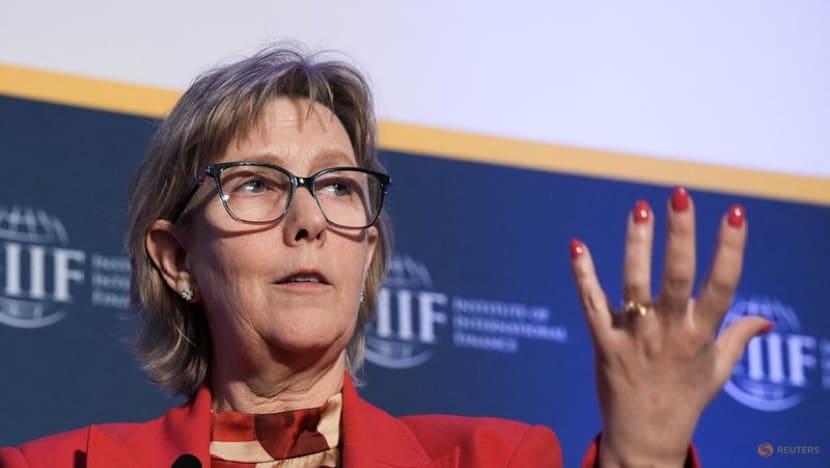
FILE PHOTO: European Commissioner for Financial Services and the Savings and Investments Union, Maria Luis Albuquerque speaks with Tim Adams, president and CEO of the Institute of International Finance (IIF) Global Outlook Forum on sidelines of the IMF and World Bank’s 2025 annual Spring Meetings in Washington, D.C.,U.S., April 23, 2025. REUTERS/Ken Cedeno/File Photo
BRUSSELS, Feb 3 : Europe must keep control over key technologies that underpin the region's economies, the European Union's Financial Services Commissioner said on Tuesday, adding to growing calls for the bloc to be less reliant on U.S.-based technology giants.
Europe is increasingly focused on "digital sovereignty" - the idea that reliance on companies from an increasingly isolationist United States is a threat to Europe's economy and security.
"Europe must retain control over the key technologies that underpin and drive our economies," EU commissioner Maria Luís Albuquerque told a financial technology regulatory conference in Brussels.
A senior official at the Netherlands' central bank also told the same event that Europe should be less reliant on technology firms based outside the region.
European financial institutions were more vulnerable to potential cyberattacks due to their reliance on a small number of cloud computing providers, said Steven Maijoor, Chair of Supervision at De Nederlandsche Bank, although he added that some were broadening their supplier base.
“It is undeniable that the faultlines on our European financial system have become far more prone to cracking in recent years," Maijoor added, citing cybersecurity risks and a souring of some "long-standing global relationships", without naming specific countries.
The European Central Bank said in November that geopolitical tensions and technological disruptions were among the risks facing Europe's banking sector.
EU regulators have designated 19 technology companies, including Amazon Web Services, Google Cloud and Microsoft, as critical third-party computing providers for the bloc's finance industry.