







Global equities rebound on de-escalation hopes, ending a weak month
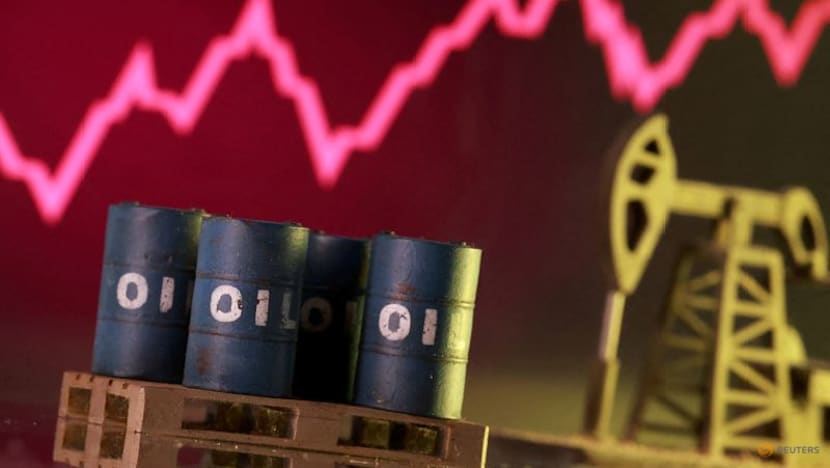
3D-printed oil pump jack and barrels in front of a rising stock graph appear in this illustration, taken March 2, 2026. REUTERS/Dado Ruvic/Illustration
NEW YORK/PARIS, March 31 : Global equity and bond markets jumped on Tuesday on speculation of a potential de-escalation in the Middle East conflict that has driven the biggest one-month increase in global oil prices in history.
Despite the rally, financial assets have suffered through a gloomy month on fears of rising inflation and stagnant growth. The surge in oil prices on the back of the worst energy supply interruption ever has sent investors to the exits in both the bond and stock markets throughout March.
Europe's benchmark STOXX 600 index fell 8 per cent in March, logging its steepest monthly decline in nearly four years and ending an eight-month string of gains.
Tuesday's rebound was driven by unconfirmed reports that Iran's president - who has less power than the country's supreme leader - said the country was ready to end the month-long war. Global stocks were also boosted by an earlier Wall Street Journal report that U.S. President Donald Trump had told aides he is willing to end the military campaign even if the crucial Strait of Hormuz remains largely closed.





However, Trump has contradicted his own message at times, as he also warned that the U.S. would "obliterate" Iran's energy plants and oil wells if it does not open the strait, which is used to transit roughly one-fifth of the world's oil and gas.
Equity markets are "taking the U.S. administration at their word, that they’re going to end the war," said Colin Graham, head of multi-asset strategies at Dutch asset manager Robeco.
"They haven’t moved to day two, where the Strait of Hormuz could still be closed.”
Brent crude futures for May settled up 4.94 per cent at $118.35 per barrel ahead of expiry.
The Brent June contract settled down $3.42 at $103.97 per barrel and U.S. crude futures settled down $1.50 or 1.46 per cent at $101.38.
The average U.S. retail price of gasoline hit $4 a gallon on Monday.
THE WAR'S GLOBAL REACH
The war, which began with the U.S. and Israel launching coordinated strikes against Iran in late February, has sent shockwaves across global markets and raised the risk of a worldwide recession.
MSCI's gauge of stocks across the globe rose 18.07 points, or 1.88 per cent, to 978.94.
On Wall Street, the Dow Jones Industrial Average rose 2.49 per cent to 46,341.51, the S&P 500 gained 2.91 per cent to 6,528.52 and the Nasdaq Composite climbed 3.83 per cent to 21,590.63.
"What we've seen from a messaging standpoint from the administration is a bit of indication they may start to either wind down or pivot," said Alonso Munoz, chief investment officer at Hamilton Capital Partners.
"You get these periods where the market gets so oversold that you just have relief rallies on any indication that there's good news."
The pan-European STOXX 600 index rose 0.41 per cent, and Europe's broad FTSEurofirst 300 index gained 0.40 per cent.
Still, the Iran conflict has left the S&P 500 and the Dow with their deepest quarterly declines since 2022 as investors worry that a wave of higher fuel costs could hurt demand for goods and services, while forcing the Federal Reserve to raise interest rates to contain inflation.
U.S. job openings, a measure of labor demand, fell more than expected in February and hiring dropped to the lowest level in nearly six years, government data showed on Tuesday.
INFLATION AND GROWTH FEARS
The oil shock pushed euro zone inflation above the European Central Bank's 2 per cent target in March.
Government bond yields had retreated from multi-year highs at the start of the week after rising sharply this month because of the conflict, with investors appearing to refocus on the risk of weaker growth stemming from the energy shock.
U.S. Treasury prices rallied, sending yields lower, after a month of heavy selling, as the de-escalation hopes boosted demand for government debt.
The German two-year yield fell 3.3 basis points to 2.588 per cent.
The European Union's energy chief has told governments to prepare for "prolonged disruption" to energy markets as a result of the war, ahead of an emergency meeting on Tuesday.
“If the Strait of Hormuz remains closed for the next week or two, then I think we’ll be raising our probabilities of recession in our scenario analysis," Robeco's Graham said, adding that this was not yet the case.
The dollar index, which measures the greenback against a basket of currencies, fell 0.69 per cent to 99.86, but remained on course for a monthly gain.
The Japanese yen rose 0.62 per cent against the greenback to 158.73 per dollar.
Japan's finance minister said that the government was ready to respond "on all fronts" against foreign exchange volatility, underscoring Tokyo's alarm over the yen's recent slide.
Spot gold rose 3.52 per cent to $4,669.09 an ounce but was still poised to end the month down over 10 per cent. U.S. gold futures settled 2.7 per cent higher at $4,678.60.





