







Stocks gain, oil prices fall on guarded hope for possible Iran war ceasefire
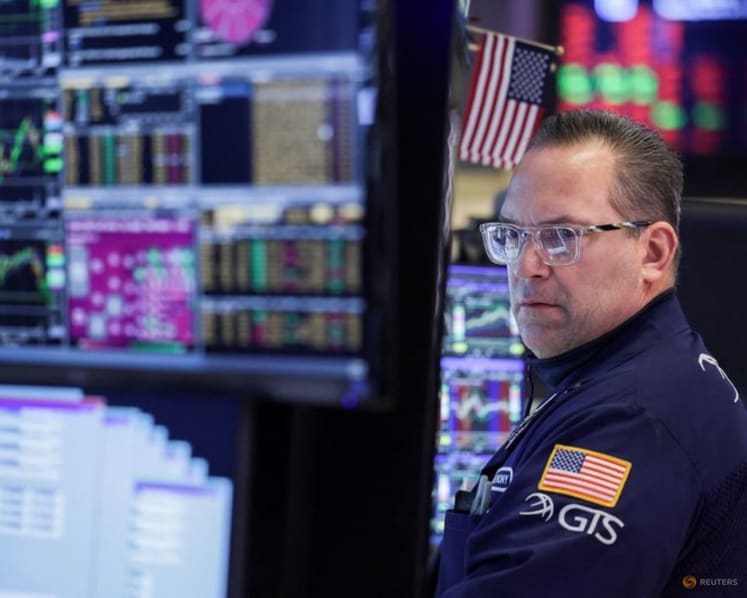
FILE PHOTO: A trader works on the floor at the New York Stock Exchange (NYSE) in New York City, U.S., March 24, 2026. REUTERS/Jeenah Moon/File Photo
NEW YORK/LONDON, March 25 : Global equity markets rose while oil prices fell on Wednesday, as markets welcomed news of discussions to de-escalate the ongoing conflict in the Middle East.
The U.S. sent a 15-point ceasefire proposal to Iran, reportedly delivered via Pakistan, that was originally brushed aside by Iranian officials. But an Iranian official told Reuters that the country is still reviewing the offer, suggesting Tehran had not rejected the idea outright.
Markets have been whipsawed by unclear signals from the White House in recent days, with President Donald Trump making overtures towards de-escalation even as the U.S. sends thousands of additional troops to the Middle East. Investors are hoping for an end to a war that has disrupted global energy supplies and risks fuelling inflation.
Oil prices, which have risen sharply since the joint U.S.-Israeli strikes on Iran, eased slightly. Brent crude futures pared earlier losses but settled down 2.17 per cent at $102.22 a barrel, while U.S. West Texas Intermediate crude futures fell 2.20 per cent to settle at $90.32 a barrel.





"The faster we get a resolution the better," said Mark Hackett, chief market strategist at Nationwide Financial in Philadelphia. "That said, there is some negotiating in public involved, and the market is susceptible to whipsaws around the news cycle."
On Wall Street, the Dow Jones Industrial Average rose 0.66 per cent, the S&P 500 rose 0.54 per cent and the Nasdaq Composite rose 0.77 per cent.
In Europe, the STOXX 600 index and London's FTSE 100 both rose 1.42 per cent.
"The mood is on the positive side," said Amelie Derambure, senior multi-asset manager at Amundi. "(The) market is trading now the idea that peace talks or a ceasefire could be on the way."
Derambure said traders were positioning themselves to avoid missing a possible relief rally, when markets rise on positive news, although she added that more convincing news will be needed for the move to be sustained.
MSCI's gauge of stocks across the globe rose 0.93 per cent.
BOND YIELDS FALL
Iran has said that "non-hostile vessels" may cross the Strait of Hormuz if they coordinate with Iranian authorities, but the waterway, which typically carries about one-fifth of the world's gas and crude supply, remains effectively closed.
U.S. bond yields were lower across the board. The yield on benchmark U.S. 10-year notes fell 7 basis points to 4.32 per cent.
European government bond yields also fell, led by Italian bonds, which have been particularly hard-hit since the war started due to Italy's dependence on fossil fuel imports.
The benchmark 10-year German yield fell 5.1 basis points to 2.96 per cent.
The U.S. dollar gained against its peers, including the Japanese yen, the Swiss franc and the euro.
The euro fell 0.4 per cent to $1.1561. The yen weakened 0.48 per cent against the greenback to 159.46 per dollar. The Swiss franc was down 0.42 per cent at 0.792 against the dollar.
The dollar index, which measures the greenback against a basket of currencies including the yen and the euro, rose 0.44 per cent to 99.63.
Spot gold prices rose 1.44 per cent to $4,537.89 an ounce.





