Dollar falls to multi-week lows as risk appetite rises on Hormuz news
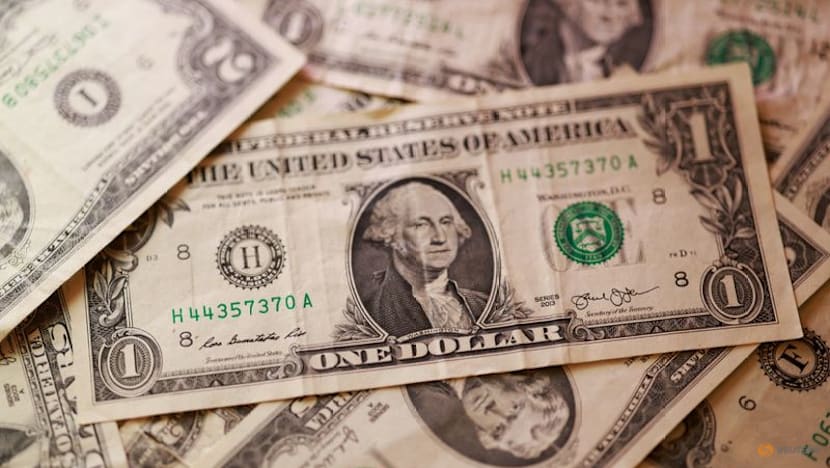
U.S. dollar banknotes are seen in this illustration taken March 24, 2026. REUTERS/Dado Ruvic/Illustration
NEW YORK, April 17 : The safe-haven U.S. dollar dropped to multi-week lows on Friday as risk appetite soared after Iran said the Strait of Hormuz is open, boosting optimism that the Middle East conflict is winding down.
Iranian Foreign Minister Abbas Araqchi said in a post on X the strait is open to all commercial vessels for the remainder of a U.S.-brokered 10-day truce agreed between Israel and Lebanon to halt fighting between Israel and Iran-backed Hezbollah.
Shortly after Araqchi's statement, U.S. President Donald Trump posted on Truth Social: "IRAN HAS JUST ANNOUNCED THAT THE STRAIT OF IRAN IS FULLY OPEN AND READY FOR PASSAGE".
Trump told Reuters on Friday that the U.S. will work with Iran to recover its enriched uranium and bring it back to the United States as part of any deal.





Following the announcement, oil prices plunged, Wall Street shares posted sharp gains and U.S. Treasuries surged, pushing their yields lower.
In afternoon trading, the dollar index, which measures the greenback against a basket of six currencies, fell 0.3 per cent to 97.96 after earlier dropping to 97.632, its lowest in seven weeks.
The index was down 0.6 per cent on the week, set for a second straight weekly decline. Over the past two weeks, it has fallen about 2.1 per cent, its largest two-week drop since late January.
"The dollar's weakness is mainly about the market unwinding the geopolitical risk premium," said George Vessey, lead FX and macro strategist at Convera in London.
"I don't think we are pricing in a fundamentally weaker U.S. dollar because there are question marks around the Federal Reserve, what's the Fed's next move is going to be after inflation came out hotter than expected. So the economy is still somewhat resilient so it's not going to be the start of a full structural dollar decline."
BOJ LIKELY TO HOLD RATES THROUGH JUNE
Against the Japanese yen, the dollar slid 0.6 per cent to 158.22 after earlier climbing to 159.86. It was on track to post its largest weekly drop in nine weeks.
Bank of Japan Governor Kazuo Ueda steered clear of signaling a rate hike was on the cards this month, instead pointing to low real interest rates and robust corporate profits, reinforcing expectations the bank will hold policy steady at least until June.
The euro, on the other hand, was up 0.1 per cent at $1.1789, after earlier touching 1.1848, an eight-week peak. The single currency was up 0.6 per cent on the week and on course for a third consecutive weekly rise.
Money markets on Friday scaled back bets on future European Central Bank rate hikes, fully pricing the first move in July, from June earlier in the session.
They now assign less than a 5 per cent chance of a rate rise at this month's meeting, down from 15 per cent.
In the United States, rate futures on Friday priced in a more than 50 per cent chance that the Fed will lower interest rates in December, up from 29.5 per cent in the previous session.
In other currencies, sterling firmed 0.1 per cent to $1.3546, on pace for a second straight week of gains.
Bank of England Chief Economist Huw Pill criticized his colleagues' "wait and see" messaging on holding policy steady while the Iran war plays out, saying tackling inflation should remain the main focus despite competing trade-offs.
The risk-sensitive Australian dollar rose 0.2 per cent to US$0.7178, staying near four-year highs, while the New Zealand currency was flat at US$0.5889.
"From a markets perspective it's about the duration of the disruption, so the swifter transit can get through (Hormuz) the better, and markets reprice the outlook," said Nick Kennedy, a currency strategist at Lloyds in London. "The moves are all in the right direction."