Japan, US agree to strengthen communication on exchange rates
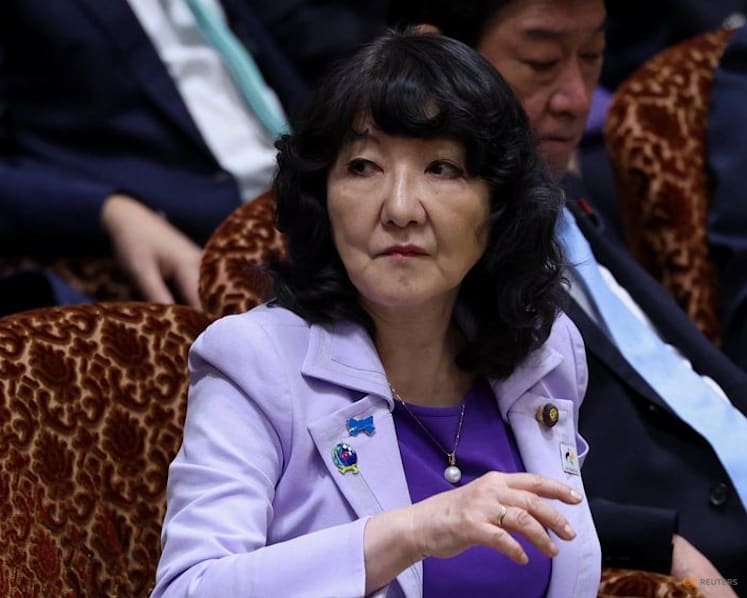
Japan's Finance Minister Satsuki Katayama attends the upper house budget committee session at the parliament in Tokyo, Japan April 7, 2026. REUTERS/Issei Kato
WASHINGTON, April 15 : Japan and the U.S. agreed to strengthen communication on exchange rates, Japanese Finance Minister Satsuki Katayama said after her meeting with U.S. Treasury Secretary Scott Bessent on Wednesday.
The remark, made on her X account, came as demand for the safe-haven dollar helped weaken the yen and kept it close to the 160-per-dollar level that has sparked past yen-buying interventions by Japanese officials.
"I explained how crude oil, stock, bond and currency markets were very volatile. We also talked about various issues related to exchange rates, though I cannot elaborate," Katayama told reporters after her meeting with Bessent, held on the sidelines of the International Monetary Fund (IMF) meeting in Washington.
Japan and the U.S. agreed to closely coordinate on currency rates while updating each other on market developments as needed, Japan's top currency diplomat Atsushi Mimura, who was present at the bilateral meeting, told reporters.





NO TALK ON BOJ POLICY
Katayama said there was no discussion on the Bank of Japan's monetary policy during her meeting with Bessent.
Bessent had repeatedly signalled that the yen's weakness could be better addressed through faster BOJ rate hikes.
When Katayama and Bessent last met in January, Bessent "emphasized the need for sound formulation and communication of monetary policy," according to a statement by the U.S. Treasury Department issued at the time.
Markets have been watching whether Bessent will make similar remarks ahead of the BOJ's policy meeting this month, where the board could debate raising interest rates.
Katayama said on Wednesday that many central bankers with whom she has spoken appeared to favour taking a wait-and-see approach on monetary policy given extreme uncertainty around how the Middle East conflict might unfold, and how any rate hikes could affect their economies.
Katayama did not mention how the BOJ should guide policy. A senior IMF official told Reuters the BOJ can see through inflationary pressures from the war as any second-round effects on broader prices will be limited.
Japanese policymakers have repeatedly issued verbal warnings against recent yen falls, which push up import costs and add to already mounting inflationary pressures.
A weak yen could also exacerbate the impact of higher oil prices, as Japan is heavily reliant on energy imports.
Hawks on the BOJ board have called for steady near-term rate hikes to counter mounting inflationary pressures, blamed partly on the weak yen.
But the war has reduced the possibility of an April rate hike as uncertainty keeps markets volatile and muddles the outlook for Japan's import-reliant economy, sources familiar with the central bank's thinking have said.