Japan's ruling party proposes 'bridging bonds' to fund investment schemes, draft shows
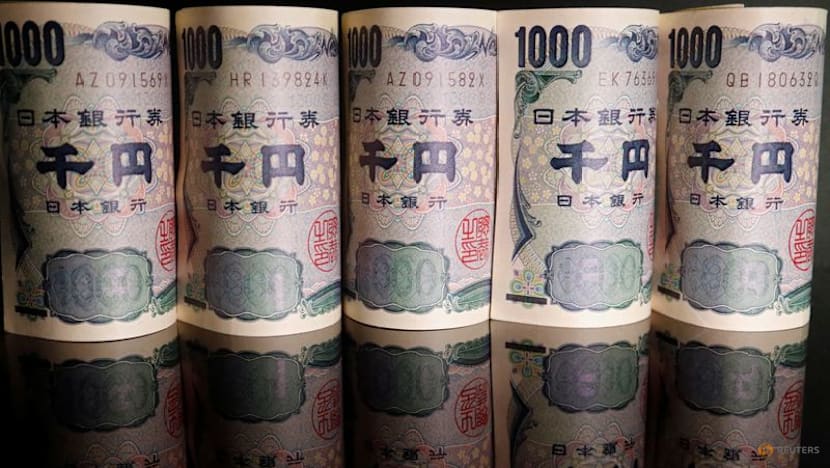
Banknotes of Japanese yen are seen in this illustration picture taken September 23, 2022. REUTERS/Florence Lo/Illustration
TOKYO, May 28 : Japan's ruling party will propose issuing "bridging bonds" to fund flagship programmes aimed at boosting growth and economic security, a draft of its proposal showed on Thursday, an idea that underscores politicians' sensitivity to rising bond yields.
The proposal is likely to serve as a basis for the government's discussions on how to fund its investment plans amid growing market attention to Japan's worsening finances.
Bridging bonds are used to cover temporary funding needs and are issued with guarantees on specific means to pay for redemption, allowing the government to argue that it is mindful of the need to keep Japan's fiscal house in order even as it boosts spending.
The idea, first reported by the Nikkei business daily, was included in the LDP proposal on Japan's growth strategy, according to the draft reviewed by Reuters.





The government should create a new investment framework, some of which can be funded by bridging bonds, the proposal said.
"For investment in areas particularly important from an economic security standpoint, the government should set aside a separate policy scheme with funding spanning several years," it said, adding that some of the funding could come from bridging bonds.
Chief Cabinet Secretary Minoru Kihara said the government was already issuing some bridging bonds to fund its spending, and aimed to continue to support efforts to rejuvenate the economy.
"We will strive to maintain market trust over Japan's sustainable fiscal policy by stably lowering government debt to GDP ratio," Kihara told a news conference on Thursday.
Japanese government bonds (JGB) slid on Thursday, sending yields higher, as the media report rekindled worries about the country's finances.
Analysts said the impact on markets would depend on the size of expenditure funded by the bridging bonds, and on how the government would redeem them.
"Markets may take the idea as negative for Japan's fiscal discipline as the government may ramp up spending without solidifying the means to fund it," said Keisuke Tsuruta, senior bond strategist at Mitsubishi UFJ Morgan Stanley Securities.
FISCAL CHALLENGES
Concerns that Takaichi, an advocate of loose fiscal policy, could ramp up spending by stepping up debt issuance sent the benchmark 10-year JGB yield to a 30-year high last week.
Takaichi has announced a plan to compile an extra budget to subsidise fuel costs and help tackle cost-of-living pressures from the Middle East conflict.
But the size, around 3 trillion yen ($18.79 billion), was smaller than past extra budgets as the bond market rout forced the administration to alleviate concerns over huge debt.
Takaichi has laid out 17 strategic areas, such as semiconductors and shipbuilding, that her administration will target in expanding domestic investment as part of its growth strategy.
The key was how to fund the programmes with Japan's huge public debt and the premier's expansionary fiscal policy already putting markets on edge.
Since they are issued for temporary funding, bridging bonds would be excluded from the government's calculation of Japan's fiscal measurements such as its debt-to-GDP ratio.
A similar mechanism was used when the government issued climate transition bonds, which were designed to raise money for decarbonisation-related investment with repayment tied to future carbon pricing revenues.
The Nikkei said the government would consider including the idea of issuing bridging bonds in its medium-term fiscal blueprint due in July, which would be the first compiled by the Takaichi administration.
($1 = 159.6400 yen)