







Japan quarterly capex rises 6.5% as government seeks to spur investment
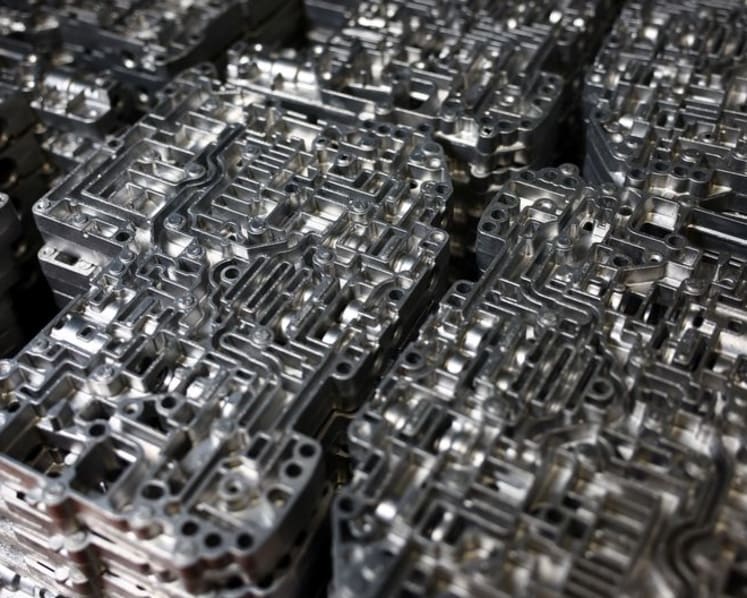
Automobile transmission parts are seen inside a factory at Kyowa Industrial Co. in Takasaki, Gunma Prefecture, Japan April 11, 2025. REUTERS/Issei Kato
TOKYO, March 3 : Japanese spending on factories and equipment rose 6.5 per cent on-year in the fourth quarter, Ministry of Finance data showed on Tuesday, indicating resilient investment demand continued to support a barely growing economy.
The encouraging data, which will be used in calculating revised gross domestic product figures scheduled for March 10, comes as the government seeks to bolster investment through targeted public outlay in sectors it deems vital for economic security.
"The data shows that overall capital expenditures have been firm," Meiji Yasuda Research Institute economist Kazutaka Maeda said, adding that the GDP figures are likely to be revised up.
Preliminary data last month showed the economy grew an annualised 0.2 per cent in the final quarter of last year, undershooting forecasts as inflation squeezed consumption while a tariff agreement with the U.S. did little to drive exports.





Capital expenditure, a gauge of domestic demand-led economic growth, totalled 15.4 trillion yen ($97.9 billion) in October-December, hitting a record high for the quarter.
It rose for a fourth-straight quarter, with growth accelerating from the previous quarter's 2.9 per cent on-year gain. On a seasonally adjusted basis, it grew 3.5 per cent from July-September.
The data also showed corporate sales rose 0.7 per cent in the fourth quarter from a year earlier, while recurring profit increased 4.7 per cent.
Japan's capital expenditure has been generally firm in recent years as companies replace ageing, low-efficiency equipment to cope with a chronic labour shortage linked to a shrinking population.
An exit from deflation has further prompted firms to bring investment forward, anticipating increases in capital costs.
Looking ahead, economists said planned government policy steps to spur corporate spending - such as capital injections, subsidies and tax credits - could have a meaningful impact on the economy.
Mizuho Research & Technologies estimated the measures would lift capital expenditure by about 1 per cent, offsetting any drag from rising interest rates.
The think tank forecast real capital expenditure growth of 2.7 per cent in fiscal 2026, which begins on April 1, and 2.5 per cent in fiscal 2027.
However, Meiji Yasuda's Maeda said it is questionable whether government funding alone would directly spur companies to invest, adding that firms already have sufficient profits to allocate to capital spending if they choose to.
"By putting in some money, the government hopes to nudge firms toward becoming investment‑oriented, but I'm not entirely convinced," Maeda said. "Growing external risks, such as tensions in the Middle East and tariff issues, complicate firms' willingness to invest."
($1 = 157.3500 yen)





