Yen slides toward intervention zone as Iran war tensions lift dollar
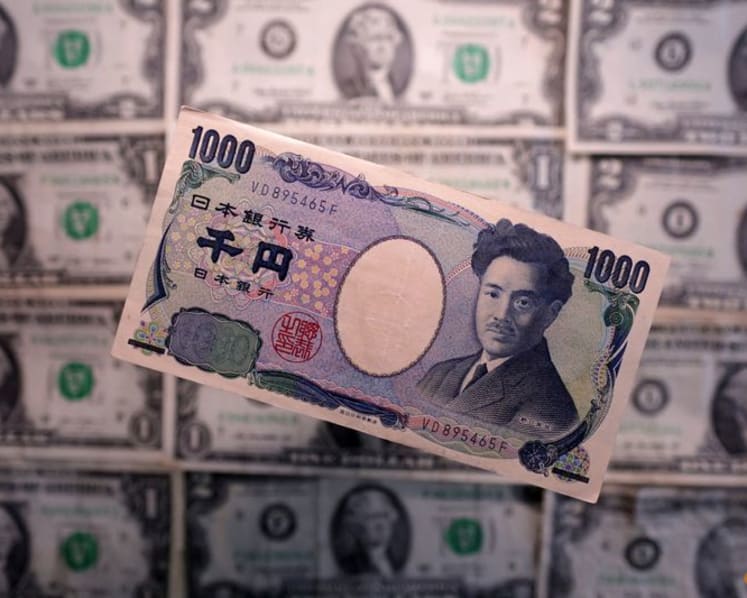
Yen and U.S. dollar banknotes are seen in this illustration taken March 19, 2025. REUTERS/Dado Ruvic/Illustration
NEW YORK/LONDON, May 27 : The yen fell to its weakest level in nearly four weeks on Wednesday, edging closer to levels that prompted Japanese authorities to intervene last month, as investors assessed renewed tensions in the Iran war.
The yen dropped 0.14 per cent to 159.51 per dollar, its weakest since April 30, when authorities stepped in to support it. Traders widely see the 160 mark as a key trigger for intervention after the yen crossed that level last month.
"They've intervened formally, and the market is fully calling their bluff," said Eugene Epstein, head of structuring for North America at Moneycorp in New Jersey.
"This is not the first time this has happened. In the past this exact playbook plays out: they intervene and the market says, 'We don't believe you,' and they intervene again and the market says, 'We believe you this time.' I would argue that the market will most likely test the Bank of Japan again," Epstein said.





Markets are pricing a roughly 70 per cent chance of a quarter-point interest rate hike at the BOJ's June 15–16 policy meeting, LSEG data showed.
DOLLAR STEADIES
President Donald Trump said the U.S. and Iran still have issues to resolve in peace talks, after Washington dismissed an Iranian state television report of a framework deal to restore shipping through the Strait of Hormuz within a month and to lift a U.S. naval blockade on Iranian ships.
The safe-haven dollar steadied, extending gains from the prior session, as hopes of a swift end to the war have waned in the wake of fresh hostilities.
The euro was a shade lower at $1.163125, while the pound was down 0.11 per cent at $1.34320.
The dollar was up 0.13 per cent to 0.7866 against the Swiss franc.
The dollar index, which tracks the U.S. currency against the yen and five other peers, was little changed at 99.2 and on track for a second straight day of gains.
KIWI SHINES
The New Zealand dollar outperformed, rising after the central bank came unexpectedly close to raising interest rates and signaled that further tightening may be needed sooner and more aggressively than previously expected.
The Reserve Bank of New Zealand left its overnight cash rate unchanged in a split decision, with three members voting for a quarter-point hike and three opting to hold.
The kiwi rallied 1.11 per cent to $0.59, rebounding from a loss in the earlier session.
The Australian dollar slipped 0.35 per cent to $0.71415, reversing earlier gains after data showed annual inflation cooled to 4.2 per cent in April.
The Australian dollar dropped sharply against the Kiwi, falling 1.39 per cent to $1.202, making it the biggest daily decline in nearly a decade.