Japan's weak spot on energy in focus as Middle East crisis worsens -REI chair
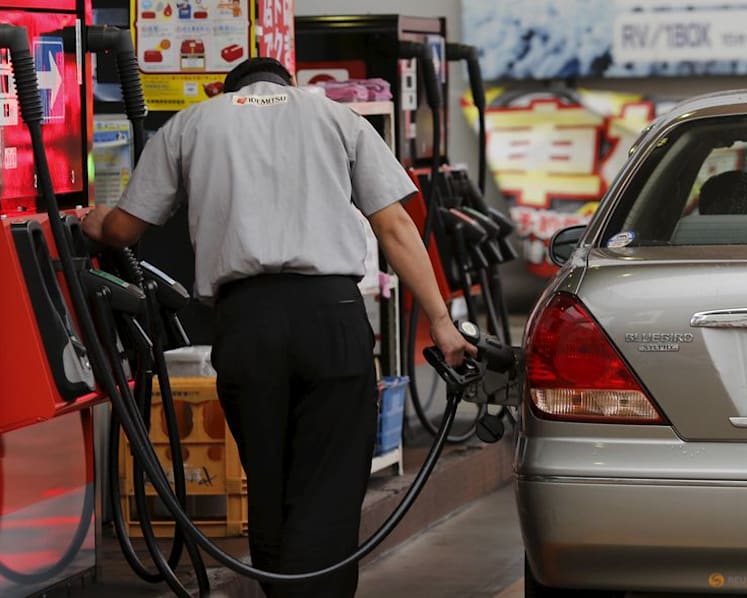
A gas station worker fuels a vehicle in Tokyo August 26, 2015. Crude oil futures edged up on Wednesday, but were still not far off 6-1/2 year lows after China's central bank moved to support the country's stumbling economy, while concerns about a supply glut capped gains. REUTERS/Toru Hanai
TOKYO, March 11 : Japan should do more to reduce its reliance on imported fossil fuels, the chair of the Renewable Energy Institute said, after the escalating Middle East conflict halted tanker traffic through the Strait of Hormuz, underlining Japan's vulnerability to geopolitical risks.
Japan relies on the region for about 95 per cent of its crude oil and 11 per cent of its liquefied natural gas imports, with roughly 70 per cent and 6 per cent respectively shipped through the Strait. The channel's closure has triggered sharp spikes in fuel prices, hitting energy‑importing economies, such as Japan, the hardest.
Tomas Kaberger, the chair of the Tokyo-based REI's executive board and a longtime observer of Japan's energy system, said the country needed to reduce vulnerability by cutting dependence on fossil fuels. "When fossil fuel imports are cut, the power plants stop and your cars stop running," he told Reuters in an interview last week.
The Iran crisis, he suggested, was a stark reminder that fossil‑fuel dependence carried geopolitical risks and was an economic liability.





This month marks 15 years since the Fukushima Daiichi nuclear disaster, which fundamentally reshaped Japan's perception of energy security. But Kaberger cautioned that nuclear power was not a solution.
"Large power plants are easily hit nowadays with modern weapons and drones. It's proven that the Russians have managed to destroy a lot of the large power plants in Ukraine," he said.
By contrast, decentralised renewable systems — solar, wind and battery storage — offer stronger resilience because no single strike can take down national supply.
Kaberger also urged Japan to recognise its strength in renewables. "In the 20th century Japan was resource‑poor because the dominant energy sources were oil, coal, gas and uranium. In the 21st century with solar, wind and battery technologies becoming the world's cheapest forms of power generation, Japan is resource‑rich," he said.
With Middle Eastern tensions rising and Fukushima's lessons still vivid, Kaberger says Japan has a historic opportunity to accelerate renewables to secure energy independence and national resilience.