







Brent set for 8% weekly fall as Israel, Hezbollah agree ceasefire
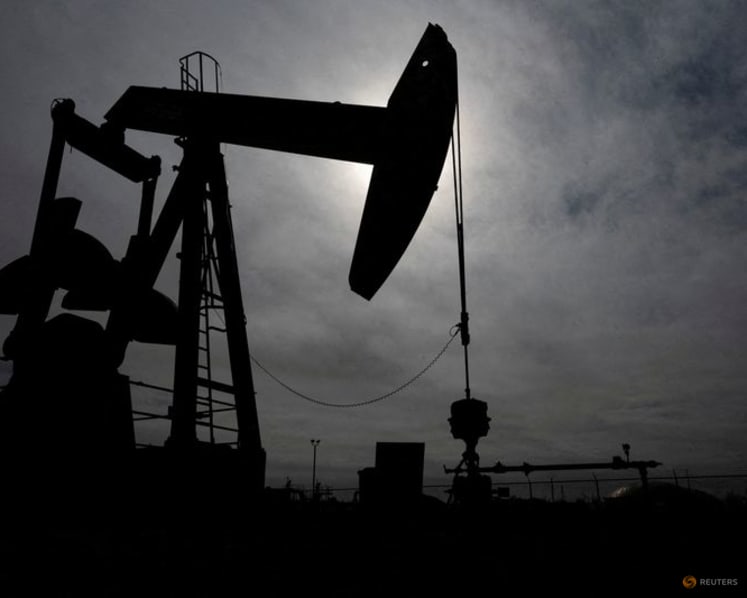
FILE PHOTO: A pump jack operates near a crude oil reserve in the Permian Basin oil field near Midland, Texas, U.S. February 18, 2025. REUTERS/Eli Hartman/File Photo
CALGARY, Alberta, June 19 : Brent crude ticked higher on Friday, but stayed set for a weekly fall of around 8 per cent, after Israel and Hezbollah agreed on a ceasefire in Lebanon but Iran set conditions for using the vital Strait of Hormuz.
Brent crude futures were up 66 cents, or 0.53 per cent, at $80.38 a barrel by 1:30 p.m. ET, while U.S. West Texas Intermediate crude CLc1 was up 94 cents, or 1.23 per cent, at $77.54 per barrel.
Trading volumes were light due to a U.S. federal holiday.
Gulf producers were preparing to raise exports after Israel and Hezbollah agreed to a ceasefire which began at 4 p.m. local time (1300 GMT) on Friday. At least four tankers carrying crude, oil products and liquefied petroleum gas entered the Strait of Hormuz on Friday, heading for Iraqi Gulf ports, MarineTraffic data showed.





Despite the uptick in activity, however, Iran signalled tighter control over shipping, with state TV reporting that vessels must coordinate transit with the Revolutionary Guards navy.
In an undated advisory circulated to the maritime industry in the last 24 hours and seen by Reuters, Iran's Persian Gulf Strait Authority said "no vessel is permitted to pass through the Strait of Hormuz without a valid passage permit issued by the PGSA".
Concerns around Iran's conditions for using the strait helped push oil prices higher on Friday, said Rory Johnston, founder of the Commodity Context newsletter.
"The market was pricing in a deal and pretty seamless execution, and that doesn't seem to be what we're getting thus far," Johnston said.
In spite of Friday's gains, Brent was down about 8 per cent week-over-week, reflecting a significant easing of supply concerns in the wake of the U.S.-Iran deal to end the war.
"Though (oil prices) haven't got to the point to where they were before the war started, it looks like we're headed in that direction," said Phil Flynn, senior analyst with Price Futures Group, adding more supply is expected to flow in coming days.
"The backlog of ships can move quicker than some people think and if there's cooperation between Iran and the U.S., it can move quite quickly," Flynn added.
A planned meeting between Iranian and U.S. officials in Switzerland on Friday has been postponed, with arrangements underway for talks in the coming days, Iran's Foreign Ministry said on Friday.
The ministry said the meeting was no longer urgent because a memorandum of understanding on ending the war had already been signed digitally between the two sides.
Analysts expect the deal to release more than 85 million barrels of oil stranded in the Middle East Gulf into global markets. The agreement also includes the lifting of U.S. sanctions on Iranian oil, which would add more supply.
Around 20 per cent of global oil and LNG supply transits Hormuz, but recovery in flows and production after the U.S.-Iran deal could take several months.
Citi said its base case, with a 60 per cent probability, sees sustained normalisation in flows, with oil markets moving into surplus and prices trending lower over the next six to 12 months to around $60 to $65 per barrel by the first quarter of 2027.
Commerzbank said oil supply should gradually recover, lowering its Brent forecast to $80 a barrel by year-end from $85, while expecting prices to remain above pre-war levels for most of the coming year.
Iraq's oilfields are ready to resume production and output will gradually return to normal, restoring previous rates, Oil Minister Basim Mohammed said.
On the demand front, world demand will rise to 113.3 million bpd in 2030 from 105.1 million barrels per day in 2025, OPEC said in its 2026 World Oil Outlook.





