







Oil futures surge 3% a barrel as winter storm slams US output
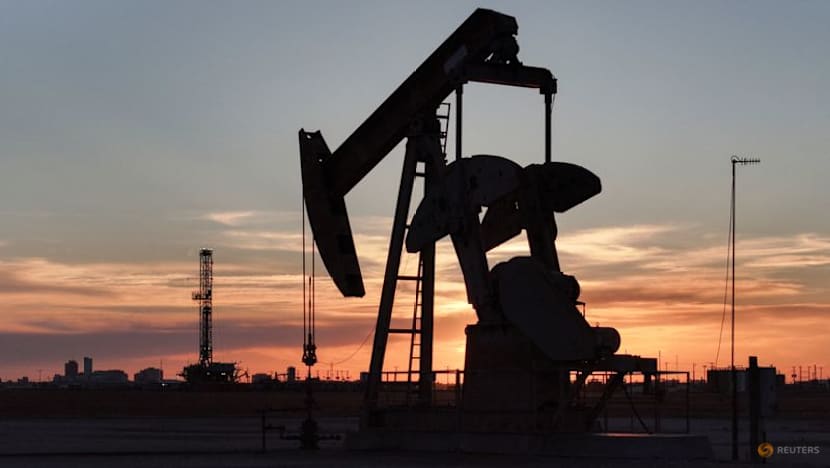
A drone view of a pump jack and drilling rig south of Midland, Texas, U.S. June 11, 2025. REUTERS/Eli Hartman
HOUSTON, Jan 27 : Oil prices settled 3 per cent higher on Tuesday as producers reeled from a winter storm that hobbled crude production and drove U.S. Gulf Coast crude exports to zero over the weekend.
Brent crude futures settled up $1.98 or 3.02 per cent, at $67.57 a barrel. U.S. West Texas Intermediate crude settled up $1.76 or 2.9 per cent, at $62.39 a barrel.
U.S. oil producers lost up to 2 million barrels per day or roughly 15 per cent of national production over the weekend, analysts and traders estimated, as a severe winter storm swept across the country, straining energy infrastructure and power grids.
Severe weather has boosted crude futures, with short-term risks tilted to the upside on fears of supply disruptions, said Fawad Razaqzada, market analyst at City Index.





"The cold weather in the U.S. will likely cause quite significant drawdowns in oil stocks over the next few weeks, particularly if this weather persists," said Tamas Varga, an oil analyst at brokerage PVM.
Exports of crude oil and liquefied natural gas from U.S. Gulf Coast ports tumbled to zero on Sunday amid frigid weather, ship tracking service Vortexa said.
Exports rebounded on Monday with flows coming in above seasonal norms as ports reopened, said Samantha Santa Maria-Hartke, head of market analysis at Vortexa.
Kazakhstan's biggest oilfield, Tengiz, is likely to restore less than half of its normal production by February 7 as it slowly recovers from a fire and power outage, two sources familiar with the matter told Reuters.
"The recovery of Tengiz production seems to be happening slower than earlier expected, keeping the oil market tighter," said Giovanni Staunovo, an analyst at UBS, adding that the weaker U.S. dollar was lending some support.
However, the CPC, which operates Kazakhstan's main exporting pipeline, said it returned to full loading capacity at its terminal on the Russian Black Sea coast after maintenance was completed at one of its three mooring points.
SUPPLY RISKS PERSIST DUE TO MIDEAST TENSIONS
A U.S. aircraft carrier and supporting warships have arrived in the Middle East, two U.S. officials told Reuters on Monday, expanding President Donald Trump's capabilities to defend U.S. forces, or potentially take military action against Iran.
"With Trump saying last week that the U.S. has an 'armada' heading towards Iran, geopolitical tensions are rising, and that is keeping oil prices supported in the near-term outlook," said Razaqzada of City Index.
Tensions between Tehran and Washington coupled with no news on the Ukraine-Russia peace deal are keeping a floor under crude, said Dennis Kissler, senior vice president of trading at BOK Financial.
Meanwhile, OPEC+ is set to keep its pause on oil output increases for March at a meeting on February 1, three OPEC+ delegates told Reuters.





