







Oil extends gains to rise 5.6% after Iran attacks Gulf energy facilities
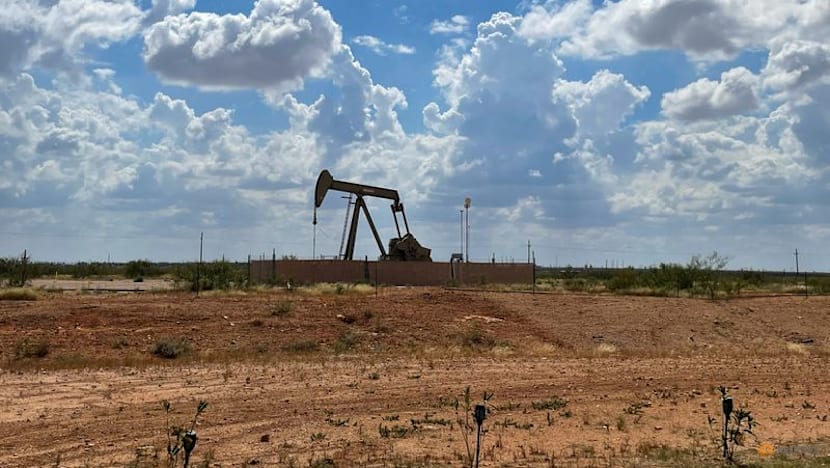
A pumpjack, used to help lift oil from a well, in the Permian basin near Midland, Texas, U.S., October 8, 2025. REUTERS/Arathy Somasekhar/File Photo
NEW YORK, March 18 : Oil prices settled higher on Wednesday and climbed further in extended trade after Iran attacked several energy facilities across the Middle East following a strike on its South Pars gas field, a major escalation in its war with the U.S. and Israel.
Brent futures were up 5.6 per cent in post-settlement trading, extending gains after settling up 3.8 per cent at $107.38. U.S. West Texas Intermediate crude extended gains to 4 per cent after closing up 11 cents, or 0.1 per cent, at $96.32.
WTI futures had settled at their widest discount to Brent in 11 years, as the U.S. benchmark was pressured by higher supply through a release from its Strategic Petroleum Reserve and rising freight costs. Brent futures, meanwhile, were buoyed by fresh attacks on Middle Eastern energy facilities.
Qatar's state oil and gas company said the Ras Laffan Industrial City, an energy-industry hub, had suffered "extensive damage" after it was hit by Iranian missiles. Saudi Arabia said it had intercepted and destroyed multiple ballistic missiles launched toward Riyadh and an attempted drone attack on a gas facility in the east of the country.





Iran has issued an evacuation warning for several energy facilities across Saudi Arabia, the UAE and Qatar, saying they would be targeted by strikes "in the coming hours," Iranian state media reported on Wednesday.
The warning followed an attack on Iran's South Pars gas field, which Israeli media reported was carried out by Israel with U.S. consent. Neither country acknowledged immediate responsibility.
"The attacks on Iran's South Pars field were boosting oil and gas prices, and any further escalations of attacks to energy infrastructure would continue to raise prices," SEB analyst Ole Hvalbye said.
The war has halted shipments via the Strait of Hormuz, which handles 20 per cent of global oil and LNG supply. Total oil output cuts in the Middle East are estimated at 7 million to 10 million barrels per day or 7 per cent to 10 per cent of global demand.
TRUMP TRIES TO CONTROL RISING U.S. OIL PRICES
U.S. President Donald Trump's administration on Wednesday announced a 60-day waiver of the Jones Act shipping law, temporarily allowing foreign-flagged vessels to move fuel, fertilizer and other goods between U.S. ports.
It will also temporarily lift federal smog-cutting restrictions on summer-blend gasoline, three sources told Reuters, though the moves only marginally impacted gasoline futures contracts.
Traders and analysts said the measures could help slow the surge in fuel prices in the U.S., but are unlikely to have much of an effect on global energy prices.
Despite the announcements, U.S. diesel futures surged to a nearly $85 per barrel premium to WTI crude, the highest since October 2022.
The U.S. also issued a general license authorizing certain deals involving Venezuela's state oil company PDVSA, while a report said Vice President JD Vance and other key Trump administration officials plan to meet on Thursday with the American Petroleum Institute, the nation’s largest oil trade group.
In Iraq, the North Oil Company said crude exports from Iraq's Kirkuk fields to Turkey's Ceyhan port have resumed via pipeline, after Baghdad and the Kurdistan Regional Government agreed to restart flows on Tuesday. Kirkuk crude exports would resume with an initial capacity of 250,000 bpd, the company said.
Separately, Iraq's state oil company SOMO signed contracts with international carriers and buyers to export crude oil via Turkey, Jordan and Syria, the Iraqi state news agency said on Wednesday.
"Iraq turning the taps back on comes at just the right time, when the world really needs more oil supplies. It also ramps up the pressure on Iran, making it harder for them to use oil as a bargaining chip," said Phil Flynn, senior analyst at Price Futures Group.
Libya's National Oil Corporation said early on Wednesday that flows from the Sharara oilfield were being gradually redirected through alternative pipelines after a fire broke out.
In the U.S., crude stocks rose while gasoline and distillate inventories fell last week, the Energy Information Administration said. Crude inventories rose by 6.2 million barrels to 449.3 million barrels in the week ended March 13, compared with market expectations for a rise of 383,000 barrels.





