Oil prices rise 6% on fears of US-Iran ceasefire collapse
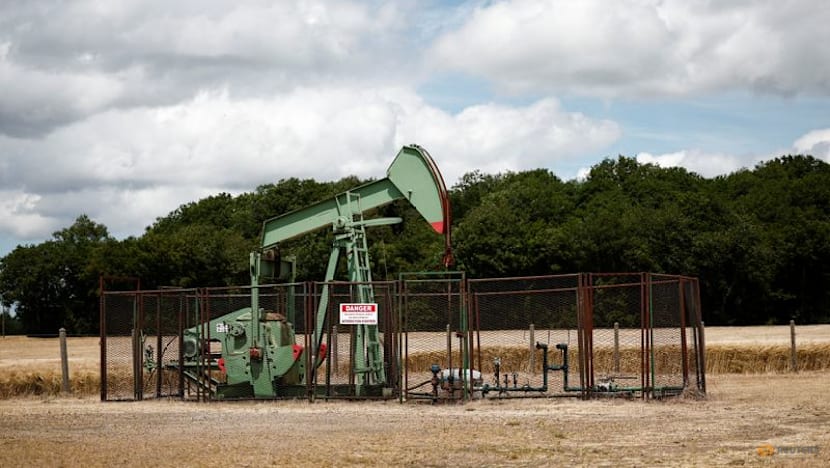
A pumpjack operates at the Vermilion Energy site in Trigueres, France, June 14, 2024. REUTERS/Benoit Tessier
NEW YORK, April 20 : Oil prices jumped around 6 per cent in Monday trading on uncertainty over peace talks between the U.S. and Iran after violence flared around the Strait of Hormuz.
Brent crude futures settled $5.10, or 5.64 per cent, higher to $95.48 a barrel. U.S. West Texas Intermediate advanced $5.76, or 6.87 per cent, at $89.61.
Both contracts had tumbled by 9 per cent on Friday for their largest daily declines since April 18 after Iran said that passage for all commercial vessels through the Strait of Hormuz was open for the remainder of the ceasefire.
Over the weekend, the U.S. seized an Iranian cargo ship that tried to break through its blockade while Iran said it would retaliate, heightening fears of a resumption in hostilities.





"The goodwill that was generated on Friday has totally evaporated," said Bob Yawger, director of energy futures at Mizuho.
With a two-week ceasefire set to expire later this week, the renewed hostilities cast doubts over prospects for a second round of talks between the U.S. and Iran in Pakistan.
Iran is considering attending the peace talks, a senior Iranian official told Reuters on Monday, but no decision had been made.
The Gulf nation's Foreign Minister Abbas Araqchi told his Pakistani counterpart Ishaq Dar that the U.S. "continued violations of the ceasefire" are a major obstacle to the continuation of the diplomatic process, an Iranian foreign ministry statement said on Monday.
Trump, asked over the weekend about the chance of a ceasefire extension, said: "I don't know. Maybe not. Maybe I won't extend it. But the blockade is going to remain."
Despite uncertainty over the ceasefire, analysts noted oil prices were off the highs seen at the beginning of the Middle East conflict. "As long as we don't have full-scale warfare, my feeling is that we're going to slowly but steadily grind lower," said Yawger.
BLOCKADE UNRESOLVED
Shipping traffic through the Strait of Hormuz, which typically handles roughly one-fifth of the world's oil and liquefied gas supply, remained at a virtual standstill on Monday, with only three crossings in the past 12 hours, shipping data showed.
"The strait remains under a double blockade," said Nikos Tzabouras, market analyst at Tradu, noting a looming ceasefire deadline and uncertainty over any agreement being reached.
"These factors can push crude even higher and, even if a resolution is achieved, it will be hard for prices to return to pre-war levels as supply is unlikely to be restored overnight."
More than 20 ships passed through the strait on Saturday, carrying oil, liquefied petroleum gas, metals and fertilisers, Kpler data showed. That was the highest number of vessels crossing the waterway since March 1.