Oil prices rise with eyes on UAE, AI concerns weigh on stocks
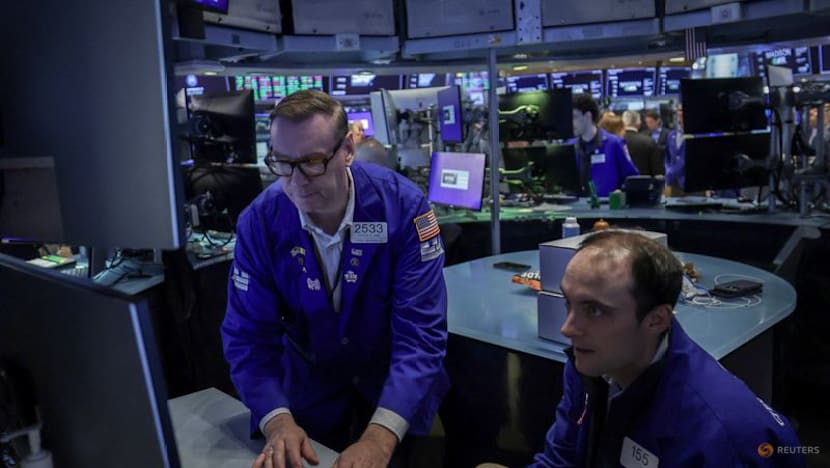
Traders work on the floor at the New York Stock Exchange (NYSE) in New York City, U.S., April 16, 2026. REUTERS/Jeenah Moon
NEW YORK, April 28 : Stocks fell and oil prices rose on Tuesday as investors assessed the stalemate in the Iran conflict and news the United Arab Emirates was cutting ties with OPEC, while concerns the AI boom was losing momentum weighed on equity markets.
U.S. bond prices also slid, with yields up on concern over the effect of high energy prices on inflation.
U.S. President Donald Trump is unhappy with the latest Iranian proposal on resolving the two-month war, a U.S. official said, dampening hopes for resolution of a conflict that has disrupted energy supplies, fuelled inflation, and killed thousands. The conflict is at an impasse and energy and other supplies are still failing to cross the critical Strait of Hormuz.
The UAE said Tuesday it was quitting OPEC and OPEC+, dealing a blow to the oil exporting groups and their de facto leader Saudi Arabia, at a time when the Middle East conflict has caused a historic energy shock. Oil prices briefly pared gains on the news, but Brent was last hovering near a three-week high while WTI broke through $100 per barrel for the first time since April 13.





"The UAE leaving shows how tough it can be to keep a cartel together during tough times," said Brian Jacobsen, chief economic strategist at Annex Wealth Management. "The UAE is OPEC’s third largest producer and the quota it has is well below its capacity."
He said even if the immediate reaction was muted, "longer-term it gives OPEC a lot less sway over the markets."
U.S. crude rose 3.93 per cent to $100.16 a barrel and Brent rose to $111.13 per barrel, up 2.68 per cent on the day.
EARNINGS AND AI IN FOCUS
The tech-heavy Nasdaq Composite fell more than 1 per cent as investors questioned whether the so-far-unstoppable artificial intelligence boom can continue to deliver meaningful returns for investors. The Wall Street Journal reported that AI heavyweight OpenAI had missed internal targets for weekly users and revenue, raising concerns over the ChatGPT parent's ability to support its massive spending on data centers.
"That's putting pressure on the Nasdaq and on the S&P because tech and communication services make up about 40 per cent of the benchmark," said Art Hogan, chief market strategist at B. Riley Wealth.
"If OpenAI is seeing some degradation, that will shuffle the deck a bit in terms of what the leadership looks like."
The Dow Jones Industrial Average rose 9.08 points, or 0.02 per cent, to 49,176.87, the S&P 500 fell 39.47 points, or 0.55 per cent, to 7,134.44 and the Nasdaq Composite fell 256.03 points, or 1.03 per cent, to 24,630.88.
Tech stocks related to OpenAI, such as Oracle and CoreWeave, fell over 3 per cent each.
MSCI's gauge of stocks across the globe fell 8.04 points, or 0.75 per cent, to 1,066.96.
The pan-European STOXX 600 index fell 0.37 per cent, the emerging market stocks gauge was down 0.75 per cent and MSCI's broadest index of Asia-Pacific shares outside Japan was down 0.69 per cent. Japan's Nikkei index fell 1 per cent after a record high on Monday.
Investors are also focusing on earnings from U.S. tech giants Microsoft, Alphabet, Amazon, Meta Platforms and Apple that will further test the AI-driven rally.
Higher oil prices continued to weigh on inflation expectations. The 2-year Treasury note yield, which typically moves in step with interest rate expectations for the Federal Reserve, rose 3.9 basis points to 3.844 per cent, from 3.805 per cent late on Monday.
“The rise in yield is following the rise in oil prices,” said Will Compernolle, macro strategist at FHN Financial.
“That could really just be from the erratic sentiment ... it seems like the day-to-day market mood about U.S.-Iran changes even if the underlying fundamentals are the same,” he said.
The yield on benchmark U.S. 10-year notes rose 2.3 basis points to 4.36 per cent, from 4.336 per cent late on Monday, while the 30-year bond yield rose 1 basis point to 4.9523 per cent from 4.942 per cent.
Elsewhere, the dollar index - which measures the greenback against a basket of currencies including the yen and the euro - rose 0.15 per cent. The British pound fell 0.1 per cent against the dollar and the euro was little changed.
The dollar has been one of the few safe-haven assets during the Iran conflict, although it has given up many of its March gains in the last few weeks.
BANK OF JAPAN SPLIT ON RATES
The BOJ left short-term rates unchanged at 0.75 per cent, in the first of several central bank meetings this week that could provide evidence of the conflict's economic impact.
The yen initially strengthened on the view that a rate hike was now in play, but was last around 0.1 per cent lower at 159.54 per dollar. A breach beyond the 160-per-dollar threshold has markets on alert that Tokyo might step in to support its currency.
The U.S. Federal Reserve, the Bank of England and the European Central Bank are due to announce decisions later this week.
All are expected to keep rates unchanged but market attention will be on comments from policymakers on pricing pressure.