







Oil slides after Trump says US will end its war on Iran soon
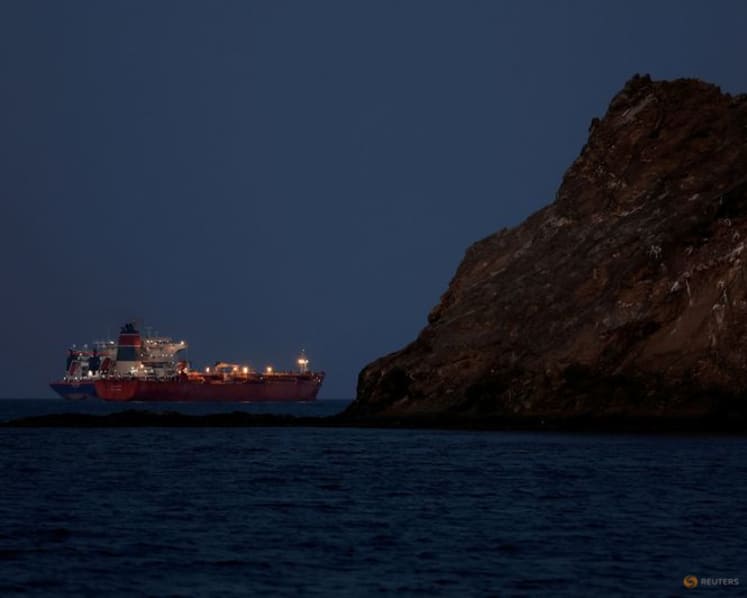
FILE PHOTO: The Callisto tanker sits anchored as the traffic is down in the Strait of Hormuz, amid the U.S.-Israeli conflict with Iran, in Muscat, Oman, March 10, 2026. REUTERS/Benoit Tessier/File Photo
NEW YORK, April 1 : Oil prices settled lower on Wednesday after President Donald Trump said that the U.S. would end its war on Iran fairly soon.
The front-month Brent contract for June fell $2.81, or 2.7 per cent, to settle at $101.16 per barrel, bouncing off a session low of $98.35. U.S. West Texas Intermediate crude futures for May slipped $1.26, or around 1.2 per cent, to $100.12 per barrel, off a session low of $96.50.
Trump, who plans to deliver a speech later in the day, told Reuters that the U.S. has ensured that Iran will not have nuclear arms and is ready to get out of the war "pretty quickly."
On Tuesday, he signaled that the U.S. could wind down the war in two to three weeks even without a deal, remarks that sent oil prices down more than $3 a barrel in that trading session.





Market participants are betting that Trump will not allow oil supply disruptions caused by the Middle East war to extend into mid-May, when U.S. gasoline demand is typically at its strongest, SEB analysts said.
"The risk to U.S. gasoline prices, consumer sentiment and ultimately the November midterm elections makes a prolonged conflict politically costly," they said.
On Monday, U.S. gasoline prices rose above $4 a gallon for the first time in more than three years.
U.S. AND IRAN CONTINUE TO GIVE CONFLICTING SIGNALS
In a social media post on Wednesday, Trump said Iran had asked for a ceasefire, but he will consider it only after Tehran stops blocking the Strait of Hormuz. Iran denied that it made any such request.
Iran has stopped vessels from crossing the Strait of Hormuz since the U.S. and Israel launched attacks on the country at the end of February. This disrupted Middle Eastern oil exports and drove fuel prices higher globally.
Analysts expect that energy flows through the Strait of Hormuz would be slow to return to levels before the conflict even if a ceasefire is announced.
"Odds appear to lean in the direction of a U.S. Iranian war exit but ... the status of the Strait of Hormuz remains highly uncertain and much deserving of some geo-risk premium even if global oil supplies slowly begin to loosen," oil trading advisor Ritterbusch and Associates said.
Oil supply disruptions from the Middle East will increase in April and will hit Europe as the closure of the Strait of Hormuz hits exports further, International Energy Agency head Fatih Birol said on Wednesday.
FALL IN OUTPUT FROM BIG PRODUCERS
Illustrating the impact of the closure of the Strait of Hormuz, crude oil output from the Organization of the Petroleum Exporting Countries dropped by 7.5 million barrels per day in March from the previous month, as producers were forced to cut output because storage is full.
In January, U.S. crude oil output fell by the most in two years, after a severe winter storm knocked production offline, data from the Energy Information Administration showed on Tuesday.
Saudi Arabia could raise its May official selling prices for crude to Asia to record levels, after Middle Eastern oil became the most expensive globally, a Reuters survey of industry sources showed.
Meanwhile, U.S. crude oil inventories rose more than expected last week, data from the Energy Information Administration showed on Wednesday.





