







Pakistan cenbank holds rate at 10.5% as oil risks cloud inflation outlook
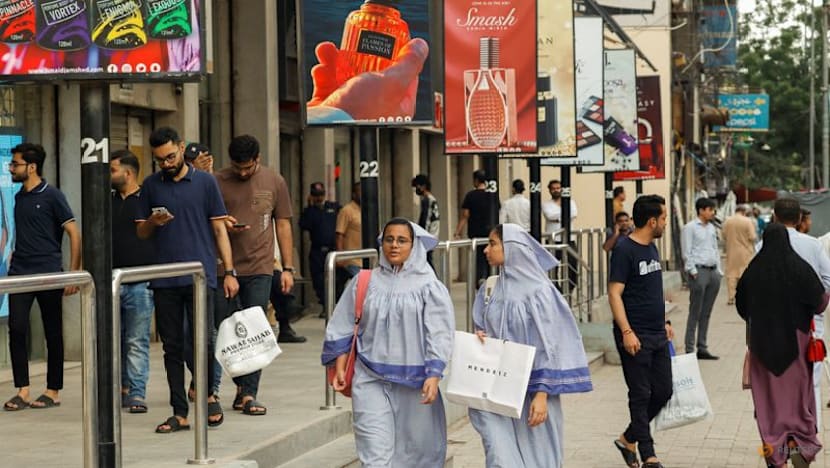
People walk outside shopping mall in Karachi, Pakistan September 23, 2025. REUTERS/Akhtar Soomro
KARACHI, March 9 : Pakistan’s central bank kept its key policy rate unchanged at 10.5 per cent on Monday, pausing its easing cycle as rising global energy prices and regional tensions pose new inflation risks for the import-dependent economy.
War between Iran and the U.S. and Israel has effectively shut the Strait of Hormuz, through which a fifth of global oil and seaborne liquefied gas is shipped, driving up energy prices and raising fears of a prolonged energy crisis.
"The Monetary Policy Committee noted that the conflict in the Middle East has led to a sharp increase in global fuel prices as well as freight and insurance costs, while also affecting cross-border trade and travel," the State Bank of Pakistan said in a statement.
"Given the evolving nature of events, the MPC observed that the intensity and duration of the conflict will both be important determinants of the impact on the domestic economy."





It added that Pakistan's fundamentals remained stronger than at the start of the 2022 Russia-Ukraine war.
The SBP has cut the key rate by a cumulative 1,150 basis points since mid-2024, from a record 22 per cent in 2023, as inflation cooled sharply from multi-decade highs.
ENERGY-FUELED INFLATION
Pakistan imports most of its energy, making inflation sensitive to global fuel prices.
On Friday, Pakistan raised consumer prices for diesel and petrol about 20 per cent, citing the higher oil prices caused by the Iran war.
The SBP said headline inflation accelerated to 7 per cent in February from 5.8 per cent in January, while core inflation reached about 7.6 per cent.
It said inflation could remain above 7 per cent through the rest of the fiscal year ending in June and into the next fiscal year, though improved food supply and better agricultural prospects may partly offset pressure from higher energy prices.
Governor Jameel Ahmad has previously said the economy could grow by 3.75 per cent–4.75 per cent in FY26, supported by stronger domestic demand and earlier monetary easing, while inflation may temporarily exceed the SBP's 5 per cent–7 per cent target range this year before easing.
The SBP also said on Monday the current account posted a $121 million surplus in January, keeping the deficit at $1.1 billion for July–January FY26, while foreign exchange reserves had risen to $16.3 billion as of February 27. It reiterated a target of building reserves to $18 billion by June.
Pakistan is in an ongoing $7 billion IMF programme, with the Fund urging policymakers to keep monetary policy tight and data-dependent to anchor inflation expectations and strengthen external buffers.





